
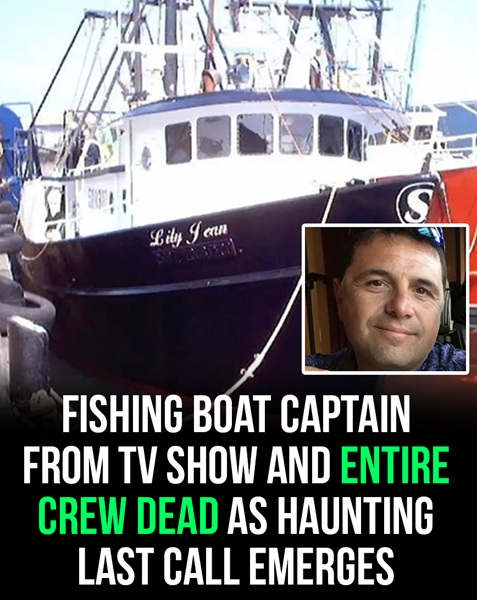
The sea has always demanded respect. Its rhythms, moods, and dangers have shaped generations of people, teaching lessons of patience, resilience, and humility.
In Gloucester, Massachusetts, a city whose very identity is inseparable from the Atlantic Ocean, the ocean is not merely a backdrop to life—it is life itself.
From the earliest light of dawn to the dim glow of sunset, the community’s heartbeat is measured in tides, fishing lines, and the steady hum of diesel engines cutting through the water.
Here, generations of families have made their living from the sea, forging a unique culture built on courage, craftsmanship, and the quiet camaraderie that comes from shared hardship. Among these families, the Sanfilippos stood out as a lineage of unwavering dedication to the ocean.
At the forefront of this storied family was Captain Accursio “Gus” Sanfilippo, a fifth-generation fisherman whose life was inextricably entwined with the sea.
Born and raised in Gloucester, Gus grew up amidst the docks, piers, and vessels that define the city’s maritime heritage. His earliest memories were of salt spray in the air, seagulls wheeling overhead, and the rhythmic clatter of nets being hauled aboard his father’s boat.

Summers were spent as an apprentice of sorts, hauling nets, sorting fish, and learning the subtle signs of the ocean—the shifting color of the water, the behavior of clouds, and the direction of prevailing winds. By the time he was a teenager, Gus possessed the knowledge, skill, and instinct that marked him as a natural seafarer.
Fishing in the North Atlantic is not a profession for the faint-hearted. The waters off New England, particularly around Georges Bank and the Grand Banks, are notorious for sudden storms, turbulent seas, and freezing temperatures.
Commercial fishermen face a constant struggle against the elements, battling both the raw power of nature and the mechanical reliability of their vessels. Gus understood these risks intimately. He carried with him not only the technical skill required to navigate treacherous waters but also a deep respect for the sea’s unpredictable temperament.
Every decision aboard his boat—when to haul the nets, when to seek shelter, when to push forward—was guided by a combination of experience, intuition, and careful observation.
Gus’s personal life mirrored his professional dedication. He married his high school sweetheart, Lorie, a partnership rooted in mutual respect, shared history, and a profound understanding of the demands of life at sea.
Their home, a labor of love constructed largely by Gus’s own hands, reflected his craftsmanship, patience, and pride. Within its walls, family gatherings were punctuated by stories of long voyages, near misses with storms, and the quiet satisfaction of a day’s hard work successfully completed.
Gus’s children grew up learning the rhythms of the ocean, the value of honesty, and the importance of community—lessons imparted not in formal classrooms but on the decks of boats and among the docks of Gloucester.
Professionally, Gus earned a reputation as a captain of unmatched skill and integrity. He ran his vessel, the 72-foot Lily Jean, with meticulous attention to safety, maintenance, and crew cohesion. He understood that a captain’s responsibility extended beyond navigation and catch quotas; it included the lives and well-being of every individual aboard.

Young fishermen under his guidance benefited not only from his technical expertise but also from his patience, mentorship, and insistence on respect for both the craft and the ocean itself. To Gus, fishing was more than a job—it was a calling, a way to honor the generations before him while preparing the next generation for the same life he had been born into.
Gus’s skill and character drew the attention of the public when he and his crew appeared on the History Channel’s Nor’Easter Men, a series documenting the high-risk life of North Atlantic commercial fishermen.
The show highlighted the dangers of multi-day trips, brutal weather, and the pursuit of haddock, lobster, and other commercial species. For viewers, Gus’s calm, confident demeanor and evident expertise offered a window into a world that few experience firsthand.
But for those who knew him, the television appearances were secondary to his daily contributions: mentoring young crew members, maintaining his boat with exacting standards, and demonstrating the combination of courage, skill, and prudence that every safe captain embodies.
On the early morning of January 30, 2026, that combination of skill and caution would meet its ultimate test. The Lily Jean was operating in the notoriously unpredictable North Atlantic, navigating the waters where winter storms are common and survival is measured in minutes.
The U.S. Coast Guard would later report that they received an emergency radio beacon alert in the early hours of that morning, signaling distress aboard the vessel. The conditions were treacherous: sustained winds near 27 mph, four-foot swells, air temperatures hovering around 12 degrees Fahrenheit, and freezing water temperatures of approximately 39 degrees.
Under such conditions, even experienced fishermen with well-maintained vessels are vulnerable. Hypothermia can set in within minutes, and the smallest mechanical failure can quickly escalate into a life-threatening situation.
Rescue crews—including a Coast Guard helicopter and a fast-response vessel—were dispatched immediately, navigating the same perilous waters that had claimed the Lily Jean. Captain Timothy Jones of the Coast Guard described the operation as one of the most challenging of his career.
“The freezing spray, high winds, and low visibility created conditions that made every second critical,” he said. “Despite our training and preparation, the ocean showed no mercy that day.” Upon arrival, crews encountered a debris field and an empty life raft, the chilling silence of the North Atlantic offering a stark contrast to the chaos of the previous hours.
Only one body was recovered—Captain Gus Sanfilippo himself. The remaining crew, including the NOAA fisheries observer Jada Samitt, were presumed lost to the unforgiving sea.
Gus’s final hours were marked by the same humanity and humility that defined his life. Fellow fisherman and friend Captain Sebastian Noto recalled a brief conversation with Gus around 3 a.m., when Gus commented on the bitter cold. Noto later reflected that it might have been an indication of mechanical issues aboard the Lily Jean, possibly a malfunctioning bilge pump.

Yet, even a momentary delay in response, even for the most skilled crew, can be fatal in the extreme conditions of the North Atlantic. The tragedy was compounded by the swift onset of hypothermia, violent swells, and the impossibility of reaching safety without immediate rescue.
The Lily Jean carried a crew of seven, representing the multi-generational fabric of Gloucester’s fishing community. Alongside Gus were Paul Beal Sr., Paul Beal, John Rousanidis, Freeman Short, Sean Therrien, and NOAA observer Jada Samitt. Together, they embodied a tradition of courage, skill, and interdependence that has defined the town for centuries.
Vito Giacalone, leader of the Gloucester Fishing Community Preservation Fund, described the community’s grief: “We loved each other. Gus treated me like a big brother, and I treated him like my younger brother. To know the tragedy of this and the kind of character Gus had… he’d be mortified to know that these lives were all lost.”
The human cost of this disaster cannot be overstated. Gloucester, a city whose history is steeped in maritime endeavor, felt the loss not only in the empty space left on the docks and at the dinner tables but in the very rhythm of its daily life. Families, friends, and colleagues across New England were reminded of the fragility of life at sea and the silent sacrifices made by those who choose to make the ocean their livelihood.
The morning of January 30, 2026, began like many others for the crew of the Lily Jean. The vessel, a 72-foot commercial fishing boat captained by Gus Sanfilippo, had departed Gloucester in the late hours of January 29, navigating toward the fishing grounds of Georges Bank, a historically rich yet perilous area of the North Atlantic.
The crew, experienced and seasoned, knew the risks: winter in New England is unforgiving, and the waters between Cape Cod and Nova Scotia have claimed countless vessels over the centuries. Nevertheless, the promise of a productive catch and the deep-seated traditions of family and community drew them out into the sea.
According to Coast Guard reports, distress signals from the Lily Jean were received around 3:45 a.m., when the boat’s emergency position-indicating radio beacon (EPIRB) automatically activated.
These devices, designed to transmit location and alert authorities in life-threatening situations, indicated a sudden and critical emergency. Rescue teams from Coast Guard Sector Boston were immediately dispatched, including a fast-response cutter and a rescue helicopter, both equipped for extreme cold-weather conditions.
The conditions were harrowing. Sustained winds were clocked at 27 miles per hour, with gusts pushing much higher. Waves reached four feet, with unpredictable swells capable of destabilizing even the most seaworthy vessels. The air temperature hovered near 12 degrees Fahrenheit, and water temperatures were just above freezing at 39 degrees Fahrenheit—conditions where hypothermia can set in within minutes.

Coast Guard Commander Timothy Jones later described the scene as “one of the most challenging search operations in my career,” highlighting that every second was critical and that even the smallest delay could mean the difference between life and death.
When the Coast Guard arrived at the vessel’s last known location, they encountered a scene of devastation. Debris, scattered across the icy waters, marked the final moments of the Lily Jean. An empty life raft bobbed amidst the waves, a haunting signal of the crew’s desperate attempts at survival.
Only one body—Captain Gus Sanfilippo—was recovered from the sea. The remaining six men and the NOAA observer were tragically presumed lost, leaving a void not only on the docks of Gloucester but across families, friends, and a community that revered these men as pillars of maritime tradition.
The details of the sinking, though still under investigation, point toward a possible mechanical failure, likely involving the vessel’s bilge pump. Fellow fisherman and longtime friend Captain Sebastian Noto reflected that Gus had mentioned the cold and potential issues with the boat shortly before the incident.
“Even if the bilge is taking on water, there’s usually enough time to issue a Mayday, to deploy a life raft, to suit up in survival gear,” Noto recalled. “The North Atlantic is unforgiving, but Gus knew the sea. He would have done everything possible. Something catastrophic must have happened very quickly.”
The crew of the Lily Jean represented more than just coworkers—they were a microcosm of Gloucester’s multi-generational fishing community. Alongside Gus were:
- Paul Beal Sr., a veteran fisherman whose experience on the Atlantic spanned decades.
- Paul Beal, following in his father’s footsteps, known for his skill in navigation and fishing technique.
- John Rousanidis, a younger crew member recognized for his dedication and eagerness to learn from seasoned captains.
- Freeman Short, a respected figure in the local fishing scene, known for his reliability and calm under pressure.
- Sean Therrien, a hardworking fisherman whose commitment to his craft mirrored that of his peers.
- Jada Samitt, a NOAA fisheries observer, whose presence aboard reflected the ongoing collaboration between scientists and fishermen to monitor and sustain the region’s marine life.
The loss of these men rippled through Gloucester with profound emotional impact. The city, whose very identity is tied to the Atlantic, has historically celebrated and mourned its fishermen in equal measure.
Vito Giacalone, leader of the Gloucester Fishing Community Preservation Fund, expressed the depth of the grief felt throughout the docks: “We loved each other. Gus treated me like a big brother, and I treated him like my younger brother. To know the tragedy of this and the kind of character Gus had… he’d be mortified to know that these lives were all lost.”
Search efforts continued for several hours, pushing crews to their limits. Helicopters battled blinding wind and freezing spray, while boats navigated waves that threatened to capsize them.
The Coast Guard made the decision to suspend active search operations after the likelihood of survival for the missing crew was deemed exceedingly low. Captain Jamie Frederick of Coast Guard Sector Boston described the decision as “incredibly difficult,” emphasizing the balance between continuing a search and the safety of rescue personnel.

The human toll of the disaster was immediate. Families of the crew received the heartbreaking news over the phone, the gravity of the loss sinking in slowly, painfully.
Friends and neighbors congregated at the docks, offering support, sharing memories, and struggling to reconcile the sudden disappearance of those who had been fixtures in their lives. Gloucester’s fire and rescue departments, along with local clergy, organized vigils and community gatherings, creating spaces for collective mourning and remembrance.
The disaster also reignited conversations about safety and technology in commercial fishing. Experts noted that even the most seasoned crews can be vulnerable to sudden equipment failure, rogue waves, or severe hypothermia in winter conditions.
While EPIRBs, survival suits, and life rafts provide essential safeguards, there remains an unpredictable element when human lives meet the raw power of nature. Gus Sanfilippo, known for meticulous attention to safety, had ensured his crew was prepared for emergencies—but in extreme weather, even preparation can be insufficient against the speed and severity of disaster.
Despite the tragedy, the event underscored the resilience and solidarity of Gloucester’s community. Local fishermen rallied around the families, assisting with funeral arrangements, providing emotional and financial support, and ensuring that the contributions of the lost crew would be remembered and honored.
Schools, local businesses, and civic organizations organized memorials, highlighting the enduring importance of the fishing community to Gloucester’s cultural and economic fabric.
The broader New England fishing community also felt the loss deeply. Commercial fishermen in Massachusetts, Maine, New Hampshire, and Rhode Island understood the hazards of the trade firsthand. Letters, messages, and vigils poured in from across the region, reflecting a shared awareness of the sea’s dangers and the respect owed to those who choose to face them daily.
Captain Gus Sanfilippo’s recovery allowed for a solemn and public tribute. The funeral, held on February 10, 2026, was attended not only by family and friends but by Governor Maura Healey, highlighting Gus’s prominence within the community and statewide recognition of his contributions to the fishing industry.
Tributes emphasized Gus’s mentorship, generosity, and unwavering commitment to crew, family, and community. Family statements described him as a man of integrity, patience, and boundless care: “He mentored many young men, teaching them how to succeed in the fishing industry while instilling in them respect for the sea and for one another.”
As Gloucester mourned, discussions began about memorializing not only Gus but the entire crew of the Lily Jean. Mayor Paul Lundberg announced that their names would be added to the city’s fishermen’s memorial, joining the hundreds of mariners who have perished in the Atlantic over the centuries.
The gesture served as a reminder that the lives of those lost at sea are woven into the historical and cultural tapestry of Gloucester, ensuring that their sacrifices and dedication are never forgotten.
The tragedy of the Lily Jean has left an indelible mark on Gloucester, Massachusetts—a city whose very soul is intertwined with the Atlantic Ocean. The loss of Captain Gus Sanfilippo and his crew is measured not only in lives cut short but in the void left within families, friendships, and a centuries-old maritime tradition. Yet, even amid grief, Gus’s story resonates as a testament to courage, mentorship, and the enduring human spirit that has always defined Gloucester’s fishermen.
From the docks to the schools, from local businesses to civic institutions, Gus Sanfilippo’s life is remembered as one that exemplified skill, integrity, and devotion. He was a man whose hands bore the calluses of labor, who understood both the generosity and cruelty of the sea, and who nurtured those around him through example.
For young fishermen, Gus was more than a captain—he was a mentor, a guide, and a living link to a lineage of seafarers stretching back five generations. Lessons learned aboard the Lily Jean extended far beyond nautical technique; they encompassed respect for nature, humility in the face of danger, and an unwavering commitment to crew and community.
In the aftermath of the disaster, Gloucester’s residents have organized a series of memorial initiatives. Mayor Paul Lundberg announced the permanent inclusion of the Lily Jean crew’s names on the Gloucester Fishermen’s Memorial, a tribute honoring the thousands of lives lost at sea over the centuries. This memorial serves not only as a place of remembrance but as a symbol of the city’s resilience, solidarity, and acknowledgment of the sacrifices inherent in the fishing profession.
Friends, colleagues, and neighbors have participated in candlelight vigils, prayer gatherings, and community storytelling events, sharing memories of the crew’s humor, generosity, and skill. These acts of collective remembrance reinforce the fabric of Gloucester’s maritime community, binding residents together even amid profound loss.
Beyond formal memorials, Gus’s impact is felt in the day-to-day life of the community. Young fishermen who once sailed with him continue to carry forward his teachings, maintaining the meticulous standards he instilled regarding safety, craftsmanship, and teamwork.
His legacy has become a living lesson, a guide for those who remain at sea and a model for future generations. Families of the crew, though mourning, also take solace in knowing that their loved ones’ contributions—like Gus’s leadership—will continue to influence the practices and culture of commercial fishing.
The disaster has also prompted broader reflection within the maritime industry. Experts emphasize that commercial fishing in the North Atlantic is inherently dangerous, even for the most experienced crews. Sudden storms, rogue waves, mechanical failures, and hypothermia remain constant threats.
The Lily Jean tragedy underscores that while modern technology—such as EPIRBs, life rafts, and survival suits—improves safety, the ocean remains unpredictable, and the risk is never fully eliminated. Industry advocates now highlight the importance of rigorous maintenance, emergency preparedness, and continuous training to ensure that tragedies like this are as rare as possible.
At a statewide level, Gus’s life and untimely death have drawn attention to the human cost of commercial fishing. Governor Maura Healey, who attended Gus’s funeral, praised his contributions, noting that he “embodied the courage, professionalism, and dedication that define Gloucester’s fishing community.”
She emphasized that while the state supports technological innovation and regulatory oversight, the heart of the industry lies in men and women like Gus, whose knowledge, instinct, and perseverance ensure the survival and prosperity of New England’s maritime economy.
Family members have spoken of Gus as a devoted husband, father, and mentor. His wife, Lorie, described him as a man who balanced a demanding profession with the joys and responsibilities of home life. Together, they built a life rooted in love, partnership, and respect for tradition, raising children who shared his connection to the ocean and appreciation for the values he upheld.
His family remembers him as a skilled carpenter and builder, someone who shaped not only the vessels he captained but the very home they lived in, leaving a tangible legacy of care and dedication.
Community members also reflect on the broader lessons of Gus’s life. In Gloucester, the story of the Lily Jean has reinforced an appreciation for the resilience, skill, and interdependence required in commercial fishing. Fishermen rely not only on their own abilities but on the coordination, trust, and judgment of every crew member.
Gus’s mentorship ensured that this culture of safety, respect, and teamwork continues even after his passing. His leadership is remembered not through accolades or public recognition alone, but in the daily actions and decisions of those who follow in his wake.
Moreover, the tragedy has sparked a renewed conversation about mental health and emotional resilience among fishermen. The dangers of the profession, compounded by long hours, isolation, and extreme conditions, take a profound psychological toll. Gus’s life illustrates the importance of community, shared experience, and mentorship in mitigating these pressures, providing both practical and emotional support in a profession that tests the limits of human endurance.
National organizations and industry groups have also taken note. The National Oceanic and Atmospheric Administration (NOAA), the Coast Guard, and commercial fishing advocacy groups have highlighted the need for continued research into safety protocols, emergency response systems, and equipment reliability.
The presence of NOAA observer Jada Samitt on the Lily Jean underscores the close collaboration between scientists and fishermen, balancing ecological stewardship with the inherent risks of harvesting the ocean’s resources.
As the months pass, the memory of Gus Sanfilippo continues to inspire reflection, gratitude, and reverence. His life story—a fifth-generation fisherman, television personality, skilled craftsman, devoted husband, and mentor—serves as a touchstone for the values that define Gloucester: courage, integrity, community, and respect for the sea. For those who knew him personally, the recollection of his calm demeanor during storms, his careful guidance of young crew members, and his unwavering commitment to his family and neighbors provides both solace and a standard to aspire to.
In the words of Coast Guard Captain Jamie Frederick, “Our thoughts and prayers are with all the family members and friends of the lost crew of the Lily Jean, and with the entire Gloucester community during this heartbreaking time.” Yet beyond mourning, there is recognition of enduring legacy: a life that exemplified skill, courage, and mentorship, whose memory will continue to shape the identity and practices of Gloucester’s fishermen for generations to come.
The sea, while merciless, also offers memory and legacy. Through stories, memorials, and the daily continuation of a way of life that Gus so dearly loved, his spirit remains present on the docks, in the vessels that still venture into Georges Bank, and in the hearts of those who follow the traditions he embodied. The tragedy of the Lily Jean reminds the world that commercial fishing is one of the most demanding, courageous, and essential professions, where every life lost is deeply felt and every act of skill and devotion deserves recognition.
Captain Accursio “Gus” Sanfilippo’s life, though tragically cut short, will continue to inspire, teaching lessons of resilience, leadership, and profound respect for the sea. In Gloucester and beyond, his story ensures that the lives lost aboard the Lily Jean are neither forgotten nor in vain, echoing through the waves, the docks, and the generations of fishermen who carry forward the spirit of one of New England’s most extraordinary mariners.
