
The entertainment world was struck with profound grief on February 11, 2026, when news broke that James Van Der Beek.
The acclaimed actor who rose to global fame for his role as Dawson Leery on the iconic television series Dawson’s Creek, had passed away at the age of 48.
His death followed a courageous three-year battle with stage 3 colorectal cancer, a disease that he faced with extraordinary openness, grace, and vulnerability. Van Der Beek’s passing serves as a solemn reminder of the relentless nature of cancer, the fragility of life, and the extraordinary courage required to confront a terminal diagnosis with honesty, resilience, and dignity.
Born on March 8, 1977, in Cheshire, Connecticut, Van Der Beek was drawn to performance from a young age. His early years were marked by an affinity for storytelling and expression, which eventually led him to the world of acting.
By the time he starred in Dawson’s Creek in 1998, James had already demonstrated an innate ability to portray emotion with subtlety, depth, and authenticity. The show, which became a cultural phenomenon, chronicled the lives of teenagers in the fictional town of Capeside, Massachusetts, and Van Der Beek’s portrayal of the introspective, sensitive Dawson resonated with millions of viewers worldwide.

Dawson Leery was more than just a character; he became an emblem of youthful yearning, moral introspection, and emotional complexity during a time when teen dramas were becoming increasingly influential in shaping generational identity.
Van Der Beek’s nuanced performance helped elevate the show from a typical coming-of-age narrative to a deeply human exploration of friendship, love, ambition, and loss. His on-screen vulnerability mirrored the authenticity that would later define his off-screen life, particularly during his battle with cancer.
Beyond the fame and critical acclaim, Van Der Beek’s life was anchored in family, faith, and personal integrity. He is survived by his wife, Kimberly Van Der Beek, with whom he shared a deeply loving and enduring partnership, and their six children. Those closest to him consistently described James as a devoted father and husband, a man whose primary joy and responsibility was his family. Even amid a demanding career and intense public scrutiny, he prioritized being present for his children, nurturing their growth, attending milestone events, and instilling in them the values of empathy, resilience, and integrity.
When he was diagnosed with colorectal cancer, Van Der Beek made the deliberate choice to share aspects of his journey with the public. In interviews, social media posts, and public appearances, he spoke candidly about the emotional, physical, and psychological challenges of living with a life-threatening illness.
He expressed gratitude for the support of his family, friends, and fans, often reflecting on the importance of cherishing the small, everyday moments that bring meaning to life. His transparency fostered a sense of solidarity and awareness, helping to reduce stigma around cancer and inspiring countless individuals to seek early screenings or engage more proactively with their health.
James’s approach to illness was neither performative nor dramatized. He shared both the triumphs and setbacks, acknowledging the toll that chemotherapy, surgery, and the uncertainty of prognosis took on him and his loved ones.
Through his honesty, he humanized the experience of terminal illness, allowing audiences to witness the resilience, vulnerability, and courage that defines the human spirit when faced with profound adversity. His willingness to speak openly about the journey — about moments of fear, hope, humor, and love — transformed his public persona from that of a celebrity actor to a relatable, inspiring figure whose impact transcended the screen.
Professionally, Van Der Beek’s career spanned decades and mediums. Following the end of Dawson’s Creek in 2003, he carefully selected roles in television, film, and theater that allowed him to explore a wide range of characters and narratives. From guest appearances on popular shows like CSI and What I Like About You to recurring roles in series such as Don’t Trust the B—- in Apartment 23, Van Der Beek demonstrated remarkable versatility, moving fluidly between drama, comedy, and even voice work. Despite the ebb and flow of Hollywood fame, he maintained a grounded approach to his craft, consistently emphasizing the importance of story, authenticity, and emotional resonance.
Yet, beyond career milestones and accolades, it was his personal qualities that defined the essence of James Van Der Beek. Friends, colleagues, and co-stars often described him as humble, kind-hearted, and deeply loyal. He was the type of individual who remembered birthdays, sent thoughtful notes, and made time for conversations that extended beyond superficial niceties.

His devotion to those he loved was unwavering, and even as illness took a physical toll, his emotional presence remained steadfast. Many who interacted with him spoke of his humor, which often surfaced in moments of vulnerability, offering levity and comfort to those around him.
One of the defining aspects of Van Der Beek’s later years was the cultivation of meaningful friendships that transcended professional collaboration. His bond with Alfonso Ribeiro, the celebrated actor best known for The Fresh Prince of Bel-Air, exemplifies this. Their friendship, which began in 2019 during Season 28 of Dancing With the Stars—where Van Der Beek competed as a celebrity contestant and Ribeiro co-hosted—grew from professional respect into a deeply personal connection.
Ribeiro became a central figure in James’s support network, offering companionship, encouragement, and laughter during the most challenging moments of his illness. Their friendship highlighted the profound human need for connection, empathy, and trust, underscoring that even amidst public life, private bonds are a source of resilience and comfort.
James Van Der Beek’s journey with colorectal cancer, his dedication to family, and his generosity toward friends and fans alike collectively illustrate a life lived with intentionality, courage, and compassion. While his death leaves an irreplaceable void, the richness of his legacy — as an actor, father, husband, and friend — continues to inspire. The lessons he imparted about transparency, faith, humor, and love resonate far beyond Hollywood, touching the lives of those who follow his story, struggle with illness, or seek examples of human dignity under pressure.
As James Van Der Beek navigated the challenges of his illness, the later years of his life became a testament to the profound interplay between friendship, resilience, and the simple joys of everyday moments. While his public persona had always been associated with charm, intelligence, and vulnerability on screen, it was during these final years that his private character — his depth of empathy, loyalty, and generosity — truly shone. Van Der Beek approached his diagnosis not with despair, but with a rare combination of courage and reflection, emphasizing the importance of living fully despite life’s uncertainties.
A particularly significant relationship during this period was his friendship with Alfonso Ribeiro, an actor, dancer, and television personality known worldwide for his role as Carlton Banks on The Fresh Prince of Bel-Air. Their paths crossed in 2019 during Season 28 of Dancing With the Stars, where Van Der Beek was a celebrity contestant and Ribeiro served as co-host. While many celebrity friendships are fleeting or superficial, their connection quickly evolved into a deeply personal bond founded on mutual respect, shared values, and emotional honesty.
Initially professional in nature, their relationship grew over the years into a profound source of mutual support. Ribeiro became a pillar in Van Der Beek’s support system during his illness, providing not only companionship but also laughter, comfort, and a steadfast presence during moments of vulnerability.
Friends and insiders described their bond as one marked by trust, authenticity, and loyalty — qualities that are often difficult to find in the high-pressure environment of Hollywood. The depth of their relationship was reflected in the fact that Ribeiro was chosen as godfather to Van Der Beek’s daughter, Gwendolyn, a decision that spoke volumes about the confidence and affection James placed in his friend.

Van Der Beek’s transparency about his health journey extended to those closest to him and to the public. He shared reflections on his diagnosis, treatments, and the emotional challenges posed by living with a terminal illness. Through social media, interviews, and personal anecdotes, he opened a window into the complex experience of facing cancer — moments of pain, frustration, and fear interspersed with gratitude, joy, and connection. His willingness to be vulnerable publicly helped countless fans and followers confront their own fears or support loved ones enduring similar struggles.
On February 12, 2026, just one day after James’s passing, Alfonso Ribeiro shared a heartfelt tribute on social media that captured the depth of his grief and the profound nature of their friendship. In his post, Ribeiro included a photograph of Van Der Beek taken several months earlier, in which James appeared healthy and vibrant, smiling warmly at the camera. The image, simple yet powerful, encapsulated the essence of Van Der Beek’s enduring spirit — a man who, even amid personal trials, radiated warmth, humor, and compassion.
In his accompanying words, Ribeiro described James as both a brother and a life guide, expressing the intensity of his loss with raw honesty. “I am broken by the loss of my friend,” he wrote, recounting the moments of hope, laughter, and pain they shared throughout the cancer journey. His tribute provided followers with an intimate glimpse into the private experiences of terminal illness and the emotional significance of enduring friendship. It was not only a statement of grief but also an acknowledgment of the transformative influence Van Der Beek had on Ribeiro’s life and the lives of countless others who admired him.
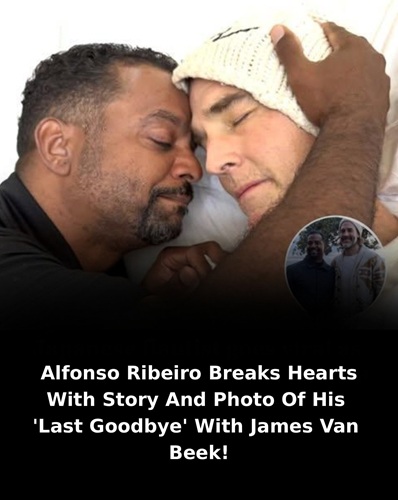
The following day, Ribeiro posted an even more intimate and emotionally moving image. This photograph, taken by Kimberly Van Der Beek shortly before James passed, showed James lying in bed, weakened by illness, with Ribeiro gently cradling his head in a gesture of love and support.
The image conveyed an overwhelming sense of compassion, intimacy, and shared humanity — a moment of connection that transcended words. In the caption, Ribeiro shared that he had made James laugh one last time, highlighting the profound power of humor and joy even amidst grief and suffering. “That last laugh will stay with me forever,” Ribeiro wrote, capturing a moment that resonated deeply with fans and observers alike.
This public display of mourning, while deeply personal, also had a wider impact. Fans, colleagues, and fellow public figures responded with an outpouring of love, admiration, and tribute. Many noted that the openness of both Van Der Beek and Ribeiro about the realities of terminal illness — the pain, the humor, the quiet moments of grace — provided comfort and guidance in navigating their own experiences with loss or health struggles. The vulnerability demonstrated in these posts reminded the public that grief, friendship, and love are universal experiences, transcending fame or circumstance.
In addition to emotional support, Ribeiro actively sought to provide practical assistance to the Van Der Beek family during this difficult period. He shared fundraising initiatives designed to offer financial stability for Kimberly and their six children, emphasizing the importance of community support and collective care.

Donations poured in rapidly, reflecting the deep affection and respect that fans had for James and his family. Beyond the fundraising, Ribeiro personally committed to remaining an active figure in the lives of the Van Der Beek children, underscoring the long-term nature of their friendship and his dedication to honoring James’s legacy through tangible action.
The public response highlighted the dual nature of Van Der Beek’s impact: it extended far beyond his artistic achievements. While he had captivated audiences for decades through television and film, his true legacy was increasingly recognized as the embodiment of empathy, integrity, and love. Friends, family, and fans alike remarked that his greatest contribution was not only the work he performed on screen but also the lives he touched through his character, honesty, and unwavering devotion to those he loved.
Colleagues from the entertainment industry frequently reflected on his professionalism and kindness, noting that Van Der Beek was as committed to uplifting others on set as he was to delivering compelling performances. Directors and co-stars described him as someone who created spaces for dialogue, laughter, and mutual support, fostering an environment of collaboration and respect. These traits, coupled with his personal courage in the face of terminal illness, elevated him from celebrity to role model, illustrating how personal integrity can influence public perception and inspire collective empathy.
James Van Der Beek’s approach to illness was deeply intertwined with his spirituality and sense of gratitude. In interviews, he often reflected on the lessons learned from facing mortality, emphasizing the importance of cherishing every moment, expressing love openly, and recognizing the value of small gestures. Whether playing with his children, sharing a meal with his wife, or enjoying a quiet evening of reflection, he consistently highlighted how these seemingly ordinary experiences became extraordinary when approached with mindfulness and appreciation.
As the world absorbed the news of James Van Der Beek’s passing, it became increasingly clear that his legacy extended far beyond his acclaimed performances on screen. While generations of fans will forever associate him with the sensitive, thoughtful Dawson Leery from Dawson’s Creek, the fullness of his life and influence is measured equally in the compassion, humility, and integrity he demonstrated in his personal life and public engagements. The period following his death revealed how deeply his character had touched the lives of those around him — family, friends, colleagues, and fans — and illuminated the profound ways in which one life can inspire countless others.
The response from fans worldwide was immediate, heartfelt, and deeply moving. Social media platforms, entertainment news outlets, and community forums were flooded with tributes, personal anecdotes, and reflections on Van Der Beek’s kindness, humor, and humanity. Fans shared how his openness about his cancer diagnosis had encouraged them to pursue health screenings, advocate for loved ones, or face their own medical challenges with courage.
Many recounted memories of watching Dawson’s Creek or other projects, not just as entertainment, but as a source of comfort, guidance, and inspiration during formative years. These stories painted a picture of an actor whose influence extended beyond performance, offering emotional support and perspective to those navigating life’s uncertainties.
Critics and journalists also reflected on Van Der Beek’s unique contribution to entertainment. While his performances were often praised for their depth and authenticity, it was his unwavering human dignity that left an indelible mark. Commentators highlighted how he remained grounded amidst fame, prioritizing personal relationships and ethical choices over mere celebrity status. The consistency of his character, even when facing terminal illness, became a defining narrative — one that reinforced the idea that true legacy is not only measured in awards or accolades, but in the positive impact one leaves on the world and the lives of others.
Alfonso Ribeiro’s tributes, both public and private, became central to this broader understanding of James Van Der Beek’s final years. Their friendship exemplified the importance of loyalty, empathy, and steadfast presence in the lives of those facing adversity. Experts in grief counseling note that supportive relationships can significantly improve emotional resilience during times of terminal illness, offering validation, levity, and comfort when they are needed most.
Ribeiro’s unwavering support highlighted how meaningful human connections can transform the experience of illness from isolation to shared understanding and love. The personal and public nature of Ribeiro’s posts offered a rare glimpse into the vulnerability, tenderness, and humor that characterized Van Der Beek’s final days.
The photograph shared by Ribeiro — showing James lying in bed, his head cradled in the hands of a devoted friend — became emblematic of the profound intimacy and love that defined his last moments. It resonated not only as a personal expression of grief but also as a universal symbol of compassion, reminding viewers of the importance of emotional presence, touch, and care in human relationships. These gestures, simple in execution but monumental in meaning, reinforced the idea that the deepest expressions of love often transcend words, manifesting instead in shared time, laughter, and quiet solidarity.
James Van Der Beek’s openness about his illness also served a broader societal purpose. Health advocates and medical professionals recognized his willingness to share his journey as a powerful tool in raising awareness about colorectal cancer and the importance of early detection. Colorectal cancer remains one of the most common and deadly cancers worldwide, yet public discussion around the disease is often limited by stigma or fear. Van Der Beek’s candid reflections, including discussions of symptoms, screenings, treatment, and emotional responses, helped normalize conversation around this condition, potentially saving lives by encouraging early diagnosis and proactive care.
In addition to his advocacy for health awareness, Van Der Beek’s story underscores the critical role of gratitude, spirituality, and perspective in facing life’s most challenging circumstances. Interviews, social media reflections, and anecdotes shared by family and friends consistently emphasized how he valued every moment — whether playing with his children, enjoying meals with his wife, or simply observing the small details of daily life. This mindfulness, born from both natural disposition and the heightened awareness brought by illness, offered lessons in living fully, embracing imperfection, and finding joy amidst adversity.
Even in mourning, James’s influence continued to shape those who loved him. The Van Der Beek family, supported by friends such as Alfonso Ribeiro, faced the daunting reality of life without him with collective resilience. The acts of care, financial support, and emotional guidance extended by friends highlighted a critical aspect of legacy: the tangible ways in which relationships, loyalty, and love sustain those left behind. By investing deeply in these connections, Van Der Beek ensured that the bonds he cultivated would continue to provide comfort, stability, and inspiration, long after his passing.
As reflections on his life continued, a recurring theme emerged: James Van Der Beek’s story was not defined solely by celebrity, illness, or even artistic accomplishment, but by the quality of his humanity. He embodied empathy, loyalty, and courage in ways that resonated universally. Whether offering guidance to a co-star, supporting a friend in crisis, or embracing the vulnerability of terminal illness publicly, his actions consistently demonstrated the profound value of character, integrity, and emotional honesty.
Ultimately, James Van Der Beek’s life and passing remind us that legacy is measured not only in public recognition but in the lives touched, the moments shared, and the love given. His story exemplifies how vulnerability can be strength, how humor can illuminate darkness, and how connection — with family, friends, and community — can provide meaning even amidst suffering. The lessons from his life encourage reflection, compassion, and intentional living, offering a blueprint for how to navigate adversity with grace and dignity.
James Van Der Beek will be remembered as a gifted actor whose performances shaped a generation of viewers, a devoted father whose love and guidance nurtured his children, a faithful husband whose partnership inspired those around him, and a loyal friend whose empathy and presence offered comfort and hope. Through his courage in confronting illness, his openness about the realities of life and death, and the love and loyalty he shared with family and friends, he leaves behind a legacy that is as enduring as it is inspiring.
Even in grief, his story continues to teach and uplift. Fans, colleagues, and loved ones are reminded to cherish the fleeting moments of life, to express love openly, and to prioritize connection above all else. In honoring James Van Der Beek, the world not only remembers an actor and public figure but also celebrates a man whose humanity, integrity, and heart continue to shine as a guiding example of how to live fully, love deeply, and leave a lasting, positive impact on everyone we encounter.
In the final reflection, James Van Der Beek’s life reminds us that courage is not defined by fame or public achievements but by the grace, honesty, and empathy with which we navigate the inevitable trials of life. His story — both on-screen and off — serves as a poignant reminder that our greatest legacy is found not in accolades or recognition but in the love we give, the connections we nurture, and the humanity we uphold.
