
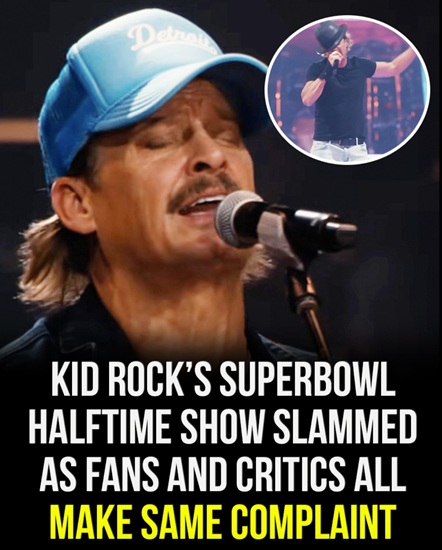
Turning Point USA’s decision to host an alternative halftime event marked an unprecedented moment in Super Bowl history. Traditionally, the halftime show has been one of the most-watched moments of any broadcast, blending pop culture, celebrity performance, and mainstream appeal
. By presenting a separate “All-American Halftime Show,” TPUSA disrupted that norm, creating a politically and culturally charged alternative for viewers. The organization positioned the broadcast as a celebration of American heritage, small-town values, and conservative cultural identity—a deliberate contrast to the NFL’s mainstage halftime, which featured global superstar Bad Bunny and leaned into a more broadly inclusive pop aesthetic.
The lineup itself reflected this intention. Brantley Gilbert, Lee Brice, and Gabby Barrett, all prominent figures in the country and rock genres, performed sets that emphasized traditional musical storytelling, Americana motifs, and themes resonant with rural and suburban audiences.
Their performances were interwoven with messaging that highlighted “classic American values” in ways both subtle and overt. The final act—Kid Rock—was the marquee performer, chosen not only for his star power but also for his symbolic association with American rock and rap fusion, a genre often linked to themes of rebellion, individuality, and working-class identity.

Kid Rock’s Performance: Energy, Expectations, and Controversy
When Kid Rock took the stage, the anticipation was palpable. Social media buzzed with speculation about the length of his set, song selection, and potential political undertones. Fans expected a high-energy performance that would reflect his historical reputation for mixing rock, rap, and country influences into a signature sound. The reality, however, was more complicated.
Almost immediately, viewers began speculating that Kid Rock was lip-syncing. Differences between his vocal delivery and the visual cues on the livestream prompted hundreds of comments across Twitter, YouTube, and TikTok. Many expressed frustration or disbelief:
- “Did Kid Rock really just lip-sync through that entire song? Feels like a replay glitch.”
- “Not sure if it’s my stream or him lip-syncing, but this isn’t what I expected.”
- “He did, like, a minute of actual performance and then just danced. Weird.”
The brevity of the performance, lasting less than a minute in some segments of the broadcast, fueled further disappointment. Memes and clips circulated quickly, highlighting the apparent mismatch between fan expectations and the on-stage reality. Observers noted moments when Kid Rock appeared to interact minimally with the audience, relying instead on choreography and lip-syncing, while his supporting performers handled live instrumentation and backing vocals.
Revisiting Controversial Lyrics and Public Backlash
The online discussion soon expanded beyond performance technique. Clips of Kid Rock’s past lyrics resurfaced, particularly lines from his 2001 track Cool, Daddy Cool, which included references to underage individuals. Social media users and commentators debated the appropriateness of his appearance, with some framing it as a moral and ethical concern:
- “It’s uncomfortable to watch knowing those past lyrics exist.”
- “We can’t ignore the context of his old music, especially with a live national audience.”
Additionally, clips from a 2001 Saturday Night Live appearance resurfaced, reigniting discussions about jokes he made regarding minors. Public reaction was sharply divided: while some criticized TPUSA for providing a platform to an artist with a controversial past, others defended the performance as separate from historical controversies, emphasizing the value of artistic nostalgia and the entertainment experience.

Despite the backlash, many viewers embraced the nostalgic elements of the show. Kid Rock’s iconic tracks, including Bawitdaba, elicited positive reactions among long-time fans:
- “Seeing Bawitdaba live—even briefly—was worth it. Pure nostalgia.”
- “For those who grew up with this music, TPUSA really delivered a moment of history tonight.”
The livestream’s metrics reflected this polarized reception. While viewership peaked at approximately 5 million during the TPUSA broadcast, it later dipped slightly during Kid Rock’s set but still accumulated over 18 million total views on YouTube. These figures highlight the broad curiosity and interest generated by the alternative broadcast, even amid criticism and controversy.
Social Media as a Cultural Amplifier
The role of social media cannot be overstated in shaping public perception of the TPUSA halftime event. Platforms like Twitter, Instagram, YouTube, and TikTok served as both megaphones and forums for real-time reaction. Clips of Kid Rock’s performance, both positive and negative, went viral within minutes.
Memes mocking the brevity of his set or alleged lip-syncing flooded the internet, while supportive communities celebrated the nostalgic and ideological significance of the show.
This real-time amplification had several implications:
- Polarization and Debate: Audiences quickly divided along cultural and political lines, discussing not only the musical content but also the ethical and ideological framing of the event.
- Rapid Memetic Spread: Short clips, gifs, and screenshots circulated rapidly, extending the conversation well beyond the Super Bowl itself.
- Influence on Mainstream Media: Traditional news outlets and entertainment publications reported on the controversy within hours, further cementing the performance as a topic of national discussion.
By leveraging social media, TPUSA effectively transformed a brief live performance into a cultural touchstone, demonstrating how alternative broadcasts can achieve outsized influence in the modern media landscape.
Part Two Conclusion: Performance, Politics, and Public Dialogue
In sum, the TPUSA All-American Halftime Show exemplified the increasingly complex intersection of live performance, political identity, and public morality. Kid Rock’s performance, brief yet highly scrutinized, became emblematic of broader societal debates about nostalgia, cultural values, and the ethics of elevating controversial figures to national platforms.
Social media accelerated both criticism and praise, ensuring that every facet of the performance—technical execution, artistic content, and ideological implications—was dissected publicly.
The event also underscored a growing trend in American entertainment: audience segmentation. Millions of viewers can now access alternative broadcasts tailored to distinct cultural, political, or ideological perspectives. By creating content that directly appeals to conservative sensibilities, TPUSA not only captured attention during one of the nation’s largest sporting events but also highlighted the evolving ways in which audiences consume, interpret, and react to live entertainment in a polarized society.

Turning Point USA’s decision to host an alternative halftime show was not merely about entertainment; it represented a carefully calculated cultural and political maneuver. Founded in 2012 by the late Charlie Kirk, TPUSA has long sought to influence young Americans through educational programs, conferences, and media campaigns that emphasize conservative ideals, free-market principles, and traditional cultural values.
By creating the “All-American Halftime Show,” the organization leveraged the Super Bowl’s global reach to amplify its messaging far beyond conventional political arenas.
The choice of performers—Brantley Gilbert, Lee Brice, Gabby Barrett, and ultimately Kid Rock—was emblematic of this strategy. These artists represent musical genres historically associated with rural and suburban America, themes of individualism, and patriotic nostalgia.
In contrast to mainstream pop or Latin music, which dominates the NFL’s official halftime performances, TPUSA curated a lineup that resonated with its core audience: viewers who align with conservative social and cultural values.
By framing the event as an ideological alternative, TPUSA tapped into a broader cultural trend in American media: the rise of niche, politically-aligned entertainment. Just as audiences increasingly select news and media that reflect their ideological views, TPUSA’s broadcast catered to a specific cultural taste, offering a performance that felt “personalized” and aligned with conservative identity.
Contrasts with the NFL Halftime: Cultural and Ideological Divergence
The juxtaposition of the TPUSA show with the NFL’s mainstage performance highlighted a stark cultural and ideological divide. While Bad Bunny’s halftime performance was celebrated for its global appeal, elaborate production, and pop-cultural inclusivity, TPUSA’s broadcast emphasized traditional American themes and conservative messaging. The contrast was apparent in several ways:
- Musical Selection: The NFL halftime featured contemporary global pop and reggaeton, whereas TPUSA’s lineup leaned heavily on country, rock, and nostalgic tracks designed to evoke Americana.
- Cultural Framing: Bad Bunny’s show highlighted modern, inclusive themes, appealing to a wide, diverse audience. TPUSA, in contrast, emphasized patriotic imagery, small-town sensibilities, and traditional values.
- Political Significance: While the NFL generally maintains a stance of neutrality, TPUSA’s alternative event carried an explicit ideological undertone, serving as both entertainment and political messaging.
This divergence underscored a growing phenomenon in American media: major cultural events are increasingly being leveraged as platforms for ideological engagement. Viewers are no longer passive consumers; they are participants in a broader cultural dialogue that extends far beyond the music or the sports action on screen.

The Role of Social Media in Amplifying Political and Cultural Narratives
Social media played a pivotal role in shaping public perception of the TPUSA halftime show. Platforms like Twitter, YouTube, Instagram, and TikTok amplified every moment, allowing audiences to react instantly, share clips, and create memetic content. This rapid dissemination of both criticism and support had several key effects:
- Intensified Polarization: Social media allowed audiences to reinforce ideological perspectives. Conservative viewers celebrated TPUSA’s messaging and nostalgic musical choices, while critics framed the performance as a platform for a controversial figure.
- Global Visibility: Clips of Kid Rock’s brief performance, as well as the alleged lip-syncing, spread far beyond the United States. International audiences engaged with the spectacle, creating discussions about American culture, political polarization, and celebrity accountability.
- Narrative Shaping: Viral clips and trending hashtags influenced mainstream media coverage. News outlets quickly reported on both fan praise and backlash, ensuring that the TPUSA halftime show became a talking point across multiple platforms, even among viewers who had not watched the live broadcast.
The speed and reach of social media demonstrate how modern live events are no longer confined to the moments they occur. Instead, they become ongoing, interactive narratives, shaped as much by public reaction and digital discourse as by the performance itself.
Performer Accountability and Public Morality
Kid Rock’s brief and controversial performance also highlighted the challenges of performer accountability in the modern era. While the primary issue for some viewers was alleged lip-syncing and short stage time, the resurfacing of past lyrics and statements sparked renewed debate about ethical responsibility, cultural standards, and the role of nostalgia in entertainment.
Several themes emerged in public discourse:
- Historical Context vs. Contemporary Judgment: Should an artist’s past lyrics and behavior influence current public perception? Supporters argued that his performance was purely entertainment, separate from past controversies. Critics contended that the historical content could not be ignored, especially in a high-visibility event.
- Symbolism of Performance: Beyond music, the performance became a cultural symbol. Kid Rock represented not just nostalgia for early 2000s rock, but also broader discussions about American values, public morality, and the intersection of politics and entertainment.
- Impact on Alternative Media Strategies: The controversy reinforced that alternative broadcasts carry reputational risks as well as rewards. Organizations like TPUSA must balance audience appeal with potential public backlash when choosing high-profile performers.
The situation illustrated a central tension in modern media: entertainment is inseparable from cultural and political interpretation. In today’s hyper-connected environment, every live performance is scrutinized for artistic quality, ideological alignment, and ethical implications.

Implications for Future Halftime Shows and Live Entertainment
The TPUSA All-American Halftime Show has the potential to influence how live entertainment is conceived and consumed in the future. Several key implications stand out:
- Audience Segmentation: With millions tuning in to both the NFL’s official halftime and TPUSA’s alternative show, it is evident that large-scale events can support multiple, competing broadcasts tailored to distinct audiences. This could lead to more ideologically-aligned or culturally-specific broadcasts in the future.
- Real-Time Accountability: Artists and performers are increasingly accountable to audiences in real time, as social media ensures that every moment is documented, critiqued, and amplified. Even brief performances or small missteps can have outsized effects on public perception.
- Media as Political Arena: Large-scale entertainment events are no longer purely cultural; they are ideological battlegrounds. Organizations seeking to influence public opinion may increasingly use high-visibility platforms for messaging that blends music, performance, and political identity.
- Economic and Cultural Opportunity: Alternative broadcasts demonstrate that niche media outlets can attract millions of viewers, monetize engagement through streaming platforms, and cultivate dedicated followings, suggesting a viable model for future entertainment and political campaigns.
Conclusion: Super Bowl LX as a Cultural Inflection Point
Super Bowl LX will be remembered not only for the Seattle Seahawks’ commanding victory over the New England Patriots but also for the complex interplay of music, politics, and public perception surrounding the halftime shows.
While the NFL’s mainstage performance delivered global entertainment and pop-cultural spectacle, the TPUSA All-American Halftime Show introduced a new paradigm: a politically-infused, ideologically specific alternative broadcast that engaged millions of viewers in real-time debate and discourse.
Kid Rock’s performance, though brief and controversial, became emblematic of broader societal conversations. It highlighted tensions between nostalgia and accountability, entertainment and ethics, and cultural identity and political ideology.
Meanwhile, the success of the TPUSA broadcast demonstrated the potential for niche media organizations to leverage major events for maximum impact, signaling a shift in how live entertainment is produced, consumed, and analyzed.
Ultimately, Super Bowl LX exemplifies a moment in which sports, music, media, and politics intersected in ways that reflect the evolving cultural landscape of America.
The Seahawks’ dominance on the field, the contrasting halftime performances, and the viral conversations surrounding Kid Rock collectively underscore that major cultural spectacles now operate as arenas of ideological engagement, social commentary, and global attention.
For scholars, media analysts, and audiences alike, the event offers a case study in how modern entertainment both reflects and shapes societal values in the 21st century.
For decades, the Super Bowl has functioned as more than a championship football game. It is consistently one of the most-watched television broadcasts in the United States each year, often drawing over 100 million viewers domestically. The halftime show, in particular, has evolved into a global entertainment platform featuring some of the world’s most recognized artists — from Michael Jackson and Prince to Beyoncé, Shakira, Rihanna, and others.
Because of its reach, the Super Bowl halftime stage has become one of the most powerful cultural platforms in modern media. Performers are not only entertainers in this context — they become symbols. Their music, image, staging, choreography, guest appearances, and even wardrobe choices are often interpreted through broader cultural, social, or political lenses.
In recent years, public discourse surrounding halftime performances has intensified. Social media ensures that reactions unfold instantly, with millions commenting in real time. As a result, halftime shows now operate within a complex ecosystem of entertainment, identity, and digital amplification.
The Rise of Alternative Media Ecosystems
One of the most significant developments in the modern media landscape is the fragmentation of audiences. Traditional broadcast networks once held near-monopoly control over major live events. Today, however, streaming platforms, digital channels, and independent organizations can create parallel programming that reaches millions of viewers.
This shift reflects a broader transformation in how audiences consume content:
- Viewers increasingly seek media aligned with their cultural preferences.
- Digital platforms allow organizations to bypass traditional gatekeepers.
- Live streaming enables real-time engagement with niche communities.
Organizations across the political spectrum have recognized this shift. Rather than competing directly within traditional broadcast structures, many choose to build alternative digital ecosystems. These platforms offer tailored messaging, curated entertainment, and community engagement centered around shared values.
The growth of such ecosystems reflects a market-driven reality: audiences are no longer monolithic. Cultural consumption is increasingly segmented, and large national events now generate multiple simultaneous conversations rather than one unified narrative.
Music, Identity, and Political Interpretation
Music has always intersected with social identity. From protest songs of the 1960s to hip-hop’s commentary on systemic inequality, artists frequently become voices for broader cultural movements. At the same time, other genres — including country, rock, and pop — have been associated with different cultural or regional identities.
In today’s polarized environment, even apolitical performances can become politicized. Viewers often interpret artistic choices through ideological frameworks. This does not necessarily mean artists intend to send political messages, but public interpretation plays a powerful role in shaping discourse.
When a performer has a history of controversial lyrics, public statements, or political affiliations, those elements often resurface during high-visibility appearances. Digital archives, viral clips, and searchable media histories ensure that past content remains accessible. As a result:
- Historical lyrics may be reevaluated under contemporary standards.
- Interviews from decades ago can reemerge in new cultural contexts.
- Public figures face ongoing scrutiny beyond the immediate performance.
This phenomenon is not limited to any one artist or genre. It reflects a broader cultural shift toward continuous accountability in the digital age.
Social Media: The Amplifier of Modern Spectacle
No analysis of modern halftime controversy would be complete without examining social media’s influence. Platforms such as X (formerly Twitter), YouTube, Instagram, and TikTok function as real-time reaction engines. Within seconds of a performance moment, clips can circulate globally.
This dynamic produces several important consequences:
1. Instant Polarization
Viewers often react emotionally in the moment. Supporters and critics alike amplify their interpretations, creating immediate camps of praise and criticism.
2. Meme Culture and Virality
Short performance segments can become memes, reshaped for humor or commentary. Sometimes a brief moment overshadows an entire show.
3. Media Feedback Loops
Traditional news outlets frequently report on social media reactions, which further magnifies online discourse. What begins as a tweet can quickly become a headline.
4. Longevity of Controversy
Unlike past decades, where controversies faded after broadcast cycles ended, digital content remains searchable and shareable indefinitely.
This amplification effect means that even minor production issues — such as vocal inconsistencies, staging delays, or audio mixing problems — can evolve into major trending topics.
Performer Accountability in the Digital Era
Modern performers operate in an environment where transparency and scrutiny are constant. The public increasingly expects:
- Authentic live vocals
- Clear communication
- Ethical consistency
- Awareness of past public statements
Lip-syncing debates, for example, are common during major live events. While pre-recorded vocal support tracks are standard in large-scale productions due to technical complexity, audiences often equate visible authenticity with credibility. When viewers perceive inconsistencies, trust can erode quickly.
Similarly, controversial historical lyrics can generate renewed discussion during high-profile appearances. Society’s standards evolve over time, and content once viewed as edgy or humorous may be interpreted differently years later.
For media organizations, booking performers involves reputational considerations. Producers must weigh audience appeal against potential backlash. In today’s environment, risk assessment is part of entertainment strategy.
Commercial Implications and Monetization
Major cultural events are not only artistic showcases — they are commercial enterprises. Advertising revenue during the Super Bowl consistently reaches record-breaking levels, with 30-second commercial spots often costing millions of dollars.
Digital alternative programming also presents monetization opportunities:
- YouTube ad revenue
- Sponsorship deals
- Subscription-based streaming
- Merchandise promotion
- Brand partnerships
When alternative broadcasts attract millions of viewers, they demonstrate the economic viability of niche-focused content. This trend suggests that future large-scale events may see increasing competition from parallel digital productions targeting specific demographics.
However, monetization also requires compliance with advertising standards. Content must adhere to brand safety guidelines to remain eligible for platforms such as Google AdSense and Ezoic. This includes:
- Avoiding explicit language
- Maintaining factual accuracy
- Steering clear of defamatory claims
- Presenting balanced commentary
As a result, media creators must balance strong viewpoints with responsible presentation.
The Future of Halftime Entertainment
Looking ahead, several trends are likely to shape future halftime shows and alternative broadcasts:
Increased Digital Integration
Livestream analytics, audience polling, and interactive features will continue to shape how performances are designed and distributed.
Expanded Audience Segmentation
Producers may increasingly tailor programming to specific cultural or regional audiences.
Greater Transparency
Artists and organizations may proactively address past controversies before major appearances to manage narrative framing.
Hybrid Media Models
Traditional broadcast networks and digital creators may collaborate or compete in new ways, reshaping the structure of live entertainment.
The halftime show of the future may not be a singular shared experience, but rather a collection of simultaneous experiences designed for different audience segments.
A Cultural Reflection Point
Ultimately, debates surrounding high-profile performances reflect deeper societal currents. When audiences argue about lip-syncing, past lyrics, or ideological framing, they are often expressing broader concerns about authenticity, values, and cultural identity.
Sports remain one of the few institutions capable of drawing massive cross-sectional audiences. Yet even these shared moments now contain multiple narratives unfolding at once.
The evolution of halftime spectacle illustrates:
- The power of digital amplification
- The commercialization of identity
- The blending of entertainment and ideology
- The fragmentation of media consumption
Rather than viewing controversy as an anomaly, it may be more accurate to see it as an inherent feature of modern mass media.
