
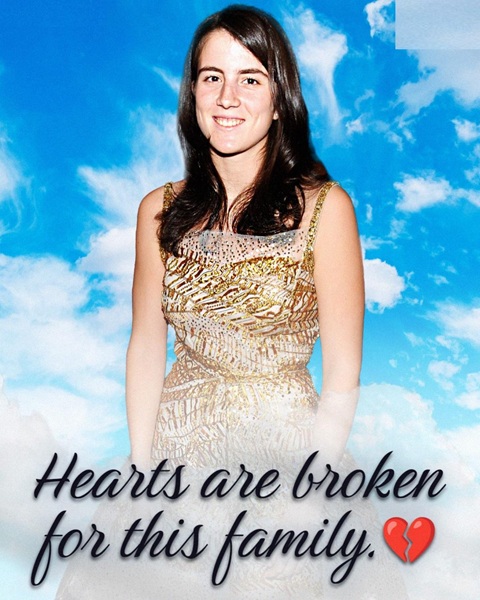
In the days following Tatiana Schlossberg’s death, the Kennedy family did something both simple and profound. They did not issue a long public statement.
They did not offer details about her illness or the circumstances of her final months. Instead, a single photograph was released quietly.
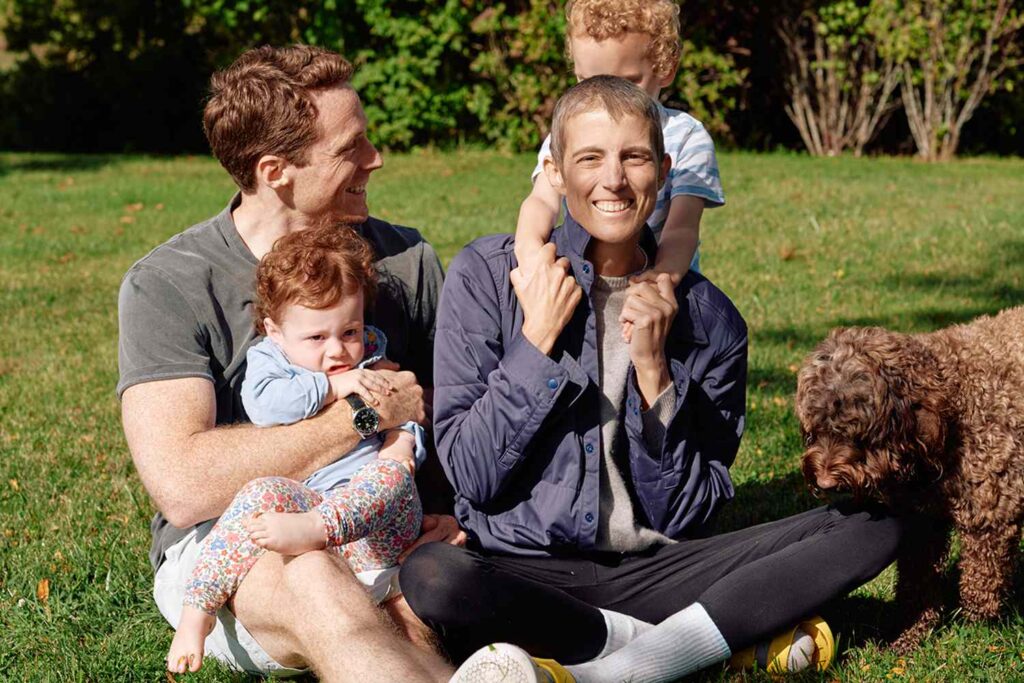
Without fanfare, through the JFK Library Foundation. And in its restraint, it carried a weight that words could never fully hold. The photograph shows no hospital room, no visible struggle, no suggestion of decline. There is no farewell encoded in its frame.
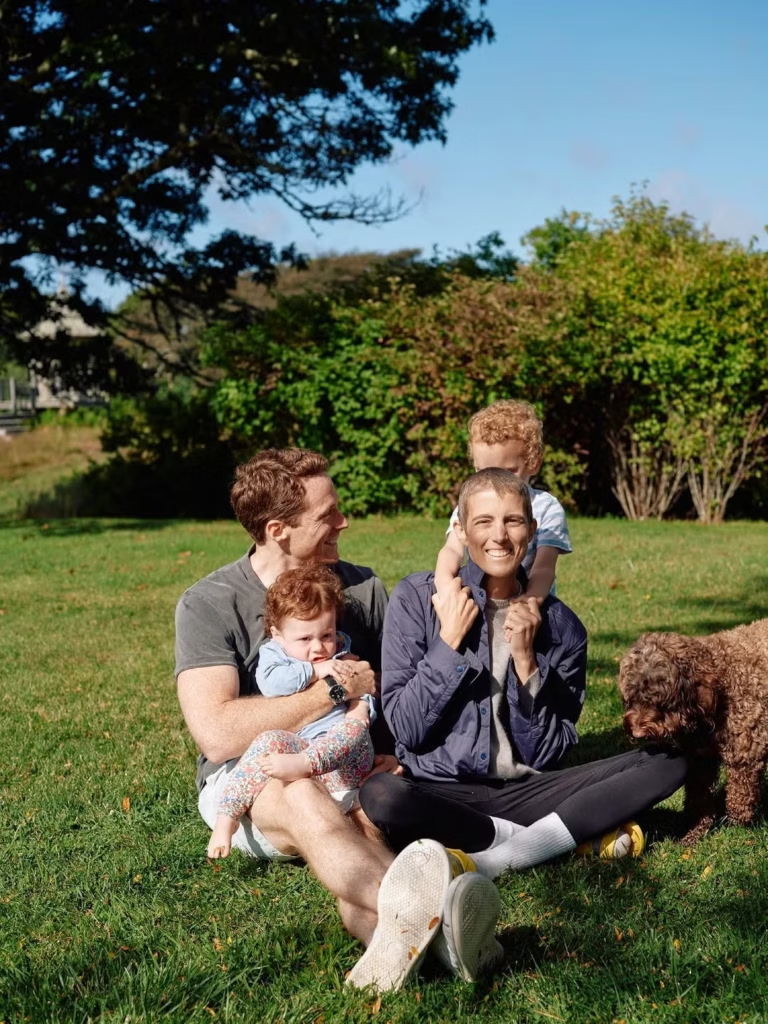
What it offers instead is something far more intimate: love in its most ordinary, unguarded form. Tatiana Schlossberg sits on the grass in a sunlit outdoor setting, smiling as one of her young children balances on her shoulders. Her husband, George Moran, is close by, holding their other child.
A family dog rests nearby. Trees filter soft afternoon light across the scene. Everything about the image feels calm, grounded, and whole.
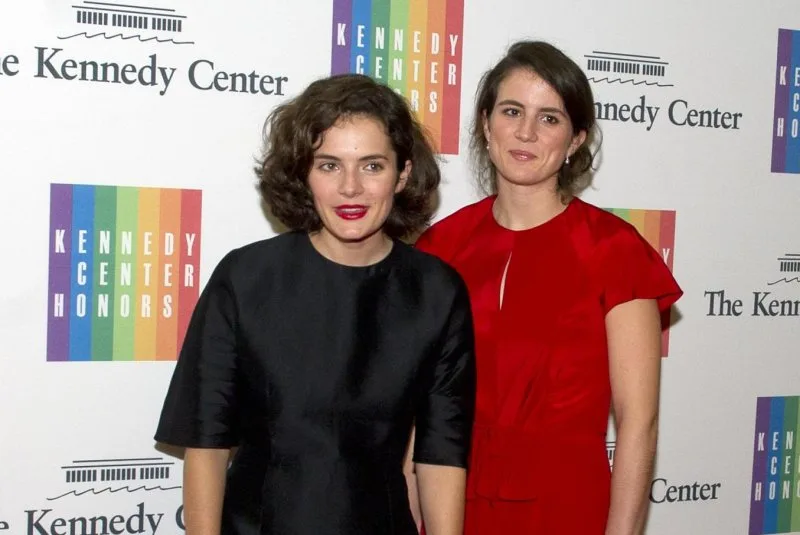
That wholeness is what makes the image almost unbearable.
Tatiana Schlossberg, the granddaughter of President John F. Kennedy and daughter of Caroline Kennedy and Edwin Schlossberg, died at just 35 years old. Her life ended long before it had finished unfolding.
She was a journalist, an environmental writer, and an advocate for climate awareness whose work emphasized responsibility, restraint, and long-term thinking.
Yet the photograph does not highlight her professional identity, her lineage, or her public achievements. It fixes her in time as something even more fundamental: a mother, present with her family, fully alive in a moment of ordinary joy.
In doing so, the image makes a quiet but powerful statement. It does not explain what Tatiana endured. It does not invite speculation or commentary. It shields her suffering rather than exposing it. And that choice reflects how she lived.
Tatiana Schlossberg was never a public figure in the conventional sense, despite belonging to one of the most scrutinized families in American history. She chose substance over spectacle and clarity over attention.
Her journalism focused on environmental responsibility, consumer habits, and climate ethics—topics that demand patience and seriousness rather than outrage. Even her book, Inconspicuous Consumption, argued that the most important choices are often the least visible ones.
The photograph, paired with a quote from that book by the JFK Library Foundation, felt deeply intentional. It echoed her belief that quiet actions matter, that meaning does not need amplification to endure. The image itself was inconspicuous by design. And yet it resonated immediately.
Public reaction followed swiftly, but with a rare tone of reverence. Comments and messages did not pry into her illness or ask for details. Instead, people noticed what was present rather than what was missing.
They remarked on how her husband looked at her, on how naturally the children leaned into her, on how the photo contained no narrative beyond love. “This is how we will remember her,” one message read. “Not sick. Not fading. Just present.”
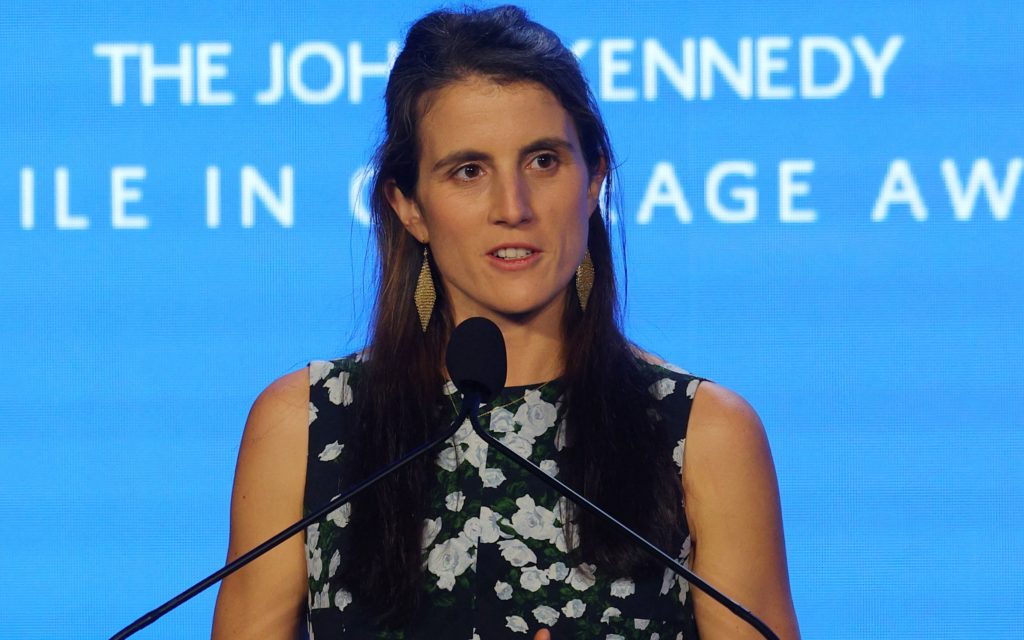
That presence stands in contrast to how grief is often handled in the public eye, especially within families like the Kennedys, whose losses have so often unfolded under relentless attention.
This time, the boundary was clear. The photograph marked a line between public acknowledgment and private mourning. It invited reflection, not intrusion.
Tatiana’s life had always been shaped by an awareness of boundaries. Though raised amid public service and history, she resisted the pull of constant visibility.
Her marriage, her children, and much of her personal life were kept intentionally private. Those close to her have noted that she understood something essential: that some things survive only when protected.
Even in illness, she appears to have maintained that instinct. There was no public chronicle of her struggle, no gradual disclosure of decline. Her children’s world was guarded fiercely. Joy, where it could be found, was preserved. Normalcy, where possible, was chosen.
The photograph captures that choice.
It also reframes how her life is remembered. Tatiana Schlossberg was not defined by tragedy, nor by her famous surname. She was defined by intention—by the way she lived thoughtfully, wrote carefully, and loved quietly. The image does not ask the viewer to grieve loudly. It asks them to pause.
In that pause, something becomes clear: dignity does not announce itself. It does not require explanation. It simply endures.
This first part of her story, told through a single image, sets the tone for how Tatiana Schlossberg should be remembered—not as a public loss to be dissected, but as a private life honored with restraint, love, and profound respect.
In the aftermath of Tatiana Schlossberg’s death, there was a noticeable absence of noise. No prolonged media cycle. No detailed timelines. No public dissection of a private illness. For a family whose history is so often accompanied by spectacle, that absence felt deliberate—and deeply aligned with the life Tatiana herself had chosen to live.
Those who followed her work knew her as a journalist and environmental writer with a measured voice and a clear moral compass. She was not drawn to outrage-driven headlines or performative activism.
Instead, she focused on how everyday choices—energy use, consumption habits, personal responsibility—accumulate into meaningful impact over time. Her writing emphasized systems, accountability, and long-term thinking, avoiding simplistic narratives in favor of nuance.
That same restraint defined how her passing was acknowledged.
The photograph shared by the JFK Library Foundation did not function as a farewell in the traditional sense. It offered no conclusion, no explanation, no emotional crescendo. Instead, it preserved Tatiana in motion—in the middle of her life, surrounded by the people she loved most.
In doing so, it subtly redirected attention away from how her story ended and toward how it was lived.
Tatiana Schlossberg’s identity was never built around her lineage, though she was fully aware of it. As the daughter of Caroline Kennedy and the granddaughter of President John F. Kennedy, she inherited not only a name but a legacy of public service, intellectual engagement, and moral responsibility.
Yet she did not treat that inheritance as a platform. She treated it as a standard.
Her career reflected that approach. She worked as a reporter covering climate and environmental issues, contributing to major publications with a focus on evidence, policy, and accountability.
Her book, Inconspicuous Consumption, examined how well-intentioned individuals often overlook the environmental cost of modern convenience. Rather than offering blame, it encouraged awareness—arguing that responsibility does not need to be loud to be effective.
In many ways, that philosophy now frames how her life is remembered.
Friends and colleagues have described Tatiana as thoughtful, disciplined, and deeply committed to her values. She was known to listen carefully, to ask precise questions, and to avoid unnecessary self-promotion.
Even as conversations around climate change became more polarized, her work remained grounded in facts and practical reasoning. She believed that progress depended less on grand gestures and more on sustained, informed effort.
Her personal life reflected the same priorities. Marriage and motherhood were central to her world, but they were not curated for public consumption. Photographs of her children were rare. Public appearances were limited. She appeared to understand instinctively that some forms of meaning only survive when shielded from constant exposure.
That understanding shaped the family’s response to her death.
The memorial service, held privately at the Church of St. Ignatius of Loyola in Manhattan, reflected continuity rather than ceremony.
Family members were present together—her parents, her siblings, her husband—united not as public figures but as people enduring an intimate loss. Though notable attendees from public life quietly paid their respects, the gathering remained subdued, focused on remembrance rather than recognition.
What emerged in the days that followed was not a narrative of tragedy, but one of character.
Messages from readers, environmental advocates, and members of the public emphasized admiration rather than curiosity. Many referenced her writing, her integrity, and the way she carried herself.
Others focused on the photograph itself, noting how it resisted the impulse to define her by suffering. The image became a kind of ethical statement: that even in grief, dignity matters.
For the Kennedy family, that choice carried historical weight. Public grief has long been part of their story, often shaped by forces beyond their control. This time, the framing was theirs. It honored Tatiana’s values while reinforcing a boundary between public memory and private pain.
In a media environment that often demands access to every detail, the family’s restraint felt almost radical. And yet it resonated precisely because it aligned so closely with who Tatiana Schlossberg was.
Her life reminds us that impact does not require visibility, and that meaning is not diminished by privacy. She demonstrated that it is possible to engage deeply with the world’s most urgent problems while still protecting what matters most. She showed that seriousness does not need spectacle, and that love does not need documentation.
The photograph that now endures is not an ending. It is a pause—a moment of stillness that asks the viewer to consider what truly lasts. Not headlines. Not explanations. But presence, intention, and care.
Tatiana Schlossberg’s life was brief, but it was complete in its purpose. She leaves behind children who were deeply loved, work that continues to inform and challenge, and an example of how to live with conviction without noise.
In that sense, her legacy is not only preserved—it is quietly instructive. And like the values she championed, it does not demand attention. It simply remains.
