
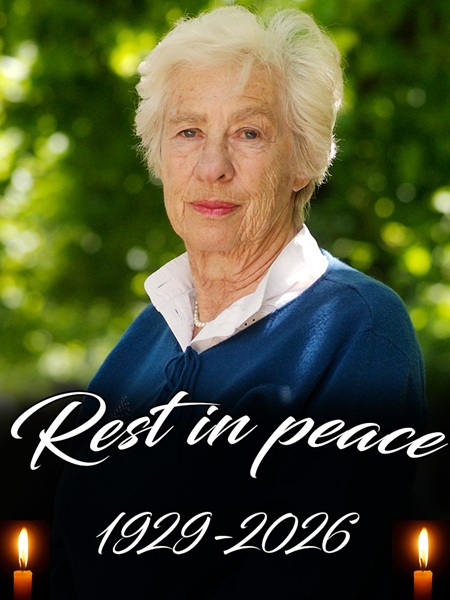
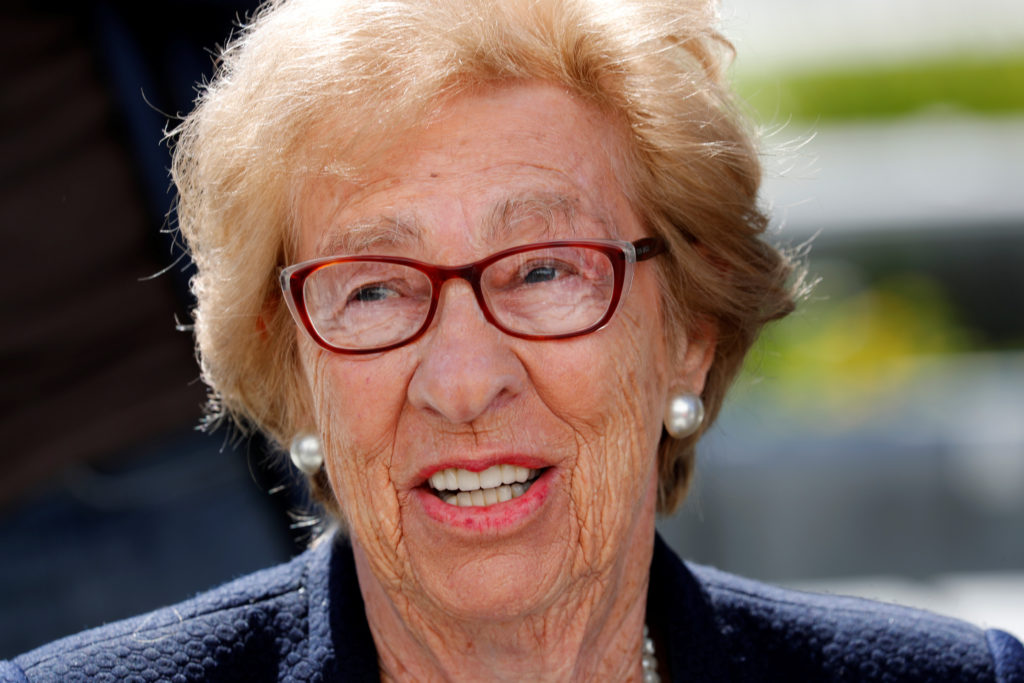
Eva Schloss, the stepsister of Anne Frank and one of the last living direct witnesses to the Holocaust, lived a life shaped by extraordinary loss, resilience, and moral courage.
Her passing at the age of 96 marked the end of a powerful voice that spent decades educating the world about the dangers of hatred, intolerance, and forgetting history.
Though born into ordinary family life, Eva’s childhood was violently disrupted by the rise of Nazism—an experience that would define not only her survival, but her lifelong mission. Eva Geiringer was born on May 11, 1929, in Vienna, Austria, into a Jewish family that valued education, culture, and stability.
Her early years were marked by a sense of normalcy, surrounded by loving parents and her older brother, Heinz.
That world collapsed in March 1938, when Nazi Germany annexed Austria in the Anschluss. Overnight, Jewish families across the country became targets of persecution, discrimination, and violence.
Like many others, Eva’s family recognized the immediate danger. Jews were stripped of rights, livelihoods, and safety, and daily life became increasingly hostile. Determined to escape the growing threat, the Geiringer family fled Austria and relocated to Amsterdam in the Netherlands, hoping to rebuild their lives in what was then considered a safer environment.
In Amsterdam, the family settled in the Rivierenbuurt neighborhood, specifically near Merwedeplein Square—a residential area that would later become historically significant.
It was there that Eva met Anne Frank, another Jewish girl forced into exile by Nazi policies. The two girls, close in age, played together in the square and shared the ordinary joys of childhood, unaware that history would forever link their names.
This fragile sense of safety did not last. In May 1940, Nazi Germany invaded the Netherlands, extending its grip across Europe. Anti-Jewish laws were quickly imposed, mirroring those already enforced in Germany and Austria. Jewish children were expelled from public schools, Jewish businesses were confiscated, and daily life became increasingly restricted.
As deportations began, Eva and her family went into hiding, much like the Frank family. For two years, they lived in constant fear of discovery, relying on secrecy and the assistance of others.
However, unlike the Franks, the Geiringer family’s hiding place was eventually betrayed. A nurse who collaborated with the Nazi regime informed authorities of their whereabouts.
On May 11, 1944—Eva’s fifteenth birthday—she, her parents, and her brother were arrested by the Nazis. Soon after, they were deported to Auschwitz-Birkenau, the largest and most notorious Nazi extermination camp. The journey marked the definitive end of Eva’s childhood.
At Auschwitz, Eva was separated from her father and brother. She and her mother were forced into brutal labor, enduring starvation, illness, and constant terror. Her father, Erich Geiringer, and her brother Heinz did not survive the camp. Like millions of others, they were victims of a system designed to erase Jewish existence.
Eva and her mother survived Auschwitz until the camp’s liberation in January 1945. Survival, however, did not mean healing. Liberation brought freedom, but also the devastating realization of who had been lost. Eva was just 15 years old, carrying memories no child should ever endure.
After the war, Eva and her mother returned to Amsterdam. In a twist of fate that would forever connect their histories, Eva’s mother, Elfriede Geiringer, later married Otto Frank, Anne Frank’s father and the sole survivor of the Frank family. Through this marriage, Eva became Anne Frank’s stepsister—a connection that deepened her understanding of loss and memory.
For decades, Eva remained silent about her experiences. Like many Holocaust survivors, she struggled to articulate the trauma she had lived through. The pain was too deep, the memories too overwhelming, and the world seemed unwilling—or unready—to listen. Silence became a form of survival.
It was not until the late 1980s, more than 40 years after the war, that Eva began to speak publicly about her experiences. The turning point came when an exhibition dedicated to Anne Frank opened in London. Witnessing renewed interest in Anne’s story, Eva recognized that history was in danger of being misunderstood or forgotten.
She later explained that her decision to speak was motivated not by politics, but by concern. Wars continued. Racism persisted. Antisemitism remained alive. Eva realized that the lessons of the Holocaust had not fully been learned.
From that moment on, Eva Schloss dedicated her life to Holocaust education. She transformed personal suffering into public testimony, choosing to relive painful memories so that future generations would understand the consequences of hatred and indifference.

Her voice, calm yet unflinching, would go on to reach millions around the world.
Once Eva Schloss found the strength to speak publicly, her life entered a new and deeply meaningful chapter. What began as a single decision to share her personal story grew into decades of tireless work dedicated to Holocaust education, human rights, and the fight against hatred in all its forms.
Eva understood that memory is not passive—it must be protected, taught, and renewed with every generation.
Throughout the 1990s and 2000s, Eva traveled extensively across Europe, North America, and beyond, speaking in schools, universities, community centers, prisons, and public institutions.
She addressed audiences of all ages, often emphasizing that the Holocaust did not begin with gas chambers, but with words, exclusion, and silence. Her approach was calm, factual, and deeply human, avoiding sensationalism while never minimizing the truth.
Eva believed education was the strongest defense against repeating history. She often reminded young people that ordinary individuals—teachers, nurses, neighbors—had the power to either resist or enable injustice. Her own betrayal by a nurse during the war served as a painful but powerful example of how moral choices matter, even in small moments.
In 1996, Eva participated in the USC Shoah Foundation’s Visual History Archive, contributing her testimony to one of the most important collections of survivor accounts in the world.
This project ensured that future generations would be able to hear her voice directly, long after survivors themselves were gone. She also recorded her life story for the Anne Frank House, further strengthening the historical record and providing invaluable educational resources.
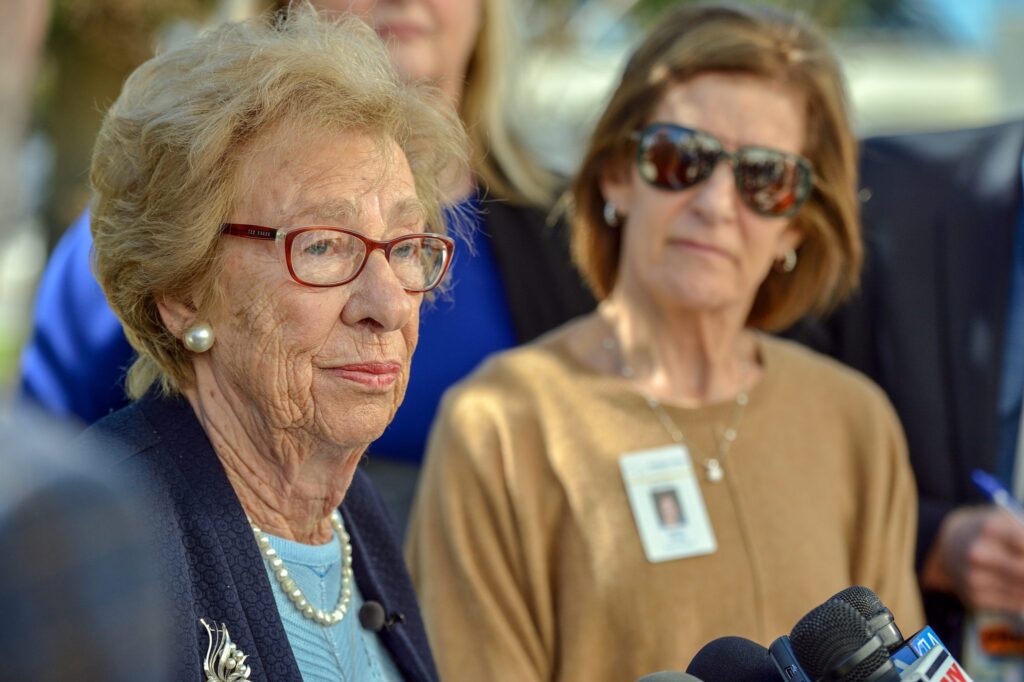
Eva’s connection to Anne Frank was often misunderstood by the public, but she addressed it with clarity and grace. She emphasized that Anne’s diary represented one voice among millions and that the Holocaust could not be understood through a single story alone.
While Anne’s words offered a powerful entry point, Eva felt it was essential to expand the conversation to include the broader reality of genocide, survival, and responsibility.
Despite the emotional toll of repeatedly recounting traumatic experiences, Eva remained committed. She acknowledged that speaking was never easy, but she believed silence carried greater danger.
Over time, her testimony became not only an act of remembrance, but also a call to action—urging people to stand against discrimination, antisemitism, and dehumanization wherever they appeared.
Her work did not go unrecognized. Eva Schloss received numerous honors for her contributions to education and public understanding. She was awarded an Honorary Doctorate in Civil Law from the University of Northumbria in Newcastle, recognizing her lifelong dedication to truth and moral leadership.
She was also appointed a Knight of the Most Excellent Order of the British Empire (MBE), acknowledging her impact on British society and international education.
In 2021, more than eight decades after being forced to flee Austria, Eva’s Austrian citizenship was formally restored. The gesture carried symbolic weight, representing a recognition of historical injustice and a belated attempt to repair what had been taken from her family. While the restoration could never undo the past, Eva accepted it as an acknowledgment of responsibility and remembrance.
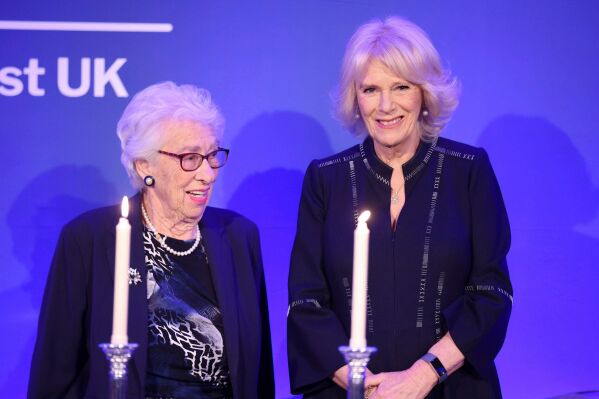
Eva Schloss spent her later years in London, where she remained active well into her 90s. Even as age slowed her physically, her commitment never wavered. She continued participating in educational initiatives and remained closely involved with the Anne Frank House UK Trust, which she co-founded and served as honorary president.
Following her passing on January 3 in London, tributes poured in from around the world. Educators, historians, political leaders, and ordinary citizens expressed gratitude for her courage and integrity. Among those honoring her memory was King Charles III, who shared a deeply personal statement reflecting her influence and character.
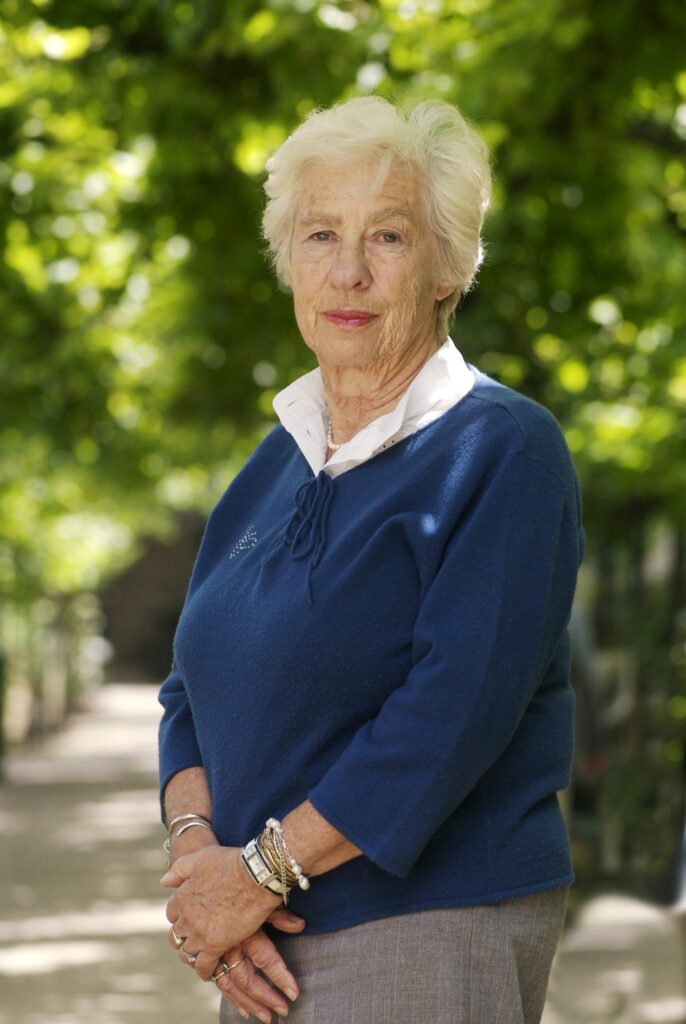
“My wife and I are greatly saddened to hear of the death of Eva Schloss,” the King wrote. “The horrors that she endured as a young woman are impossible to comprehend, and yet she devoted the rest of her life to overcoming hatred and prejudice, promoting kindness, courage, understanding and resilience.”
He concluded by acknowledging the privilege of knowing her and expressing hope that her memory would remain a blessing—words that echoed the sentiments of many who had been touched by her life and work.
Eva’s family described her as not only a survivor and educator, but also a devoted mother, grandmother, and great-grandmother. Despite everything she had endured, she built a life rooted in love, family, and purpose. Those closest to her emphasized her quiet strength, her sense of responsibility, and her unwavering belief in the power of truth.
In her own words, Eva often said she did not speak because she wanted to relive the past, but because she feared what would happen if the past were forgotten. She warned that antisemitism, racism, and intolerance do not disappear on their own—they return when people stop paying attention.
Eva Schloss’s legacy lives on through her books, recorded testimonies, educational programs, and the countless individuals she inspired. Her life stands as proof that survival is not only about enduring tragedy, but about transforming pain into purpose.
As the number of Holocaust survivors continues to diminish, Eva’s voice remains an essential guidepost—reminding the world that history carries lessons, and that remembrance is a responsibility shared by all.
Rest in peace, Eva Schloss. Your courage, honesty, and humanity will continue to teach long after your voice has fallen silent.
