
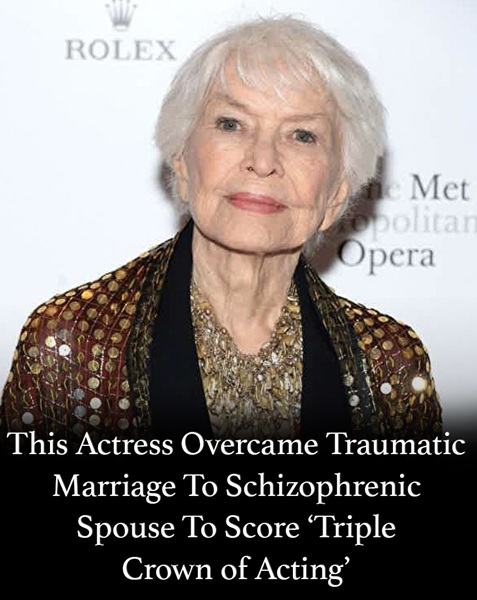
At 92 years old, Ellen Burstyn remains one of the most revered and enduring figures in Hollywood, a living emblem of grace, intelligence, and artistic courage.
Her career spans more than six decades, touching theater, film, and television, yet it is the depth of her personal journey that makes her story so compelling.
Behind the accolades, the Oscars, the Tony, and the Emmy lies a life marked not just by extraordinary professional success but by profound personal trials, resilience, and continual transformation.
For many audiences, Ellen Burstyn’s career seems almost untouchable. She has delivered award-winning performances, gained critical acclaim, and cultivated a reputation for professionalism that has kept her largely free from the scandals and tabloid dramas that have plagued other Hollywood stars.

But the truth is far more complex. Burstyn’s life has been shaped by hardship, trauma, and deeply personal challenges that could have easily derailed her career—or broken her spirit entirely. Instead, she endured, evolved, and emerged stronger, turning each trial into a source of depth and authenticity in her work.
From Edna Rae Gillooly to Ellen Burstyn
Ellen Burstyn was born Edna Rae Gillooly on December 7, 1932, in Detroit, Michigan, the daughter of Correine Marie (née Hamel) and John Austin Gillooly. Her early years were fraught with instability and emotional disconnection. After her parents divorced when she was very young, she primarily grew up with her mother and stepfather, along with her two brothers, Jack and Steven.
Despite the presence of her mother and stepfather, her childhood was anything but secure or loving. Burstyn has spoken candidly in interviews about feeling unloved and emotionally neglected, describing her early life as a period in which she “always felt like a stranger in her own home.” The lack of a nurturing, supportive environment left deep marks on her sense of self and her understanding of relationships.
Her biological father was largely absent from her life. When she attempted to reconnect with him at age 19, the experience was devastating. Rather than welcoming her back, he reportedly behaved inappropriately, permanently severing any hope for a normal father-daughter relationship.
These early experiences of rejection, instability, and emotional trauma instilled in Burstyn a determination to carve out her own path—one in which she could define herself independently of her past. On her 18th birthday, she made a decisive move: she left home, fully aware that this step would begin a long and unpredictable journey toward independence.
Survival and Reinvention in Early Adulthood
Once she left home, Burstyn supported herself through modeling and dancing, finding temporary refuge in professions that allowed her both flexibility and financial support. Early in her career, she adopted several stage names, each representing a new facet of her evolving identity.

For a period, she performed as a dancer under the name Kerri Flynn, while she also worked as a model in Dallas and New York. She later explained that she changed her name around 25 times during her early career, a reflection of both survival and reinvention.
She was Edna Rae, she became Erica Dean as a dancing girl on The Jackie Gleason Show, and later she used Ellen McRae as she transitioned into serious acting, making her Broadway debut in 1957. Finally, in 1969, around the time she starred in Tropic of Cancer, she adopted the name Ellen Burstyn—the identity that would eventually become synonymous with excellence and gravitas.
During these early years, survival often required compromise and vulnerability. In candid interviews, Burstyn has recounted how, at age 18 or 19, she sometimes relied on the generosity of men she dated simply to afford meals. She was open about the pressure to appear gracious, even when it meant putting herself in precarious situations. This honesty and openness about her struggles became one of her defining traits—a courage to confront life’s difficulties head-on and transform them into fuel for her personal and artistic growth.
The Early Career Struggle
Burstyn’s entry into professional acting was neither smooth nor immediate. After leaving modeling and dancing behind, she immersed herself in acting classes and sought opportunities on Broadway and television. In the mid-1950s, she worked in minor roles, often uncredited, learning the craft under the guidance of experienced mentors and seasoned actors.
These early years were marked by uncertainty, financial instability, and an unrelenting desire to be taken seriously as a performer. Every performance, every audition, every minor role was a step toward establishing herself not just as a working actress but as a formidable talent with lasting potential.
This period of reinvention and self-discovery laid the foundation for her later success. It was not only about learning technique or memorizing lines; it was about cultivating resilience, emotional depth, and the ability to channel her personal experiences—pain, loss, and longing—into authentic performance. Burstyn’s early life, full of hardship and challenge, would later become the emotional reservoir from which she drew some of her most unforgettable performances.
Breakthrough Roles and Hollywood Recognition
Ellen Burstyn’s major breakthrough came in the early 1970s. Her first Academy Award nomination, for Best Supporting Actress in The Last Picture Show (1971), showcased her ability to bring complexity and nuance to her characters. The film, itself nominated for eight Oscars, introduced her to wider audiences and signaled her arrival as a serious talent in Hollywood.

Just two years later, she would star in what became a defining role: Chris MacNeil in The Exorcist (1973). The film, now recognized as one of the most influential horror movies in history, demanded extraordinary physical and emotional commitment from its cast. Burstyn’s portrayal of a mother confronting the unimaginable terror of her daughter’s possession required her to endure grueling production conditions.
In one scene, she was violently thrown backward by a harness, suffering a permanent injury to her coccyx. Her scream of pain was genuine, and director William Friedkin kept the take in the final cut. The production lasted nine months, often involving six-day weeks and marathon shooting schedules, yet the result was cinematic history.
The cultural impact was immediate and intense. Audiences reacted viscerally—some fainted, others screamed—creating a media frenzy that only amplified Burstyn’s prominence. The experience was overwhelming, but it cemented her reputation as a fearless actress willing to push herself to the limits of physical and emotional endurance.
The Oscar and the Height of 1970s Cinema
While The Exorcist brought Ellen Burstyn international fame, it was Alice Doesn’t Live Here Anymore (1974) that solidified her status as a true Hollywood legend. Directed by Martin Scorsese, the film told the story of a widowed mother, Alice, who embarks on a journey of self-discovery while striving to provide for her young son. The film was revolutionary for its time, placing a woman at the center of the narrative during an era when Hollywood overwhelmingly prioritized male-driven stories.
Burstyn was not only the lead actress but also a driving force behind the film’s production. She fought persistently to ensure that Alice’s story was authentic and female-centered, advocating for a narrative that showcased the struggles, resilience, and independence of women. This determination exemplified her deep understanding of the industry and her commitment to using her voice to highlight stories that mattered. The performance earned her the Academy Award for Best Actress, a crowning achievement that recognized not only her talent but her vision and advocacy.
Reflecting on the 1970s in a 2023 interview with Interview Magazine, Burstyn noted that studios then were run more by filmmakers than by corporate executives. Scripts were chosen for their artistic merit and emotional resonance, not by predictive algorithms or market analytics.

This environment allowed her the freedom to take risks, explore complex characters, and push the boundaries of her craft. Her willingness to embrace challenging roles, coupled with the creative freedom of the era, resulted in performances that remain iconic decades later.
In addition to her Oscar win, Burstyn achieved the Tony Award for her performance in Same Time, Next Year, demonstrating her versatility across stage and screen. Today, she is one of the few performers to have achieved the “Triple Crown of Acting”—winning an Oscar, a Tony, and an Emmy—an extraordinary testament to her range and dedication.
The Abortion That Changed Her Life
Long before reaching these career heights, Ellen Burstyn endured a life-altering experience that left a profound mark on her physically and emotionally. In 1950, at age 18, she married Bill Alexander. That same year, she became pregnant. Young and raised in the Catholic faith, she made the agonizing decision to undergo an illegal abortion at approximately five months, a procedure that was both physically dangerous and legally risky at the time.
Burstyn has described the abortion as traumatic, both physically and psychologically. Complications from the procedure left her unable to conceive biological children—a loss that she carried with sorrow for decades. While she later adopted a son, Jefferson, during her second marriage, the emotional weight of losing the ability to bear children remained a formative part of her life. She often reflected that the experience shaped her inner life, teaching her resilience, compassion, and the profound complexity of human choice and consequence.
A Marriage Marked by Fear and Trauma
Perhaps the most harrowing chapter of Ellen Burstyn’s life came with her third marriage to actor Neil Nephew, who later changed his name to Neil Burstyn. Neil struggled with schizophrenia, and over time, his behavior became increasingly erratic and violent. In her memoir Lessons in Becoming Myself, Burstyn revealed that she endured physical abuse and sexual assault during the marriage—a stark reminder that spousal rape was not legally recognized in many jurisdictions at the time.
She lived in constant fear, often uncertain of her own safety. When she sought help from authorities after threats and escalating violence, she was reportedly met with indifference, told that police could not intervene in “household problems” unless a crime had already been committed. This lack of institutional protection highlighted both the societal and systemic challenges faced by women in abusive relationships during that era.
After their divorce in 1972, Neil allegedly stalked her for years. The trauma lingered even as she pursued her burgeoning career, demonstrating the remarkable ability of Burstyn to compartmentalize her personal suffering while delivering emotionally raw performances on screen.

In 1978, Neil died by suicide, jumping from a ninth-floor apartment window, an event that left Burstyn grappling with complex emotions, including guilt and sorrow. With time, therapy, and reflection, she understood that his illness was not her responsibility, allowing her to finally release the burden of irrational self-blame.
Reinvention Through Spiritual Growth
In the decades that followed, Burstyn focused on not only her career but also profound personal and spiritual growth. She explored meditation, various philosophical and spiritual traditions, and extensive self-reflection to cultivate a deeper understanding of herself. Rather than allowing trauma to define her, she sought to integrate her experiences into her personal development and artistry.
This inner work profoundly influenced her later performances. In Requiem for a Dream (2000), she delivered a portrayal of Sara Goldfarb—a lonely, delusional, and desperate woman—that many critics consider one of the greatest performances of her career. The emotional authenticity she brought to the role was deeply rooted in a lifetime of lived experience, pain, and resilience. Burstyn’s ability to channel her personal history into her art became a hallmark of her work, setting her apart as an actress of extraordinary depth.
Advocacy and Mentorship
Beyond her own career, Burstyn has been a mentor and advocate for other actors, particularly women seeking meaningful and challenging roles. She has spoken openly about the importance of artistic integrity, personal growth, and the courage to say no to projects that do not align with one’s values or artistic vision. Her mentorship reflects a broader philosophy: that survival and success in Hollywood are intertwined not just with talent, but with self-awareness, discipline, and ethical commitment.
Even in her ninth decade, Ellen Burstyn continues to defy conventional expectations about aging in Hollywood. While many actors find themselves marginalized as they grow older, Burstyn has embraced her age as an opportunity to take on roles that reflect the richness, complexity, and dignity of lived experience.
She has appeared in acclaimed television series such as Big Love and The Handmaid’s Tale, delivering performances that are both nuanced and deeply human. She has also returned multiple times to the Law & Order franchise, often joking in interviews that she seems to have “escaped Hollywood’s ageism.” Her sustained relevance in an industry notorious for discarding aging talent underscores her resilience, adaptability, and unyielding commitment to her craft.
When she turned 80, Burstyn made a conscious decision to relocate from Rockland County to New York City, remarking that it was “time for a little action.” Living in an apartment overlooking Central Park, which she fondly calls her garden, she now enjoys the rhythms of city life while maintaining her spiritual and physical routines. Daily walks in the park, careful attention to diet, and a practice of gratitude have become pillars of her well-being. She has maintained a vegetarian diet since childhood, attributing her long-term health and vitality to discipline, curiosity, and a positive outlook rather than any miracle formula.
Reflection, Compassion, and Making Peace with the Past
Perhaps one of the most touching aspects of Burstyn’s story is her reconciliation with her past, particularly her complex relationship with her mother. Though their early relationship was strained, painful, and fraught with misunderstanding, Burstyn has come to understand her mother’s own limitations and struggles.
Rather than harboring resentment, she has embraced compassion and forgiveness. “I wish I could call her,” she once remarked, reflecting both longing and acceptance. This ability to reflect with empathy captures much of who Ellen Burstyn is today: introspective, forgiving, and aware that life is rarely simple or straightforward.
This philosophy extends beyond her family relationships. Burstyn has repeatedly emphasized the importance of resilience, self-reflection, and spiritual inquiry. Her belief in personal growth and transformation has been a guiding principle throughout her life. She often speaks of trauma not as a final verdict on one’s life but as a catalyst for deeper understanding, artistic expression, and emotional maturity. This perspective has informed both her personal journey and her professional choices, allowing her to inhabit roles with authenticity and depth.
Legacy of Strength and Artistic Integrity
Ellen Burstyn’s career and life story are a testament to endurance, courage, and integrity. She has worked with some of the greatest directors of the 20th and 21st centuries, from Martin Scorsese to Darren Aronofsky, and has left an indelible mark on theater, film, and television.
Her accolades—the Oscar, Tony, and Emmy—represent formal recognition of her craft, but they are only one dimension of her legacy. Equally important is the quiet power of her resilience: a young woman who fled an unhappy home, survived abusive relationships, endured personal loss, and navigated systemic barriers in Hollywood, all while remaining true to her vision and values.
Her ability to reinvent herself, often multiple times throughout her life, serves as a model of adaptability and courage. From changing her name over 25 times early in her career to transforming personal trauma into creative fuel, Burstyn embodies the principle that reinvention is always possible, no matter one’s circumstances. Even in her 90s, she continues to mentor younger actors, advocate for meaningful storytelling, and pursue roles that challenge cultural stereotypes about women, aging, and human complexity.
Teaching Through Example
Burstyn’s influence extends beyond the screen and stage. Through her openness about personal hardship, she has encouraged conversations about mental health, abuse, trauma, and personal accountability—topics that were once taboo in Hollywood. By sharing her story, she has offered a roadmap for surviving adversity with dignity and for channeling pain into growth. Her memoirs, interviews, and public appearances consistently emphasize self-awareness, ethical responsibility, and the necessity of emotional and spiritual work.
Her philosophy is simple yet profound: stand alone, embrace change, and approach life with curiosity and compassion. These principles have guided her through decades of personal and professional challenges and have made her an enduring figure of inspiration for audiences worldwide.
Continuing to Inspire
At 92, Ellen Burstyn remains actively engaged in life and art. She continues to act, walk in Central Park daily, maintain a disciplined vegetarian diet, and practice gratitude. She studies spiritual teachings, reflects on her past, and embraces the unpredictability of life with both courage and curiosity.
She is a living testament to the power of resilience, the necessity of artistic integrity, and the transformative potential of personal growth. Her life demonstrates that age is not a barrier to relevance, that trauma can be transformed into empathy and creativity, and that reinvention is a lifelong process.
Ellen Burstyn’s story is not one of effortless glamour, fame, or privilege. It is a narrative of survival, courage, and continual evolution. She has faced physical danger, emotional trauma, systemic indifference, and personal loss—and yet she has emerged not only intact but profoundly luminous. She has taught generations of actors and audiences that the truest measure of greatness lies not solely in awards or acclaim but in the capacity to endure, to grow, and to remain compassionate in the face of adversity.
Her legacy is both personal and universal. It is a story that resonates with anyone who has faced hardship, embraced transformation, and pursued authenticity. Ellen Burstyn exemplifies that life’s deepest challenges can become the source of its most profound artistry, and that true endurance—emotional, creative, and spiritual—is the hallmark of a life fully lived.
