
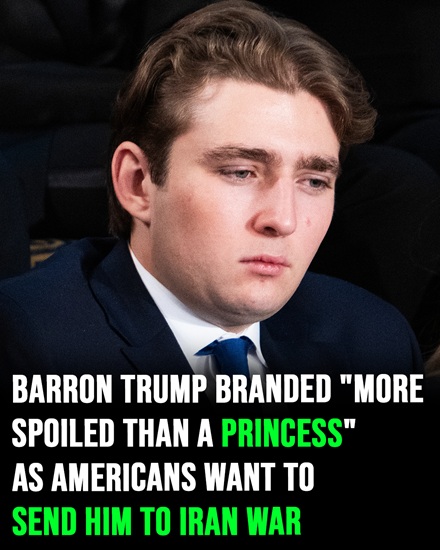
Social media erupted in early 2026 as widespread debate grew about the United States’ military engagement with Iran and whether public figures’ families should participate more directly in the country’s defense.
Amid ongoing combat operations initiated by the United States and Israel against targets in Iran, critics and commentators on social platforms coined the hashtag #SendBarron, urging that Barron Trump, the youngest son of President Donald J. Trump, enlist in military service.
Barron William Trump, born March 20, 2006, is the only child of Donald and Melania Trump and a member of the first family, a private figure with limited public presence prior to recent online commentary.
The hashtag and related memes circulated widely after a satirical website, DraftBarronTrump.com, was launched by a former writer and others as a form of political commentary, blending parody with real frustration over the conflict.

That satire was often conflated with genuine opinion in social feeds, prompting heated debate about whether Trump’s family members should “share the burden” of a conflict that has claimed lives from various nations.
Some social media users argued that if the Trump administration supports continued military engagement, symbolic gestures like Barron’s voluntary enlistment could demonstrate solidarity with U.S. troops, even if no official draft exists.
A number of posts referenced the deaths of U.S. service members and raised broader questions about how leaders involve the public in decisions that risk young Americans’ lives amid complex global conflicts.
Political discourse around the conflict has been intense; President Trump and his administration have described the operations as strategic efforts to counter Iranian threats, while legislative leaders debate whether these actions legally constitute “war.”
It’s important to note that under current U.S. law, a formal military draft has not been enacted, and there is no official Selective Service induction or compulsory enlistment underway for citizens, including Barron Trump.
All male U.S. citizens and residents between ages 18 and 25 are required to register with the Selective Service System, but registration alone does not mean a draft has been reintroduced or that anyone is being compelled to serve.
Calls for Barron to enlist were amplified when commentators and former figures such as Jesse Ventura, a veteran and former governor, publicly encouraged him to join the armed forces, framing it as patriotic duty.

Ventura, who served as a U.S. Navy SEAL during the Vietnam era, used television and interview platforms to question why Barron had not volunteered for service given the political decisions affecting U.S. troops.
On cable news, hosts such as Lawrence O’Donnell criticized Barron’s absence from military service, contrasting high‑profile historical examples of leaders’ children serving in wars with the youngest Trump son’s civilian life.
O’Donnell’s statements included commentary about past leaders’ children serving during major conflicts like World War II, referencing public figures such as Queen Elizabeth II, who served in uniform during wartime.
These critiques are part of broader media debates about leadership, civic responsibility, and how public figures should relate to policies that involve military engagement and potential loss of life.
At the same time, social media discussions spotlighted speculation about Barron’s eligibility for military service, including unverified claims about height, physical requirements, and possible medical exemptions.
Some online posts suggested Barron might be “too tall” for certain military roles, a claim that circulated widely despite no confirmation from official Defense Department recruitment sources about his personal military status.
Height limits in U.S. armed services vary by role but do not categorically prohibit enlistment, and many service members outside those ranges have served via waivers or in positions not subject to strict height limits.

Similarly, claims about bone spurs or medical exemptions have circulated on forums and unverified posts — but no official records confirm that Barron Trump holds any medical classification affecting his military eligibility.
The volume of online commentary has been amplified by heightened public anxiety over potential draft discussions and broader unease about prolonged conflict without clear political or strategic endpoints.
Some public figures beyond social media have also weighed in, arguing that if military action is justified, leaders should consider symbolic acts of shared risk, while others reject that framing as unrealistic or divisive.
In contrast, many Americans emphasize that military service remains voluntary today, with the U.S. Armed Forces continuing to operate as an all‑volunteer force across all branches.
Observers note that discussions about elite families’ involvement in military service often reflect deeper frustrations with war decisions, socioeconomic disparities, and perceptions of privilege in public life.
While online movements and commentary can gain traction quickly, it’s crucial to differentiate satire, social media opinion, and verified policy — particularly when high emotions surround conflict and national security.
Many social media posts urging enlistment were created as political satire or provocation rather than sincere military recruitment appeals, and those distinctions are often blurred online.

Critics on both sides of the political spectrum have used these discussions to highlight broader cultural debates about military service, patriotism, and whether children of leaders should be subject to the same risks as other Americans.
Public opinion remains sharply divided on the conflict itself; polls suggest varying levels of support, skepticism, and concern about the human and economic costs of prolonged military engagements overseas.
The debate over whether Barron Trump or any public figure’s child “should” enlist touches on larger questions about civic duty, personal choice, and how societies distribute sacrifice during times of conflict.
In the United States, enlistment decisions are governed by individual choice and federal recruitment policy, not by public pressure or social media trends, regardless of family background.
For now, there are no official announcements or confirmations that Barron Trump has enlisted, registered for specialized service, or been deemed ineligible by any official military branch.
His public presence remains limited compared with his siblings and other first family members, and his own priorities, including college and personal development, have been private decisions.
Mother Melania Trump has previously emphasized her protective approach to her son’s privacy, particularly amid surge calls for his potential military involvement, underscoring family boundaries and well‑being.
As the U.S.–Iran conflict continues, social media commentary about enlistment, draft prospects, and elite responsibility remains part of broader national conversations about military engagement and civic obligation.
Public debate over the conflict’s direction, troop deployments, and strategic endpoints continues to shape discussions in Congress, media forums, and everyday social discourse across the United States.
Ultimately, decisions about military service lie with individuals and lawful governmental processes, and speculation about enlistment trends should be distinguished from formal policy and verified reporting.
