
The geopolitical landscape of the Middle East has long been shaped by the delicate and often volatile balance of power, where historical rivalries, sectarian divisions, and competing national ambitions intersect.
Over the last two decades, however, the regional equation has increasingly been influenced by Iran’s rapid military modernization, particularly its missile development program.
While the world often focuses on surface-level conflicts and diplomatic maneuvering, a less visible but far more consequential development has been taking place deep beneath the Iranian plateau.
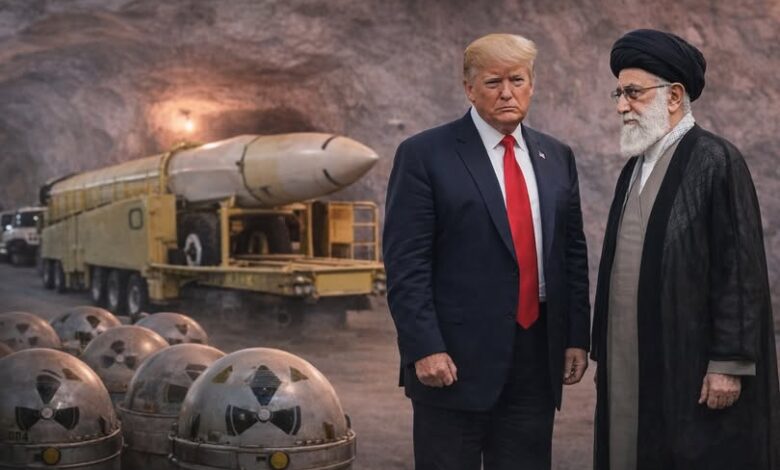
Here, in the inhospitable terrain of central Iran, vast subterranean infrastructures—dubbed by Iranian military officials as “missile cities”—have been constructed to provide a robust, survivable, and highly flexible missile capability.
These underground facilities are not merely hardened storage depots or simple bunkers; rather, they constitute fully integrated military complexes, meticulously designed to protect, maintain, and deploy an array of ballistic and cruise missiles.
They form the backbone of Iran’s deterrent posture, signaling to both regional adversaries and global powers that Tehran has achieved an unprecedented level of strategic autonomy.
The scale of these installations is remarkable. According to a combination of satellite intelligence, open-source research, and data provided by the United States Central Command, some of these facilities extend over several kilometers of reinforced tunnels, with storage depots, maintenance workshops, command centers, and specialized missile launch pads integrated into a single, subterranean network.
The depth of these complexes—estimated at around 500 meters below ground—provides exceptional protection against conventional aerial bombardments, including the most advanced bunker-busting munitions available in global arsenals.
This structural depth alone creates a formidable barrier against preemptive strikes and ensures the operational survivability of Iran’s strategic missile inventory under scenarios of intense military pressure.
At the operational level, Iran’s missile arsenal represents a carefully calibrated combination of indigenous development, reverse engineering, and incremental technical innovation. Estimates suggest that the country currently possesses more than 3,000 ballistic missiles across various ranges and capabilities.
These include short-range ballistic missiles (SRBMs) like the Fateh-110 and Zolfaghar series, medium-range ballistic missiles (MRBMs) such as the Shahab-3, Khorramshahr, and Sejjil, and an emerging hypersonic portfolio exemplified by the Fattah-2 project.
Each class of missile fulfills a specific strategic and tactical role within Iran’s military doctrine, which emphasizes redundancy, survivability, and the capacity for rapid retaliation.
Unlike many conventional forces that rely on surface-based silos and depots, Iran’s approach to missile deployment is defined by concealment, mobility, and the ability to launch in dispersed, decentralized configurations.
This strategy is designed to complicate enemy targeting and ensure that no single strike could neutralize the country’s deterrent potential.
Short-range ballistic missiles form the tactical foundation of Iran’s missile strategy. The Fateh and Zolfaghar families are engineered for high precision against military targets located within a few hundred kilometers of Iran’s borders.
These systems are capable of delivering conventional warheads with a combination of speed, maneuverability, and accuracy that makes them particularly effective for “saturation strikes”—simultaneous launches of multiple projectiles designed to overwhelm enemy radar networks and missile defense systems.
The practical demonstration of this capability was notably observed in January 2020, following the targeted killing of General Qassem Soleimani. In retaliation, Iran launched a coordinated barrage of ballistic missiles against U.S. military positions in Iraq, demonstrating the ability to organize and execute complex strike operations with precision timing and centralized coordination.
The event served as a clear signal not only of Iran’s technical capacity but also of its operational doctrine, which prioritizes quick, high-impact retaliatory measures as a cornerstone of regional deterrence.
Beyond the tactical SRBMs, Iran has focused considerable resources on developing its medium-range ballistic missile capabilities, which constitute the strategic backbone of its deterrence framework.
Missiles like the Shahab-3, Sejjil, and Khorramshahr provide operational ranges extending to approximately 2,000 kilometers, theoretically covering most of the Levant, parts of the Arabian Peninsula, and reaching well into southeastern Europe.
These systems leverage advances in solid and liquid propulsion, composite materials, and precision guidance, reflecting decades of domestic engineering combined with knowledge acquired from foreign missile technologies. While Tehran asserts that these ranges define the current operational limits of its program, Western analysts remain cautious.
Many experts note that the propulsion systems and staging designs underpinning these MRBMs could, with relatively minor modifications, support extended ranges, potentially approaching intercontinental capabilities in future decades.
This potential “range creep” remains a key concern for NATO members and European capitals, particularly as the dual-use technologies developed for space launches overlap with those required for advanced long-range missile deployment.
The threat calculus becomes even more complex with the advent of hypersonic weapons, which Iran is actively pursuing. Hypersonic missiles, capable of maneuvering at speeds exceeding Mach 5, introduce a fundamentally new challenge for conventional missile defense architectures.
The Fattah-2, a hypersonic glide vehicle under development, is intended to combine extreme speed with maneuverability, allowing it to evade current interception systems that rely on the predictable trajectories of traditional ballistic missiles. If successfully operationalized, such a capability would compel a fundamental reevaluation of defensive postures across the region, particularly for high-value installations in Israel, the Gulf states, and U.S. bases in the Middle East.
The incorporation of hypersonic systems into Iran’s military calculus underscores a broader shift in strategic thinking: deterrence is no longer solely about missile quantity or range, but about technological sophistication, adaptability, and the ability to penetrate advanced defensive networks.
In parallel to traditional ballistic programs, Iran has cultivated a diverse suite of cruise missiles and unmanned aerial systems, further complicating the regional security environment. Cruise missiles like the Soumar, heavily influenced by the Russian Kh-55 design, utilize low-altitude, terrain-following flight paths that make detection and interception exceedingly difficult for conventional radar and anti-missile platforms.
Meanwhile, loitering munitions such as the Shahed-136 drone demonstrate the growing importance of low-cost, high-volume strike options.
These drones can be produced rapidly and deployed en masse, creating tactical dilemmas for defenders who must expend expensive interceptor missiles against relatively inexpensive and potentially disposable threats.
This asymmetric cost-benefit ratio represents a transformative shift in military strategy: a swarm of drones costing a few thousand dollars can threaten or degrade a defensive battery designed to counter multimillion-dollar missiles, illustrating how economic considerations are increasingly intertwined with operational planning.
Beneath the rugged Iranian plateau, the missile cities are a feat of military engineering, with reinforced tunnels, command centers, and launch facilities meticulously arranged to maintain operational readiness under extreme wartime conditions.
These subterranean complexes integrate storage depots, maintenance workshops, and rapid deployment systems, allowing missiles to move from deep underground to surface launch pads in minutes, ensuring Tehran retains the ability to strike even under preemptive assault.
Satellite imagery reveals vast networks of tunnels, some extending for kilometers, with multiple exit points. This dispersion complicates enemy targeting, making it virtually impossible to neutralize the entire missile inventory with a single air campaign.
Missile cities are built to withstand immense conventional forces, including bunker-buster munitions designed to penetrate hardened underground structures. Reinforced ceilings, shock-absorbing materials, and depth ensure survivability against most modern strikes.
Iran’s operational doctrine relies heavily on redundancy. Each missile type has multiple storage points and launch pads, ensuring that a localized attack would not significantly degrade the overall deterrent capacity of the nation.
The logistics within these facilities are highly sophisticated. Automated transport systems, maintenance robots, and underground fuel storage allow missiles to be prepared and launched with minimal human intervention.
Dual-use technology plays a crucial role. Components developed for space launch vehicles or civilian industries are adapted to missile production, creating a robust supply chain that supports rapid replacement of lost assets.
This distributed production network allows Iran to recover from military setbacks quickly. Even after reported losses during past confrontations, expert assessments indicate that Tehran replaced missiles in remarkably short timeframes.
Command and control systems are deeply integrated within the missile cities. Hardened communication nodes allow secure, encrypted coordination between launch facilities, operational planners, and mobile units across the country.
The combination of mobility, redundancy, and deep underground storage creates a psychological dimension to deterrence. Adversaries must assume that no preemptive strike can fully neutralize Iran’s missile capabilities.
Missile cities also house specialized teams for testing, calibration, and maintenance, ensuring that both short-range and medium-range missiles maintain operational accuracy, even after extended storage periods underground.
Beyond storage, these facilities are equipped to conduct coordinated multi-missile strikes. Launch sequences can be programmed to target multiple regional locations simultaneously, overwhelming enemy defenses and maximizing tactical impact.
Hypersonic glide vehicles like the Fattah-2 are particularly reliant on these deep facilities. Their launch requires precise handling and pre-flight preparation, which the missile cities are uniquely designed to accommodate.
Iran’s approach represents a shift in strategic thinking: survivability and adaptability are prioritized over sheer numbers. Even a limited inventory, if properly protected and managed, can serve as a credible deterrent against much larger forces.
Regional security calculations must also account for asymmetric tactics. Swarms of drones, low-flying cruise missiles, and electronic warfare capabilities are all integrated into the operational framework of these cities.
Experts note that these missile cities demonstrate a strategic patience. Iran invests in long-term infrastructure and technology, ensuring that its deterrent remains credible for decades, even in the face of advanced countermeasures.
Western intelligence consistently monitors these sites using satellite imagery, electronic signals, and human intelligence. While the underground depth complicates direct observation, subtle activity patterns reveal maintenance cycles, testing, and logistical movement.
The geopolitical impact is significant. Israel, the Gulf states, and European nations must factor Iran’s hidden capabilities into defense planning, deterrence posture, and crisis response strategies, elevating the stakes of regional military engagements.
Missile cities are more than storage facilities; they are national insurance policies. Their presence ensures Iran can project power, defend its borders, and maintain strategic credibility, regardless of external military pressure.
These complexes also highlight Tehran’s industrial resilience. Even under heavy sanctions, Iran has developed the infrastructure and technical expertise to sustain a complex missile production and deployment ecosystem over decades.
The strategic implications extend globally. U.S. forces in the region, NATO allies, and international security agencies must continuously evaluate how these subterranean networks affect deterrence dynamics, regional escalation risks, and the potential for rapid, high-impact missile launches.
Finally, the missile cities serve as a stark reminder that modern warfare is no longer solely defined by visible armies or surface-level bases. Deep, hidden infrastructure now underpins national security and shapes the balance of power in the Middle East.
Iran’s missile cities have forced regional powers to rethink defense strategies, prompting investments in advanced detection systems, layered missile defenses, and rapid-response protocols across the Gulf, Levant, and southeastern Europe.
The strategic calculus for Israel has shifted significantly. Underground missile networks compel the Israeli Defense Forces to prioritize intelligence, precision strikes, and preemptive planning while accounting for the high survivability of Iranian assets.
The Gulf Cooperation Council (GCC) nations face similar challenges. Saudi Arabia, the UAE, and Qatar now integrate layered defense systems and airspace monitoring, acknowledging that conventional deterrence may be insufficient against well-protected, high-volume missile capabilities.
European capitals remain cautious. Analysts note that medium-range missiles, combined with potential long-range propulsion adaptation, could extend Iran’s reach into parts of the continent, challenging NATO’s forward defense strategies and contingency planning.
In Washington, intelligence reports continue to monitor Iran’s missile program closely. Analysts emphasize the distinction between regional strike capabilities and a fully operational intercontinental ballistic missile (ICBM), which remains technically limited but could evolve in coming decades.
The dual-use nature of Iran’s space program adds complexity. Satellite launch vehicles employ similar propulsion and staging technologies, creating a potential pathway for extended-range ballistic capabilities if political and technological priorities align.
Hypersonic programs are particularly concerning. The Fattah-2 and similar projects could bypass current missile defenses, requiring new investment in detection, interception, and predictive modeling to mitigate risks to regional and high-value strategic assets.
Drone and loitering munition proliferation complements Iran’s missile doctrine. Swarm tactics allow inexpensive, rapid, and distributed attacks, capable of overwhelming even the most sophisticated air defense batteries.
Iran’s strategic doctrine emphasizes resilience. Even if a portion of the missile arsenal were neutralized, distributed underground storage, redundant launch capability, and rapid industrial replenishment maintain the credibility of the deterrent.
The presence of missile cities underscores Tehran’s investment in survivable infrastructure. The combination of depth, redundancy, and technological sophistication signals that Iran prioritizes long-term strategic endurance over short-term tactical gains.
International diplomacy is directly influenced. Nuclear negotiations, arms control dialogues, and regional security summits must now consider these hidden assets as critical factors in any risk assessment or policy formulation.
Cyber capabilities may also intersect with missile strategy. Secure communications, satellite guidance, and automated launch protocols highlight Iran’s integration of digital resilience with physical military infrastructure.
Iran’s missile development has implications for asymmetric warfare. Low-cost drones, cruise missiles, and electronic disruption techniques extend Tehran’s influence beyond conventional ranges, creating deterrence through complexity rather than purely through quantity.
The historical lessons are clear. Adversaries in the Middle East and beyond must assume that any preemptive strike will encounter extreme technical, logistical, and operational hurdles, which complicates planning and raises the stakes of potential conflict.
Strategic patience remains central. Iran’s long-term focus on infrastructure, technical training, and domestic production capacity ensures that the nation maintains a credible and adaptable deterrent despite international pressure or sanctions.
Global powers recognize that missile cities alter threat perception. Intelligence assessments now incorporate subterranean capabilities into war-gaming scenarios, escalation ladders, and contingency planning for potential regional confrontations.
The intersection of missile technology with civilian and space programs creates further diplomatic challenges. Dual-use technology complicates monitoring efforts, requiring nuanced verification protocols to distinguish legitimate civilian activity from military capability expansion.
From an economic perspective, the low-cost nature of drone swarms versus high-cost interceptor munitions introduces new asymmetries. Attackers must expend disproportionate resources to counter relatively inexpensive systems, redefining the cost-benefit analysis of conflict.
Iran’s military modernization also includes psychological deterrence. Visible satellite imagery of underground complexes, combined with propaganda and media dissemination, reinforces perceptions of invulnerability and technological sophistication.
In conclusion, the 500-meter-deep missile cities are far more than physical structures. They represent a paradigm shift in regional deterrence, asymmetric warfare, and strategic engineering, fundamentally altering how adversaries perceive Iran’s military power.
The ongoing debate surrounding Iran’s missile program underscores the evolution of modern warfare. High-speed, maneuverable missiles, deep-earth silos, drone swarms, and dual-use technologies collectively signal a new era in global security dynamics.
As 2026 progresses, international actors continue to navigate this complex landscape. The missile cities remain both a tangible and symbolic representation of Iran’s long-term commitment to defending its sovereignty and asserting strategic influence.
Ultimately, these underground facilities redefine deterrence. They serve as a constant reminder that modern military power increasingly relies on survivability, technological integration, and strategic foresight, reshaping the security architecture of the Middle East and beyond.
