
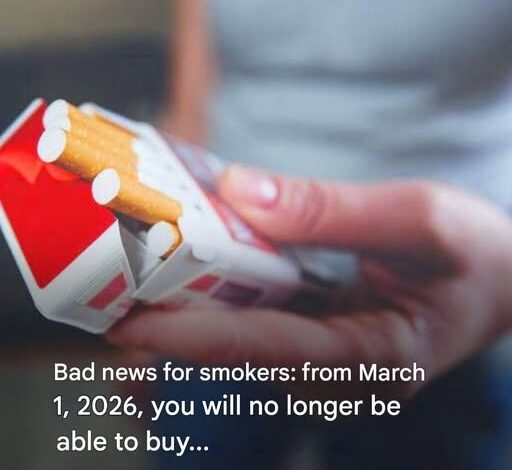
The evolution of tobacco pricing in France represents one of the most significant public health interventions in modern European history, illustrating the nation’s unwavering commitment to reducing smoking prevalence through deliberate economic policy.
By 2026, the French market for cigarettes has undergone a transformative shift, becoming one of the most heavily regulated and heavily taxed across the European Union.
This transformation is not an incidental effect of inflation, currency fluctuations, or manufacturing changes, but the result of a meticulously designed, long-term governmental strategy.
The central goal is clear: to use fiscal pressure as the primary lever to discourage smoking and create measurable public health benefits.
Over the past three decades, this strategy has moved from a series of incremental adjustments to a coherent, systematic approach, reflecting a broader societal consensus that the health and economic costs of tobacco justify strong regulatory intervention.
From a historical perspective, France’s journey toward a high-cost, low-consumption tobacco market began in earnest in the late 1990s and early 2000s, during a period when smoking prevalence was still alarmingly high. At that time, a standard pack of cigarettes could be purchased for roughly three euros, making smoking an affordable, everyday habit for millions of French citizens.
Public health authorities were increasingly concerned about the long-term consequences of widespread tobacco use, as studies consistently demonstrated the link between smoking and chronic diseases such as lung cancer, chronic obstructive pulmonary disease (COPD), cardiovascular disorders, and stroke.
Moreover, the economic burden on the healthcare system, including hospital admissions, pharmaceutical costs, and public insurance expenditures, was growing rapidly.
Policymakers recognized that a purely educational approach—while necessary—would be insufficient to drive substantial reductions in smoking rates.
As a result, France adopted a multi-pronged strategy, combining health campaigns, advertising restrictions, and, crucially, significant taxation on tobacco products.
Central to the French model is the recognition that the price of tobacco is both a public health tool and a financial lever. The government deliberately positions cigarettes as a high-cost product to create a strong economic disincentive, particularly for younger demographics, who are highly sensitive to price changes.
Over the last 25 years, the price of a standard pack of 20 cigarettes has increased more than fourfold, reaching an average range of 12.50 to 13.00 euros by January 2026.
Premium international brands now frequently exceed 13.50 euros per pack, while even budget options rarely fall below 12 euros. This steep pricing trajectory is unparalleled in most consumer goods markets, highlighting the deliberate nature of state intervention.
Every increase in price is carefully calibrated based on epidemiological data, consumption trends, and healthcare cost projections, ensuring that the fiscal policy achieves measurable reductions in smoking rates while maintaining fairness across different socioeconomic groups.
The structural reality of cigarette pricing in France is governed by a sophisticated interplay between the private sector and state authority, reflecting a model in which regulatory oversight is exceptionally robust.
Unlike typical consumer products, where market forces primarily determine the final retail price, tobacco products are subject to a highly controlled, top-down approval system.
Manufacturers and importers are responsible for proposing initial prices, taking into account production costs, distribution logistics, international shipping, and commercial margins.
However, these proposals are not final. The Directorate General of Customs and Indirect Taxes (DGDDI) rigorously examines every proposed price to ensure compliance with national legislation and health policy objectives.
This review includes detailed scrutiny of the excise duty calculations, value-added tax (VAT) applications, and the manufacturer’s reported costs. Only after the DGDDI approves a price is it published in the official journal, at which point it becomes legally binding for all retailers.
The impact of this regulatory framework on everyday life in France cannot be overstated. Tobacconists, whether located in central Paris, the rural villages of Brittany, or the scenic towns of Provence, must apply the approved prices without exception.
Promotional campaigns, loyalty programs, or discounts are strictly prohibited. This uniformity ensures that the price functions as a reliable public health instrument: the economic barrier to smoking remains consistent nationwide, and citizens are less likely to circumvent regulations through local pricing variations.
By maintaining such strict controls, the government effectively positions the cost of cigarettes as a visible, tangible reminder of the broader health consequences associated with smoking.
For French citizens, the economic weight of tobacco is no longer a peripheral consideration—it has become central to personal decision-making.
Analyzing the composition of a cigarette pack’s retail price reveals the extent to which the state dominates the market. Despite the considerable costs manufacturers incur—covering cultivation, processing, international logistics, and quality control—their share of the final retail price is relatively modest, averaging around 15%.
Retailers, primarily tobacconists, receive a margin of 8–10%, reflecting the operational costs of maintaining stores, paying staff, and managing distribution.
The lion’s share, however, belongs to the state, which claims between 75% and 80% of the price through a combination of excise duties and VAT. This fiscal structure underscores the dual role of taxation: it serves both as a source of public revenue and as a deliberate tool to discourage consumption.
The taxation system itself is a sophisticated, “mixed formula” designed to achieve multiple objectives simultaneously. The excise duty, the primary engine of this model, combines a proportional percentage of the retail price with a fixed amount per unit.
This ensures that all products, regardless of brand or packaging, carry a minimum cost burden. To prevent the introduction of ultra-low-cost brands that could undermine public health goals, the government enforces a minimum tax rule: if the calculated excise duty falls below a threshold, the fixed minimum applies automatically.
On top of this, the standard VAT is applied, further reinforcing the price barrier. The result is a pricing ecosystem in which tobacco consumption is consistently discouraged, and where every purchase directly contributes to offsetting the public health costs generated by smoking-related diseases.
The impact of rising cigarette prices on consumption patterns in France has been substantial. Data from the French Ministry of Health indicates consistent declines in smoking prevalence, particularly among younger adults under 25.
Young adults are especially sensitive to price fluctuations. Surveys suggest that each significant price increase prompts reconsideration of purchasing habits, often leading to partial reduction, brand switching, or complete cessation. The government strategically targets these demographics.
Older smokers, while less price-sensitive, also exhibit measurable behavioral changes over time. Many reduce daily consumption or explore cessation aids, including nicotine replacement therapy or medically supervised programs subsidized by public health authorities.
Gender differences in smoking trends remain notable. Historically, men smoked at higher rates, but the gap has narrowed. Price increases, coupled with awareness campaigns, have accelerated the reduction of smoking rates among both men and women.
Socioeconomic factors also play a significant role in consumption shifts. Lower-income populations, facing higher relative costs, show stronger declines in cigarette use. Conversely, higher-income groups maintain purchasing patterns but increasingly select premium brands.
The government complements fiscal measures with intensive educational campaigns. Mass media advertisements, public service messages, and school-based programs reinforce the economic message with health information about respiratory, cardiovascular, and oncological risks.
Healthcare data demonstrates the tangible benefits of these interventions. Hospital admissions for smoking-related illnesses, particularly COPD and lung cancer, have shown gradual decreases, reflecting the cumulative impact of decades-long price strategies and awareness efforts.
However, the high price of cigarettes has created new challenges. Cross-border shopping to neighboring countries, such as Belgium, Luxembourg, and Spain, has increased, as consumers seek cheaper alternatives, undermining the domestic taxation strategy.
Illicit markets have also expanded. Smuggled cigarettes and counterfeit products pose risks to both revenue collection and public health, as quality standards cannot be guaranteed, potentially increasing exposure to harmful contaminants.
In response, French authorities have strengthened enforcement mechanisms. Customs patrols, border inspections, and targeted operations against organized smuggling networks have intensified, ensuring that the majority of tobacco consumption remains within regulated channels.
The government also leverages technology to track sales and distribution. Digital monitoring of wholesalers and retailers, combined with unique packaging codes, allows rapid identification of unauthorized products and reinforces compliance with pricing regulations.
Public perception of tobacco pricing remains largely supportive. Polls indicate that citizens recognize the health rationale behind high prices, particularly when paired with visible reductions in healthcare costs and improvements in national health outcomes.
Price consistency across regions reinforces fairness. By maintaining uniform retail costs nationwide, the government prevents local economic disparities from undermining the effectiveness of fiscal deterrents, ensuring that no citizen has an advantage in accessing cheaper tobacco.
Cultural shifts also influence the success of high taxation. Smoking is increasingly viewed as a costly and socially discouraged behavior, creating social pressure that complements financial disincentives and reinforces the decline in smoking prevalence.
France’s experience demonstrates the synergy between economic policy and public health initiatives. High taxes, regulatory oversight, awareness campaigns, and enforcement collectively form a robust system that measurably reduces tobacco consumption.
This comprehensive approach has influenced global perspectives on tobacco control. International organizations, including the World Health Organization, have cited France as a leading example of using fiscal measures effectively to achieve public health objectives.
Environmental considerations have emerged as an additional factor. The reduction in cigarette consumption also decreases litter and pollution associated with cigarette production, packaging, and disposal, contributing indirectly to broader sustainability goals.
The psychological impact of pricing cannot be understated. For many citizens, the cost of cigarettes functions as a constant reminder of health risks, embedding the “light of truth” into everyday decisions and creating a form of behavioral conditioning over decades.
By combining economic, social, and regulatory tools, France has managed to shift smoking from a normalized habit to a carefully managed behavior, illustrating the power of integrated, long-term policy design in public health.
The taxation strategy in France is not arbitrary; it is carefully calibrated to balance revenue generation with public health goals. Excise duties and VAT combine to maintain price pressure while funding essential healthcare services.
High tobacco taxes directly contribute to offsetting the financial burden of smoking-related illnesses. Hospital care, long-term treatment of cardiovascular and respiratory diseases, and cancer therapy are partially funded through these revenues.
Policymakers argue that each euro collected in tobacco taxes helps prevent future expenditures in the healthcare system. By discouraging smoking, the government reduces long-term costs and strengthens the sustainability of public health financing.
The French government regularly adjusts tax rates. Annual reviews consider inflation, smoking prevalence data, and healthcare expenditure projections to ensure that cigarette prices continue to act as an effective deterrent.
Price increases are strategically timed. Scheduled hikes are announced well in advance, allowing consumers and retailers to prepare, while ensuring consistent revenue streams and predictable reductions in smoking behavior across all demographics.
Political consensus around tobacco taxation remains strong. Despite differences on other economic issues, major parties generally support high excise duties as a tool to protect public health and stabilize healthcare budgets.
Public opinion aligns with this approach. Surveys show widespread acceptance of tobacco taxes, particularly when paired with visible health improvements, reduced hospitalizations, and educational campaigns that emphasize prevention over punishment.
Internationally, France’s model is closely observed. Other European nations have referenced its regulatory framework, enforcement techniques, and mixed excise-VAT formula as benchmarks for effective tobacco control strategies.
The social impact is substantial. Smoking has become less visible in public spaces, with cultural norms shifting toward non-smoking behaviors, and social stigmas reinforcing individual decisions to reduce or quit smoking.
Healthcare benefits are measurable. Epidemiological studies show a long-term decline in smoking-related diseases, particularly among younger generations, confirming that high prices combined with awareness campaigns produce tangible public health improvements.
Cross-border and illicit market challenges persist, but technological monitoring, customs enforcement, and digital tracking of distribution channels have significantly reduced illegal consumption compared to past decades.
Retailers adapt to high taxation by diversifying product offerings, including vaping alternatives, nicotine patches, and cessation tools, which further supports the government’s public health objectives while mitigating economic pressure on local businesses.
The environmental impact of reduced cigarette consumption is also notable. Fewer discarded cigarette butts, reduced packaging waste, and lower production emissions contribute to France’s broader sustainability and public cleanliness goals.
Behavioral psychology supports the effectiveness of fiscal measures. The visible cost at the point of sale creates immediate feedback, reinforcing awareness of health risks and encouraging gradual habit change across populations.
By 2026, cigarettes in France are effectively a high-cost luxury item, reserved for committed smokers. This transformation demonstrates the power of sustained, well-enforced policy to reshape consumer behavior over decades.
The policy legacy is multifaceted. It combines revenue generation, public health protection, social awareness, and international leadership in tobacco control, establishing a long-term framework for other nations to emulate.
Ultimately, France’s experience illustrates that deliberate, integrated interventions—combining taxation, regulation, enforcement, and education—can achieve substantial reductions in harmful behavior while maintaining social equity and economic predictability.
For the French citizen, the “light of truth” is tangible at the checkout counter. The high cost of cigarettes serves as a constant reminder of personal and societal health responsibilities, embedding awareness into everyday life.
The trajectory of cigarette pricing, policy enforcement, and societal change offers a rare case study in successful public health economics. By aligning financial incentives with health outcomes, France has created a sustainable model for tobacco control.
Looking forward, continued vigilance is essential. Emerging tobacco alternatives, global price disparities, and evolving consumer preferences require ongoing adaptation to maintain the integrity and effectiveness of France’s high-tax, public-health-oriented tobacco strategy.
In conclusion, the story of tobacco pricing in France is not merely about economics. It is about decades of coordinated policy, social responsibility, healthcare management, and national commitment to creating a smoke-free future for generations to come.
