
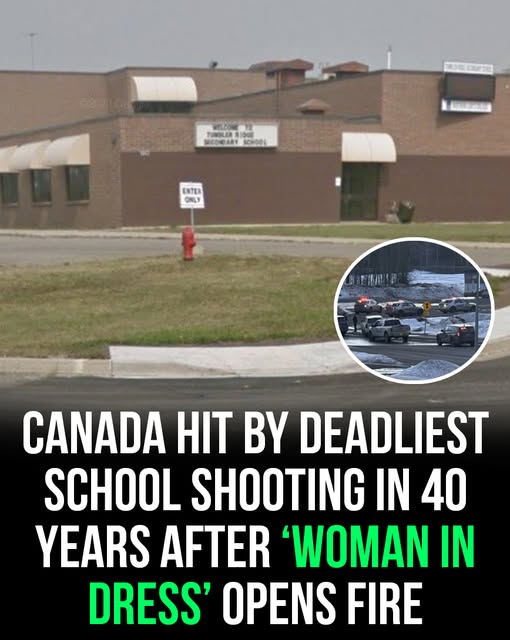
TUMBLED RIDGE, British Columbia — A deep sense of shock, sorrow, and disbelief has spread across Canada following a devastating mass shooting on Tuesday, February 10, 2026.
In the remote community of Tumbler Ridge in northeastern British Columbia. The tragic events — which unfolded during what began as a typical winter afternoon.
Ended with nine people dead and at least 27 others wounded, marking one of the deadliest acts of mass violence in recent Canadian history.
Nestled in the foothills of the Rocky Mountains and home to roughly 2,400 people, Tumbler Ridge, a town known for its tight‑knit community and quiet way of life, has been profoundly shaken by the events that unfolded at a local residence and Tumbler Ridge Secondary School.
A Quiet Afternoon Shattered
The sequence of violence began in the early afternoon. Just after 1:20 p.m. local time, the Royal Canadian Mounted Police (RCMP) received reports of an active shooter at Tumbler Ridge Secondary School, a public institution that serves approximately 175 students from grades 7 through 12.

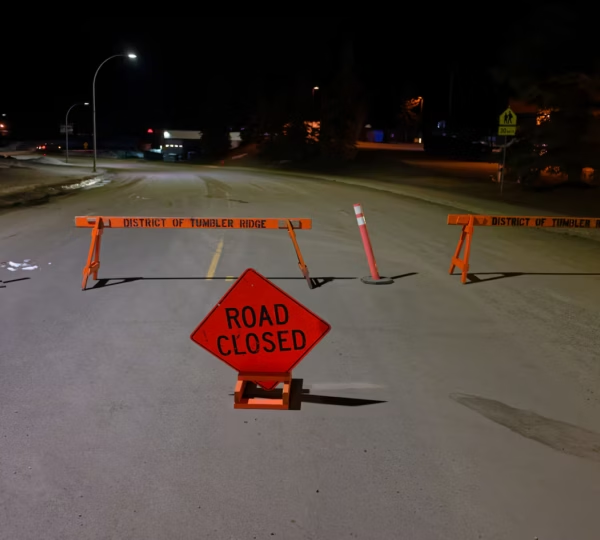
Within minutes, RCMP officers were on the scene, initiating emergency procedures in one of the most rapid law‑enforcement responses in recent Canadian memory. Local authorities issued a Police Initiated Public Alert (PIPA) urging residents in Tumbler Ridge and nearby communities to shelter in place, lock doors, and follow instructions from police as the situation developed.
But investigators later confirmed that the attack did not begin at the school itself. Prior to the school assault, the suspected shooter had fatally shot two family members at a private residence in Tumbler Ridge. The victims, a 39‑year‑old woman and an 11‑year‑old boy, were later identified as the suspect’s mother and step‑brother.
Police say the first calls to emergency services referenced gunfire at the secondary school; a family member then alerted authorities about the shootings at the residence as officers were responding.
The Attack at the School
Once on site at Tumbler Ridge Secondary School, RCMP officers, joined by local first responders and emergency personnel, quickly entered the building to locate the threat and secure the scene. Inside, authorities discovered multiple victims, and found an individual believed to be the attacker who had died from an apparent self‑inflicted gunshot wound.
Police later confirmed that six people were found deceased inside the school. A seventh victim, seriously wounded, died while being transported to a hospital for advanced medical care.
The majority of the victims inside the school were students, ranging in age from 12 to 13 years old, alongside one adult educator. Authorities have not publicly released full names or personal details of the victims pending family notifications, but RCMP Deputy Commissioner Dwayne McDonald confirmed that they included an adult female educator and a group of young adolescents who were students at the school.
Injuries and Medical Response
In addition to those killed, at least 27 individuals were wounded in the attack. Many of those injured suffered non‑life‑threatening wounds, yet several were badly hurt and required urgent medical treatment.
Local health facilities and emergency services were quickly overwhelmed as first responders treated wounded students, staff and others present at the school. At least two victims with serious injuries were airlifted by air ambulance to medical centres outside the community for higher levels of care.
Teachers, support staff, and student peers were among those providing immediate care and comfort to the injured while awaiting the arrival of emergency medical crews, a testament to the community’s resilience even amid overwhelming tragedy.
Lockdown, Evacuation, and First Responder Efforts
The response from law enforcement and emergency services was swift and decisive. RCMP officers reportedly reached the school within two minutes of receiving the first calls about an active shooter — a response time that provincial officials later described as critical in preventing further casualties.
As word of the shooting spread, teachers and staff acted quickly to execute lockdown procedures. Students were instructed to shelter in place, lock doors, and barricade classroom entrances with furniture as best they could. Videos captured outside the school during the ordeal showed students evacuating the building with their hands raised as police vehicles surrounded the site and emergency helicopters hovered overhead.
First responders from the RCMP, local fire departments, and medical services worked to evacuate students and staff safely, provide first aid, and secure the entire area. As the tense hours passed, families and loved ones gathered outside the school and nearby community centers, searching for information and waiting anxiously for news.
A Community United in Shock and Grief
Tumbler Ridge, a town of just a few thousand people where most residents know one another by name or through family connections, has been profoundly affected by the events. Mayor Darryl Krakowka, speaking in the immediate aftermath, described the massacre as “devastating” and emotionally overwhelming, noting that many of those affected were people he knew personally.

Local clergy, volunteers, and emergency personnel have stepped forward to support families, organize vigils, and provide vital resources such as grief counselling and trauma support. Community centers, churches, and public spaces quickly became gathering points for shared mourning, mutual support, and collective remembrance.
Counsellors and mental health professionals have been deployed to help students, families, and first responders cope with shock, trauma and loss — acknowledging that healing from such a profound tragedy will take time and sustained support.
What We Know About the Suspect
Police have identified the suspected shooter as 18‑year‑old Jesse Van Rootselaar of Tumbler Ridge, who was found deceased inside the school. Authorities have confirmed that the death was from an apparent self‑inflicted injury.
In press conferences, RCMP officers said that Van Rootselaar acted alone, and investigators had found no evidence of additional suspects or ongoing danger to the public.
Officials have also disclosed that the suspect had a history of contact with law enforcement related to mental health concerns, including prior visits to the family home by police under British Columbia’s Mental Health Act. Police confirmed that in a previous visit, firearms in the home were seized under the Criminal Code — but were later returned after a lawful petition.
As of now, authorities have not released an official motive, and investigators have cautioned against premature conclusions. They stated that determining why the attack occurred and what factors may have contributed will take time and exhaustive examination of evidence, digital records, interviews, and other information.
The Tumbler Ridge tragedy has reverberated far beyond the remote town, capturing national attention and prompting expressions of grief and solidarity from leaders across Canada. Prime Minister Mark Carney issued an official statement describing himself as “devastated” by the news of multiple deaths and injuries in such a small and peaceful community. He emphasized the importance of supporting the victims’ families and praised the swift actions of first responders, police, and school staff who intervened to prevent even greater loss of life. (cbc.ca)
Similarly, British Columbia Premier David Eby called the incident “an unimaginable tragedy” and urged all citizens to look out for one another, highlighting the need for both immediate and long-term mental health and trauma support.

Premier Eby announced that the provincial government would deploy counselling teams to Tumbler Ridge and nearby communities and make resources available for children, students, and adults who were directly or indirectly affected. Flags across British Columbia and in key federal government buildings were lowered to half-mast in tribute to the victims.
Opposition leaders and municipal politicians across Canada echoed these sentiments, calling for unity and compassion in the face of such senseless violence. Members of Parliament, provincial legislators, and local councillors emphasized that the loss would be felt for years to come, particularly in small communities like Tumbler Ridge where personal connections run deep.
Vigils and memorial gatherings were immediately organized, with hundreds of residents participating in moments of silence to honor those killed and to show solidarity with survivors and grieving families.
The Historical Context of Mass Shootings in Canada
While Canada experiences far fewer mass shootings than some other nations, incidents of this severity are devastating precisely because of their rarity and their impact on public consciousness. The Tumbler Ridge shooting has prompted comparisons with past acts of extreme violence, such as:
- École Polytechnique Massacre (Montreal, 1989): A gender-based attack that resulted in 14 deaths and prompted significant reforms to Canada’s gun laws.
- Nova Scotia Rampage (2020): A 13-hour killing spree that left 22 dead and reignited debates on firearm regulations and rural policing.
Experts emphasize that while Canada’s strict gun control framework has historically limited firearm-related violence compared with some countries, the Tumbler Ridge incident illustrates that even communities with strong safety measures are not immune to tragic events.
Following previous mass shootings, Canada implemented tighter firearm regulations, including bans on certain assault-style rifles, enhanced buyback programs, and strengthened licensing requirements. However, law enforcement officials note that enforcement, monitoring, and community mental health services remain critical factors in preventing violence — issues that will likely see renewed scrutiny in the aftermath of the Tumbler Ridge tragedy.
Investigation and Forensic Analysis
RCMP and forensic teams continue to conduct a meticulous investigation into the shooting. Authorities have confirmed the recovery of two firearms from the school — a long gun and a modified handgun — and forensic specialists are analyzing ballistic evidence to reconstruct the sequence of events.

Police are also reviewing digital evidence, including social media accounts, communications, and any available surveillance footage, to gain a comprehensive understanding of the suspect’s movements, planning, and potential motivations. Authorities caution that such investigations are complex and require careful evaluation to avoid misinformation.
Deputy Commissioner McDonald emphasized that while the shooter acted alone, investigators are examining all potential connections between the suspect and the victims, including social, familial, and psychological factors. RCMP officials have not released a timeline of motive or a manifesto, and have explicitly asked the public to refrain from speculation, stating that determining why the attack occurred will require months of investigation.
Impact on Students, Families, and the Community
For the students and families of Tumbler Ridge Secondary School, the aftermath of the shooting has been particularly traumatic. Hundreds of students were safely evacuated, yet the psychological toll of witnessing violence at such close proximity is profound.
Trauma counsellors from both provincial and national organizations have been deployed to provide immediate support, including one-on-one sessions, group therapy, and long-term follow-up services.
Parents reported feeling an intense mixture of fear, helplessness, and anger as they rushed to the school upon receiving emergency alerts. Teachers and school staff, praised for their quick thinking and courage, worked to barricade classrooms, calm frightened students, and ensure safety until authorities arrived. The coordination between first responders and school personnel likely prevented even greater loss of life.
Community leaders are urging residents to support each other through shared grief. Local organizations, including churches, volunteer groups, and municipal offices, have mobilized to provide meals, temporary shelter, and transportation for families visiting the town during this crisis. Mental health professionals emphasize the importance of open dialogue and communal coping in helping children and adults process the emotional impact.
National and International Response
News of the mass shooting spread rapidly through Canadian media and international news networks, sparking a wave of condolences from foreign leaders and organizations. Governments around the world expressed sympathy for the victims and solidarity with Canada, highlighting the global resonance of tragedies that affect children and communities.
In Canada, social media platforms have become both a source of information and a venue for collective mourning. Many Canadians shared messages of support, coordinated vigils, and launched community-driven initiatives to provide assistance to survivors and families. While these platforms have helped unite communities in grief, authorities have repeatedly reminded the public to avoid sharing unverified information that could interfere with the ongoing investigation.
Renewed Debate on Gun Control and Mental Health
As in previous instances of mass violence, the Tumbler Ridge shooting has reignited national debates surrounding firearm regulation, access to mental health services, and preventative measures in schools. Lawmakers, academics, and advocacy groups are calling for careful review of policies related to firearm storage, licensing, and monitoring, particularly for individuals with known mental health concerns.
Experts note that while the shooter’s firearms had previously been seized, lapses in regulation and enforcement — combined with underlying mental health issues — may have contributed to the tragedy. Public safety analysts suggest that additional resources for early intervention, community mental health programs, and rural emergency response training may be key factors in preventing future events
The Tumbler Ridge mass shooting of February 10, 2026, has left an indelible mark on the town and on Canada as a whole. In the days following the tragedy, the tight-knit community has been engaged in an ongoing process of mourning, reflection, and collective resilience. While grief remains raw, the responses from families, neighbors, and local leaders illustrate the remarkable solidarity of a town confronting unimaginable loss.
Vigils, Memorials, and Collective Mourning
Almost immediately after the shooting, local organizations and residents organized public vigils to honor the victims. Candles, flowers, and handwritten messages filled community centers and public squares, with hundreds of participants — including students, parents, educators, and local officials — gathering in remembrance. Clergy from multiple denominations conducted interfaith memorial services, emphasizing healing, compassion, and mutual support.
Mayor Darryl Krakowka, addressing a community gathering, described Tumbler Ridge as a “family town,” highlighting how neighbors had opened their homes, shared meals, and offered comfort to those in need. “We have lost far too much, but what we are witnessing now is the strength of our people,” Krakowka said. “In grief, we find each other, and together we will move forward.”
Schools, which typically serve as hubs for social activity and learning, have become central locations for counseling and mental health support. Teachers and administrators are working closely with trauma counselors to provide long-term psychological support, while also helping students return to a sense of normalcy and safety in educational spaces.
Counseling and Trauma Support for Survivors
The impact of witnessing violence firsthand is profound, particularly for young adolescents. Mental health professionals stress that the psychological effects of mass shootings can last for years, potentially resulting in anxiety disorders, depression, or post-traumatic stress disorder (PTSD).
In response, counseling services have been expanded in Tumbler Ridge and surrounding communities, ensuring that students, parents, and staff have access to trauma-informed care.
Provincial health authorities have dispatched teams trained in critical incident stress management, helping survivors process grief, fear, and shock. Group sessions have been organized to allow students and families to share their experiences in safe, structured environments. Psychologists emphasize that these interventions, combined with community support, are essential for long-term recovery and resilience.
The Broader Societal Impact
While the tragedy is acutely felt in Tumbler Ridge, its effects are national in scope. Mass shootings in Canada remain rare, but each incident has historically prompted widespread reflection on public safety, gun laws, and mental health services. Experts suggest that the Tumbler Ridge incident will likely reignite debates over the following:
- Firearm Regulation: Questions are emerging about firearm licensing, storage, and access — particularly for individuals with a history of mental health issues. Investigators are examining how the shooter obtained weapons and whether existing laws or enforcement mechanisms were adequate.
- Mental Health Support: Analysts emphasize the importance of early intervention and community-based mental health resources, noting that rural towns often have limited access to mental health care.
- School Safety and Preparedness: While Tumbler Ridge Secondary School’s rapid lockdown and evacuation protocols likely prevented additional deaths, experts highlight the need for ongoing active shooter preparedness and safety education in schools across Canada.
A Community United in Action
Despite the immense loss, Tumbler Ridge has demonstrated extraordinary unity. Residents have volunteered in multiple capacities — providing transportation for grieving families, assisting with memorials, or offering temporary housing. Local businesses and civic organizations have donated supplies and meals, and neighbors have opened their doors to anyone needing comfort or assistance.
Faith leaders and community coordinators have emphasized the importance of collective healing. Rather than focusing on blame, the town has prioritized support, compassion, and rebuilding, demonstrating a model of communal resilience that has drawn attention nationwide.
Long-Term Reflections and Policy Implications
As the investigation continues, Canadian policymakers and law enforcement agencies are likely to scrutinize the incident for lessons on preventing future tragedies. Discussions may focus on:
- Enhancing firearm safety regulations while balancing the rights of law-abiding citizens.
- Expanding mental health resources in rural areas where access is limited.
- Strengthening school safety protocols with a focus on practical, rapid-response measures.
- Community engagement initiatives that promote social cohesion and identify individuals who may be at risk of committing acts of violence.
Past Canadian mass shootings, including the École Polytechnique massacre in 1989 and the Nova Scotia rampage in 2020, led to substantive legislative and policy reforms. The Tumbler Ridge shooting is expected to contribute to ongoing dialogue, potentially influencing future gun laws, public safety policies, and mental health programming in Canada.
Personal Stories of Loss and Courage
Amid the tragedy, stories of personal courage and community solidarity have emerged. Teachers who barricaded classrooms, students who protected younger peers, and neighbors who immediately responded to assist the injured have been widely praised for their bravery.
One parent recounted rushing to the school upon receiving the alert, finding neighbors comforting students in the cold winter air. Another witness described how classmates held hands and sang quietly to calm each other while locked in a classroom. These accounts underscore the resilience and humanity that can emerge even in the darkest moments.
Looking Ahead: Healing and Recovery
The road to recovery for Tumbler Ridge will be long. Families and friends continue to mourn, students and staff process trauma, and law enforcement continues a meticulous investigation into the events.
Counselors, educators, and civic leaders stress that collective healing requires time, patience, and sustained support. Provincial and federal resources are being deployed not only for immediate trauma intervention but also for long-term mental health care, academic support for students, and programs designed to strengthen community resilience.
Nationally, Canadians are being called upon to show solidarity with Tumbler Ridge through continued support for victims and survivors, as well as careful engagement in discussions surrounding public safety and prevention strategies. The tragedy serves as a stark reminder of the fragility of life, the importance of mental health awareness, and the critical need for community cohesion in responding to crisis.
A Nation Reflects and Remembers
Flags remain at half-mast, vigils continue, and the stories of those lost and injured resonate across Canada. While the Tumbler Ridge shooting has left an undeniable scar, it has also highlighted the strength, compassion, and solidarity of a community united in grief.
Canadians are reminded that healing is a shared responsibility — not only to remember the victims but also to support those who survived and to work toward prevention of future tragedies. For Tumbler Ridge, a small town in the Rocky Mountain foothills, the path forward will be shaped by memory, resilience, and the enduring spirit of a community that has come together in the face of unspeakable tragedy.
