
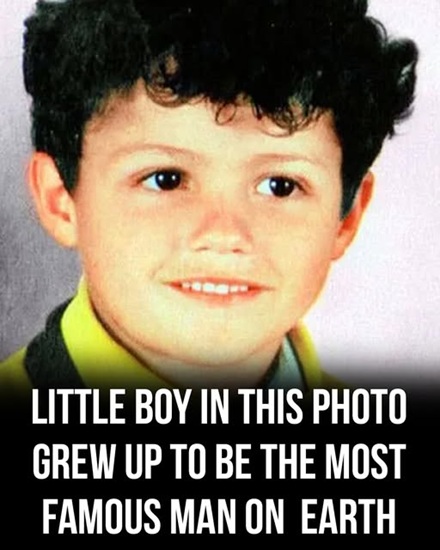
He grew up on a tiny, windswept island in the middle of the Atlantic Ocean, far from the glitz and grandeur of the football stadiums that would one day echo with his name.
The island of Madeira, Portugal, is renowned for its dramatic cliffs, rugged landscapes, and the resilience of its people—qualities that would mirror the character of the boy who became one of the most famous athletes in the world.
Cristiano Ronaldo dos Santos Aveiro’s story is one of astonishing perseverance, remarkable talent, and an unwavering determination to rise above the odds, a story that begins long before the roar of the crowds and the flash of cameras.
Humble Beginnings in Madeira
Cristiano Ronaldo was born on February 5, 1985, in Funchal, the capital city of Madeira, as the youngest of four children in a modest family. His father, José Dinis Aveiro, worked as a municipal gardener and kit man for a local football club, while his mother, Maria Dolores dos Santos Aveiro, juggled multiple jobs, including cleaning houses, to support her family. Despite their hard work, the family struggled financially, and life on the island was marked by limited resources and daily challenges.

Ronaldo’s entry into the world was fraught with danger. His mother once attempted to induce a miscarriage while pregnant with him, drinking strong black beer and running until she collapsed—a desperate act recommended by a neighbor. Miraculously, the attempt failed, and Ronaldo survived, a circumstance that foreshadowed the resilience and survival instincts that would become central to his life story. Reflecting on his childhood in later years, Ronaldo has often acknowledged the fragility of life and how early experiences shaped his appreciation for opportunity and determination to succeed.
Childhood Amidst Struggle and Hardship
Life in the Aveiro household was far from easy. José Dinis Aveiro struggled with alcoholism, a battle that ultimately ended tragically when he passed away in 2005 from liver-related complications. Ronaldo has been candid about his father’s struggles, stating, “I really don’t know my father 100 percent. He was a drunk person. I never spoke with him like a normal conversation. It was hard.” Despite the absence of a stable paternal figure, Ronaldo’s mother remained a steadfast source of guidance and support, nurturing his budding passion for football and instilling values of discipline, responsibility, and perseverance.
From an early age, Ronaldo demonstrated an extraordinary drive and a natural affinity for football. He would spend hours kicking a makeshift ball around the streets of Funchal, often using rolled-up socks or scraps of paper when a proper ball was unavailable. His intensity, focus, and dedication were remarkable, even for a child, and his coaches quickly noticed a raw talent that went beyond his peers. His early football practice sessions were relentless, a combination of innate ability and the desire to escape the constraints of his modest upbringing.
A Heart Condition That Threatened Everything
At just 15 years old, Ronaldo faced a potentially life-threatening obstacle. During a routine medical examination, doctors discovered an abnormality in his heart—a condition that, if left untreated, could have ended his dreams of becoming a professional footballer. The diagnosis was alarming: a rapid heartbeat due to a cardiac anomaly that required immediate intervention. Rather than allowing fear to dominate, Ronaldo approached the situation with the same determination he brought to football. He underwent a successful surgical procedure, which involved using lasers to merge multiple cardiac pathways into one stable pathway, effectively correcting the condition.
This pivotal moment was not just a medical triumph but a psychological turning point. Ronaldo later reflected that the experience gave him a deeper understanding of mortality and a renewed commitment to life, fitness, and his ambitions. The scare instilled a profound sense of urgency and resilience, qualities that would define his professional journey and personal discipline.

Early Football Journey in Madeira
Even as a child, Ronaldo’s talent was unmistakable. He began his formal football education at Andorinha, a local club where his father worked. His early displays of skill—speed, dribbling, and precision—set him apart, and by age 10, he had moved to Nacional, a more competitive youth club in Funchal. Here, Ronaldo began to experience the pressures and rigors of organized football. Coaches recognized his exceptional technical ability and tactical awareness, even at such a young age.
Despite his evident talent, young Ronaldo faced typical childhood challenges magnified by his extraordinary ambitions. His competitive nature sometimes manifested in a fiery temper; he struggled with authority and was known to have emotional outbursts during matches or training. These moments, while challenging, were early indicators of the intense mental and emotional focus that would characterize his professional career.
A Bold Move at Age 12: Leaving Home for Lisbon
At just 12 years old, Ronaldo made a life-changing decision: he left his family and the island of Madeira to pursue football on the mainland of Portugal. Joining the youth academy of Sporting CP in Lisbon was a dream opportunity but also a monumental challenge for someone so young. The move required him to adapt to an entirely new environment, live away from his family, and face rigorous training schedules while continuing his education.
Life in Lisbon was not easy. Ronaldo struggled academically and did not progress beyond the 6th grade, but he excelled on the pitch. His natural talent, combined with relentless work ethic and focus, made him stand out among peers who were often older and more physically developed. The early separation from home, while emotionally taxing, forged independence, resilience, and a maturity that would serve him throughout his career.
At Sporting CP, Ronaldo’s skills flourished under professional coaching. He began developing the flair, precision, and versatility that would later define his style. Observers noted his exceptional speed, balance, and ability to execute complex dribbling maneuvers at a level far beyond his age. By the time he was 16, Ronaldo had already attracted the attention of major European clubs, setting the stage for a professional career that would soon capture the world’s imagination.
Cristiano Ronaldo’s journey from a promising youth talent to a global football icon accelerated dramatically at Sporting CP, one of Portugal’s most respected clubs. Having joined the academy in Lisbon at age 12, Ronaldo faced a new set of challenges: adjusting to life away from his family, rigorous training routines, and high expectations from coaches and teammates. These years were formative, not just in terms of football skills, but in building the mental toughness that would define his career.

At Sporting CP, Ronaldo quickly distinguished himself through an extraordinary combination of speed, agility, and technical prowess. His dribbling ability, once considered unusual for a player so young, became a hallmark of his style. Coaches marveled at his ability to execute complex moves with precision, often leaving defenders in his wake. But it was not just talent that set Ronaldo apart—his relentless work ethic, discipline, and obsession with improvement became evident during daily training sessions. He spent countless hours practicing free kicks, perfecting shots with both feet, and studying professional players to emulate their techniques.
Despite his rising talent, Ronaldo faced challenges typical of an ambitious teenager. His competitive nature sometimes manifested in defiance and fiery outbursts, a reflection of his intense desire to succeed. Coaches noted his occasional frustration with limitations, but these moments were quickly channeled into motivation. Every setback, from losing a match to struggling with physical development, became an opportunity to push harder and refine his craft.
A Memorable First-Team Debut
By the age of 16, Ronaldo had become the youngest player to sign a professional contract with Sporting CP, a remarkable achievement that placed him firmly on the radar of Europe’s top clubs. His first-team debut came shortly thereafter, on October 7, 2002, in a Primeira Liga match against Moreirense. Ronaldo’s performance, though brief, demonstrated flashes of brilliance—speed, vision, and a keen sense of positioning—that hinted at the extraordinary potential he would fulfill in the years to come.
The debut marked the beginning of a meteoric rise. Sporting CP’s coaching staff and management recognized that Ronaldo possessed a rare combination of technical skill, athleticism, and psychological resilience. In training and matches, he was relentless, often outworking players twice his age. Scouts from across Europe began to take notice, setting the stage for a transfer that would change the trajectory of his career and global football history.
The Manchester United Era: Growth Under Sir Alex Ferguson
In the summer of 2003, Ronaldo’s life changed forever. After a friendly match against Manchester United, legendary manager Sir Alex Ferguson was so impressed with the 18-year-old winger that he immediately pursued the signing. The transfer was finalized for a reported £12.24 million, a fee that at the time reflected potential rather than proven dominance. Ronaldo, now far from Madeira and even Lisbon, stepped into one of the world’s most demanding football environments.
The early days at Manchester United were both challenging and transformative. Ferguson’s leadership was critical in shaping Ronaldo’s approach to professional football. He emphasized discipline, tactical awareness, and humility—qualities that would complement Ronaldo’s natural talent. Initially, critics questioned whether the young Portuguese winger could adapt to the physicality and pace of the English Premier League. Ronaldo, however, quickly silenced doubts through dedication and performance, using every training session to push his limits and elevate his game.
During these formative years, Ronaldo refined several aspects of his play. His dribbling became sharper, his shooting more precise, and his free-kick technique evolved into a signature weapon. He developed the trademark stepovers and feints that would later mesmerize defenders across Europe. Beyond technical skill, Ferguson instilled in him the importance of mental toughness and leadership—qualities that Ronaldo would later display consistently, both at club and international levels.

Rise to Fame and Early Accolades
Ronaldo’s performance at Manchester United soon captured global attention. By the 2006–2007 season, he had become a key player for the team, contributing goals, assists, and moments of inspiration that often turned matches in United’s favor. He helped the club secure multiple Premier League titles and played pivotal roles in domestic and European competitions. His speed on the wing, coupled with precise finishing, made him a constant threat and a favorite of fans worldwide.
During this period, Ronaldo began receiving individual accolades that underscored his growing reputation. His dribbling, work ethic, and goal-scoring prowess earned him the Premier League Player of the Season award, as well as recognition from UEFA and FIFA. By combining extraordinary talent with relentless self-discipline, Ronaldo was transforming from a promising young player into a superstar capable of defining an era of football.
International Emergence: Representing Portugal
Parallel to his club success, Ronaldo’s international career was taking shape. Making his debut for the Portugal national team in 2003 at the age of 18, he quickly became a fixture for the squad. Despite initial skepticism about his consistency, Ronaldo demonstrated remarkable maturity, contributing both goals and leadership. His presence brought a new dynamic to the team, blending technical skill with relentless energy.
One of the earliest milestones in his international career came during the 2004 UEFA European Championship, hosted by Portugal. Ronaldo’s performances helped the host nation reach the final, where they narrowly lost to Greece. Though disappointed, the tournament cemented his reputation as a rising star on the international stage. The experience also provided crucial lessons in handling pressure, media scrutiny, and expectations—lessons that would serve him well in the years to follow.
Personality, Work Ethic, and Public Perception
During these early professional years, Ronaldo’s personality and approach to the game became increasingly visible. Known for his intense focus, perfectionism, and obsession with fitness, he was often described as a player who left nothing to chance. His rigorous training routines, careful diet, and attention to detail set a standard that few peers could match. Yet, alongside his seriousness on the pitch, Ronaldo exhibited charm and humility in personal interactions, endearing him to fans and teammates alike.
Off the field, he navigated the pressures of sudden fame with growing confidence. Media attention, sponsorships, and public scrutiny were intense, but Ronaldo’s upbringing—marked by adversity, discipline, and early independence—helped him remain grounded. He learned to balance public expectation with personal goals, a skill that would prove vital as his career trajectory continued upward.
In 2009, Cristiano Ronaldo made a historic transfer to Real Madrid for a then-world record fee of €94 million. The move marked the beginning of what many consider the most prolific phase of his career. In Spain, Ronaldo joined a team already filled with stars but immediately set himself apart through his extraordinary goal-scoring ability, athleticism, and unmatched dedication to training. His combination of speed, strength, technical skill, and an unrelenting drive to improve became the foundation for a period of unprecedented success.
At Real Madrid, Ronaldo’s achievements reached new heights. He became the club’s all-time leading goal scorer, netting 450 goals in just 438 appearances. His consistency was extraordinary—he scored over 50 goals in six separate seasons and became known for delivering in the biggest moments, including Champions League finals, El Clásico matches against Barcelona, and domestic cup deciders. His signature free-kicks, unstoppable headers, and ability to score with either foot made him virtually impossible for defenders to contain.

Beyond individual feats, Ronaldo’s presence helped Real Madrid secure multiple La Liga titles and a record five UEFA Champions League trophies in a decade, cementing his place among the greatest players in the history of football. His leadership on and off the pitch inspired teammates, set professional standards, and captivated fans worldwide.
Juventus: Dominance Across Borders
In 2018, Ronaldo transferred to Juventus, seeking new challenges and opportunities. In Italy, he continued to break records, scoring over 100 goals in three seasons and leading Juventus to multiple Serie A titles. His arrival brought renewed energy to the team, and his professional approach influenced both teammates and young talent. Ronaldo’s ability to adapt his game to different leagues and styles showcased not only technical versatility but also mental resilience—a hallmark of his long career.
International Triumphs with Portugal
While his club career flourished, Ronaldo’s commitment to Portugal never wavered. In 2016, he captained the national team to their first major international trophy at the UEFA European Championship. Despite being forced off the field in the final due to injury, his leadership, energy, and influence inspired the team to secure victory over France, a moment etched forever in Portuguese football history.
In 2019, he added another international achievement by leading Portugal to victory in the inaugural UEFA Nations League. Over his international career, Ronaldo has earned more than 220 caps and scored over 140 goals, making him one of the most prolific international goal scorers in history. His impact transcends statistics; he has inspired generations of players, instilled national pride, and elevated Portugal’s status in global football.
Records, Awards, and Unparalleled Longevity
Cristiano Ronaldo’s career is defined by extraordinary records. He has won multiple Ballon d’Or awards, recognizing him as the best player in the world on several occasions. In 2024, he became the first male footballer to score 900 official career goals, a milestone that reflects not only talent but longevity and consistency. Across domestic leagues, European tournaments, and international competitions, Ronaldo has consistently maintained peak performance, a testament to his dedication to fitness, training, and mental preparation.
His accolades include top scorer awards in the Premier League, La Liga, Serie A, and the Champions League. He has been recognized by UEFA as the Player of the Year multiple times, cementing his reputation as one of the most decorated athletes in football history. Forbes has repeatedly ranked him among the highest-paid athletes in the world, while Time magazine included him in their list of the 100 most influential people, reflecting his impact both on and off the pitch.
Global Influence and Social Media Power
Beyond the stadium, Ronaldo’s influence has reached a global audience. He became the first person to surpass 1 billion followers across social media platforms including Facebook, Twitter, Instagram, and YouTube. Fans from every continent engage with his content—celebrating goals, workouts, family moments, and charitable initiatives. His social media presence exemplifies how modern athletes can cultivate personal brands, inspire millions, and maintain a powerful connection with supporters worldwide.
Philanthropy and Personal Legacy
Ronaldo’s commitment to giving back has been notable throughout his career. He has donated millions to hospitals, disaster relief efforts, and children’s charities, often quietly and without seeking public recognition. In 2021, he donated funds to help rebuild schools in Gaza and to support hospitals in Portugal. Ronaldo’s philanthropy reflects a deep understanding of his platform and responsibility as a global icon, reinforcing his role as more than just an athlete.
Lessons from a Remarkable Journey
Cristiano Ronaldo’s life and career provide powerful lessons on resilience, dedication, and the pursuit of excellence. From the boy growing up in Madeira under challenging circumstances to the global superstar breaking records on football’s biggest stages, Ronaldo demonstrates that determination, hard work, and self-belief can overcome almost any obstacle.
Some key lessons include:
- Resilience in the Face of Adversity: Overcoming family struggles, a near-fatal heart condition, and early life challenges.
- Relentless Work Ethic: Daily commitment to training, fitness, and self-improvement.
- Adaptability and Learning: Adjusting to different leagues, cultures, and playing styles.
- Global Leadership: Inspiring fans, teammates, and aspiring athletes through performance, discipline, and social engagement.
A Legacy That Transcends Football
Today, at 40 years old, Cristiano Ronaldo stands as a living symbol of ambition, discipline, and perseverance. His journey—from a shy boy with humble beginnings on a small Atlantic island to one of the most celebrated athletes in human history—is a testament to the power of determination and resilience. Every goal, record, and accolade tells the story of a boy who refused to be defined by circumstance, who transformed challenges into motivation, and who relentlessly pursued excellence.
The rare childhood photograph of young Ronaldo that recently surfaced serves as a poignant reminder: behind every legend is a child with dreams, doubts, and untested potential. Ronaldo’s life reminds us that greatness is not merely a product of talent, but of dedication, resilience, and the courage to overcome adversity. From Madeira to Manchester, Madrid, Turin, and back again, his story continues to inspire millions, proving that with perseverance and passion, humble beginnings can lead to extraordinary achievements.
