
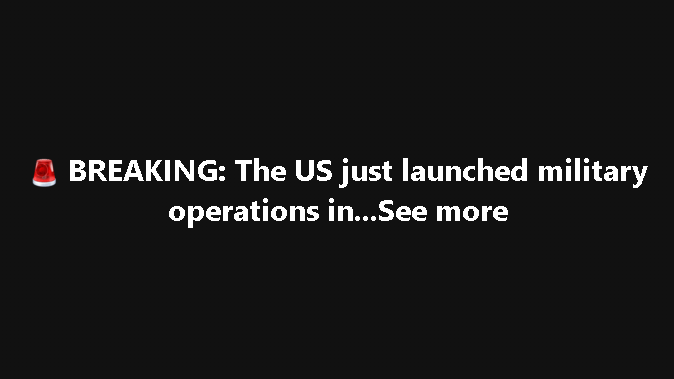
In the early months of 2026, the geopolitical landscape of Latin America has been defined by heightened uncertainty, particularly regarding the United States’ engagement with Ecuador.
While rumors have circulated widely on social media and digital news platforms suggesting the possibility of U.S. military operations on Ecuadorian soil, it is crucial to approach such claims with rigorous scrutiny.
As of March 4, 2026, neither the U.S. Department of Defense nor the Ecuadorian government has issued any official statement confirming military action. This silence is not unusual in international security affairs, where strategic ambiguity often serves as a diplomatic tool. Yet, in an era dominated by viral misinformation and instant news cycles, the lack of confirmation has created a climate of anxious speculation, reinforcing a “spiral of uncertainty” across both regional and global audiences.
Understanding the potential implications of any U.S. engagement in Ecuador requires a careful examination of the historical and structural context of U.S.-Ecuador relations. For decades, Ecuador has grappled with internal instability driven by a combination of socio-economic disparities, political volatility, and the presence of well-armed transnational criminal organizations.
The nation’s strategic location on the northern edge of the South American continent, its access to key Pacific ports, and its proximity to Colombia—a longstanding hotspot for illicit trafficking—have made it a focal point for international security efforts. Since the early 2000s, Ecuador has increasingly relied on collaboration with the United States in areas such as counter-narcotics operations, intelligence sharing, and law enforcement training. This partnership, often conducted quietly, has been characterized by measured intervention rather than overt military action.
The rise of violent criminal networks in Ecuador over the last several years has escalated the stakes of these bilateral efforts. By 2024, certain regions of Ecuador, particularly the provinces of Esmeraldas, Sucumbíos, and parts of Guayas, were experiencing unprecedented levels of organized crime activity. These groups, often well-funded and heavily armed, have expanded their influence over local communities, exerting both social and economic pressure.
The Ecuadorian government, headquartered in Quito, responded with an array of internal security measures that included police crackdowns, specialized counter-narcotics units, and increased intelligence cooperation with international partners. Within this framework, U.S. support has traditionally focused on providing training, surveillance technology, and logistical assistance, rather than direct combat engagement.
Despite this context, recent online reports and viral posts have painted a markedly different picture: one of immediate U.S. troop movements and potential military incursions. While such posts have gained traction due to their sensational framing, it is important to recognize that much of this content originates from fringe sources without credible verification.
Established international media outlets—including Reuters, Associated Press, and BBC News—have not reported any evidence of active U.S. military operations within Ecuador. The discrepancy between viral reports and verified information underscores a broader trend in contemporary information consumption: the “glitched” interpretation of routine security cooperation as a dramatic escalation. For instance, recent joint exercises in Ecuador, designed to strengthen port security and improve maritime interdiction, may have been mischaracterized online as evidence of a clandestine invasion.
Analyzing the potential scenarios, it becomes evident that any U.S. action would likely remain within the parameters of measured, strategic engagement rather than a full-scale military intervention. Past operations in the region, including counter-narcotics missions and specialized training programs, suggest that the United States prefers indirect approaches that leverage intelligence, logistical support, and targeted operations to achieve policy objectives.
A sudden large-scale deployment would not only contradict historical patterns but also violate diplomatic norms and international law, triggering immediate scrutiny from the Organization of American States (OAS), the United Nations, and regional partners.
Furthermore, the broader geopolitical environment in 2026 adds layers of complexity to any potential U.S. action. Latin America, while historically considered a U.S. sphere of influence, has seen increasing involvement from other global actors, including China, the European Union, and multilateral development organizations.
Ecuador itself has been balancing its relationships carefully, pursuing foreign investment and international aid while maintaining domestic sovereignty. Any overt military action by a foreign power would disrupt this balance and provoke intense diplomatic backlash, making unverified reports of an invasion highly improbable from a strategic standpoint.
At the same time, the human dimension of Ecuador’s internal conflict cannot be understated. Citizens in major cities such as Guayaquil and Quito have endured rising crime rates, including kidnappings, extortion, and violent clashes between security forces and criminal organizations. The social and psychological impact of living under these conditions has created an acute public desire for stability, which in turn amplifies sensitivity to any reports of foreign military activity. In this environment, misinformation can act as a force multiplier for fear, generating a “chilling” atmosphere in which speculation is easily mistaken for fact.
The first principle for navigating these claims, therefore, is a disciplined approach to information verification. Observers must differentiate between actual policy shifts and the amplified signals of digital rumor. Congressional hearings, official press releases, and credible journalism remain the definitive channels through which accurate information about U.S. engagement in Ecuador is likely to emerge. Until such sources confirm the nature and scope of any operation, all viral assertions should be considered speculative.
Finally, the moral and strategic calculus of U.S.-Ecuador engagement is inherently complex. On one hand, the United States has a vested interest in supporting Ecuador to prevent the expansion of criminal networks that could destabilize the region and threaten international trade routes. On the other hand, overt military intervention carries the risk of being perceived as neo-interventionist, potentially undermining the legitimacy of U.S. foreign policy and provoking regional tension.
Historically, U.S. actions in Latin America have been carefully calibrated to balance these objectives, emphasizing support over occupation, cooperation over unilateral action. This nuanced understanding is essential to interpreting the current reports: while the “light of truth” in early March 2026 may appear obscured by rumor and viral posts, historical patterns and established protocols suggest a measured, strategic, and primarily non-combative U.S. presence in Ecuador.
As we move further into 2026, the regional implications of any potential U.S. involvement in Ecuador become increasingly complex. Ecuador does not exist in isolation; its stability directly affects the broader Andean and northern South American corridor, including Colombia, Peru, and Venezuela. Historically, the Andean region has served as both a strategic economic corridor and a battleground for transnational criminal activity.
Ecuador’s position along key maritime routes and its proximity to Colombia’s northern borders make it a focal point for international counter-narcotics efforts. Any perceived escalation—whether through rumors or verified operations—has the potential to reverberate across neighboring states, influencing both security strategies and diplomatic postures.
Over the past decade, Ecuador has faced a multi-dimensional security challenge. The principal threat comes from transnational criminal organizations involved in drug trafficking, illegal mining, human smuggling, and organized violence. These groups, often interconnected across multiple borders, operate with considerable autonomy, using local communities as both cover and recruitment pools.
In 2025, intelligence assessments indicated that criminal networks had established semi-permanent operational zones in provinces such as Esmeraldas, Sucumbíos, and parts of Guayas. These areas were marked by intermittent armed clashes, disappearances, and extortion activities that created an ongoing humanitarian and law enforcement challenge.
In response, Ecuadorian authorities implemented a strategy that combined targeted police operations with international support. The United States, under its long-standing bilateral security agreements, provided technical assistance, intelligence analysis, and specialized training programs for counter-narcotics units.
Notably, joint initiatives focused on maritime interdiction, port security, and surveillance of key transit routes for illicit substances. While these efforts have helped reduce some operational capabilities of criminal networks, the structural nature of the threat means that Ecuadorian forces still confront persistent and decentralized criminal activity.
This context is critical in understanding the online claims of U.S. military action. What some viral sources describe as a sudden invasion could in fact be the visible component of ongoing covert support operations. For example, the deployment of U.S. technical advisors or intelligence teams embedded with Ecuadorian forces could be misinterpreted as evidence of direct military involvement.
Similarly, advanced equipment deliveries or joint training exercises, though routine in the bilateral security partnership, may be exaggerated in sensational reporting. The “spiral of misinformation” that spreads via social media often conflates these legitimate security activities with hypothetical combat operations, generating public concern disproportionate to the factual situation.
Beyond the immediate Ecuadorian context, regional actors are closely monitoring any U.S. engagement. Colombia, with its own long-standing battle against organized crime, maintains frequent intelligence coordination with Ecuador and the United States.
Peru, sharing a long Amazonian border with Ecuador, has increasingly invested in cross-border cooperation to prevent the spillover of criminal activities. Venezuela, despite internal political instability, observes developments with strategic caution, as regional shifts can influence migratory patterns and trade flows. Any significant kinetic action by a superpower, even in a targeted manner, could recalibrate alliances, economic partnerships, and security cooperation across these neighboring states.
The public perception of these events in Ecuador is equally significant. Citizens in urban centers such as Quito and Guayaquil, as well as in rural border regions, have lived through years of escalating violence. Public trust in security forces, government institutions, and international partners is deeply shaped by everyday experiences with crime and uncertainty. In this environment, the proliferation of unverified reports contributes to a “chilling” climate, where speculation is often treated as fact.
Local populations, while desiring stability, may experience heightened anxiety when social media posts suggest the presence of foreign troops, regardless of whether these claims are accurate. This dynamic underscores the importance of credible, transparent communication by both national authorities and international partners.
Several plausible strategic scenarios emerge when assessing the potential for U.S. involvement. The most likely scenario, based on historical precedent and existing security agreements, involves continued technical support, intelligence sharing, and limited advisory operations.
This approach minimizes the risk of diplomatic fallout while maximizing the effectiveness of Ecuador’s law enforcement response. A second scenario could involve narrowly defined, targeted operations designed to disrupt specific criminal networks, such as coordinated raids with Ecuadorian authorities. Even in such cases, the actions would be highly specialized and limited in scale, rather than representing a broad military incursion.
Conversely, the least likely but most sensationalized scenario is a full-scale kinetic intervention, involving U.S. ground forces deployed in Ecuadorian territory. Such an operation would contradict decades of diplomatic practice, violate international norms, and provoke immediate responses from regional organizations such as the Organization of American States (OAS) and the United Nations Security Council.
Furthermore, a large-scale deployment would likely generate global media coverage from credible outlets, which has not occurred as of early March 2026. Therefore, the absence of confirmation from reputable sources strongly suggests that these viral reports are speculative, amplified by social media algorithms and click-driven platforms.
Importantly, the digital environment itself plays a critical role in shaping perceptions. Social media platforms, messaging apps, and online forums facilitate the rapid dissemination of unverified information, often framing it with urgent or sensationalist language. Headlines claiming “absolute” troop movements or imminent invasion capitalize on emotional reactions, bypassing careful analysis. For both international observers and local citizens, the challenge lies in distinguishing between factual developments, routine security operations, and viral exaggerations. The “light of truth” emerges only through verified reporting, official briefings, and methodical investigative work rather than through viral posts.
Finally, the moral dimension of any hypothetical intervention cannot be ignored. While some analysts may argue that U.S. involvement is necessary to prevent the collapse of regional security and protect broader international trade networks, others caution against the perception of neo-interventionism.
Historical precedent demonstrates that even well-intentioned interventions carry long-term consequences, including political backlash, social unrest, and the erosion of public trust. Any engagement in Ecuador, therefore, must balance operational effectiveness with diplomatic prudence, ensuring that the actions taken serve both immediate security objectives and the long-term stability of the nation.
In summary, the regional, strategic, and social complexities surrounding U.S.-Ecuador engagement in 2026 illustrate why sensational reports of large-scale military operations are highly unlikely. The combination of historical patterns, ongoing bilateral cooperation, regional interdependencies, and the mechanisms of modern information dissemination points toward a measured, non-combative presence.
For citizens, analysts, and international observers alike, the key remains disciplined verification, reliance on credible sources, and the recognition that viral claims often exaggerate ordinary security measures into hypothetical crises. The “active awareness” of the public and the international community serves as the strongest safeguard against misinformation, helping to preserve the stability and integrity of Ecuador’s ongoing security efforts.
As 2026 unfolds, the broader trajectory of U.S.-Ecuador relations and regional stability in northern South America remains contingent upon careful management of both real-world operations and perceptions in the digital information space.
While viral reports of alleged military operations in Ecuador have sparked international attention, a grounded analysis rooted in historical precedent and verified facts suggests a more measured reality. Understanding these dynamics requires not only examining immediate security threats and bilateral cooperation but also anticipating how political, economic, and social factors may influence both domestic and regional outcomes in the coming months.
1. The Strategic Future of Ecuadorian Security Cooperation
Ecuador’s ongoing struggle against transnational criminal organizations will likely continue to shape its relationship with the United States. Current security strategies emphasize precision, intelligence-driven operations, and capacity-building rather than overt kinetic intervention. In practical terms, this means U.S. involvement is expected to continue along lines of:
- Enhanced intelligence support: Providing Ecuadorian authorities with actionable intelligence regarding the movements of criminal networks, including coordination across national borders.
- Training and advisory programs: Focusing on counter-narcotics, maritime interdiction, and special operations training for Ecuadorian police and military units.
- Technological assistance: Implementing surveillance, communications, and logistics systems designed to strengthen domestic operational capacity.
Such cooperation reflects a long-term strategic approach aimed at minimizing direct intervention while maximizing the effectiveness of Ecuador’s internal security forces. By continuing these efforts, both countries aim to address the root causes of organized crime without the risks inherent in a large-scale foreign military presence.
2. Regional Implications and Multilateral Considerations
Any escalation or perceived U.S. presence in Ecuador inevitably intersects with broader regional dynamics. Colombia, Peru, and Venezuela, as well as regional organizations like the Organization of American States (OAS), monitor developments closely. Historically, unilateral military actions in Latin America have prompted diplomatic friction, highlighting the importance of multilateral frameworks and regional dialogue.
Going forward, key considerations for regional stability include:
- Coordinated cross-border operations: Ecuador, Colombia, and Peru increasingly rely on joint intelligence-sharing and coordinated operations to prevent criminal spillover, particularly along riverine and jungle borders.
- Balancing external partnerships: Ecuador seeks to diversify its foreign relations, maintaining cooperative ties with both the U.S. and other international actors such as the European Union and regional economic organizations. This ensures strategic flexibility and reduces dependency on any single foreign power.
- Economic and social resilience: Strengthening local governance, infrastructure, and social services reduces the ability of criminal organizations to exploit vulnerable populations, enhancing both domestic stability and regional security.
By focusing on these elements, Ecuador and its partners aim to achieve sustainable security outcomes while avoiding the pitfalls of perceived or real foreign overreach.
3. Digital Information, Misinformation, and Public Awareness
The events of early March 2026 highlight a critical dimension of modern geopolitics: the influence of digital information ecosystems on public perception. In the absence of verified reporting, misinformation and speculation can rapidly escalate into widespread belief, potentially destabilizing local confidence and shaping foreign policy discourse.
Key lessons for both citizens and analysts include:
- Verification over virality: Not every claim circulating online represents factual reality. Sensationalist narratives often exploit fear, urgency, and emotional triggers.
- Relying on established channels: Congressional briefings, official statements from national governments, and reports by reputable international media remain the most reliable sources for understanding real-world developments.
- Contextual analysis: Understanding the historical and operational context—such as ongoing joint security exercises—helps differentiate routine activity from extraordinary events.
For Ecuadorian citizens, maintaining awareness of verified developments helps reduce anxiety and fosters resilience. For international observers, disciplined scrutiny ensures that policy recommendations are based on reality rather than amplified rumor.
4. Lessons in Strategic Prudence and Diplomacy
The potential for misunderstanding or misinterpretation underscores a broader lesson in modern international relations: strategic prudence and transparent communication are critical in preventing escalation. Both Ecuador and the United States appear to be operating within a framework that prioritizes:
- Measured engagement: Limiting direct military presence to advisory, training, or intelligence roles reduces the risk of diplomatic backlash.
- Preserving sovereignty: Maintaining Ecuador’s control over domestic security operations ensures legitimacy and public trust.
- Regional diplomacy: Active engagement with neighboring states mitigates the risk of regional misperceptions and reinforces collective security mechanisms.
By adhering to these principles, both nations can navigate the complexities of internal security challenges while minimizing the risks of miscalculation.
5. The Path Forward for Citizens and Analysts
For the international community and local populations alike, the events of March 2026 reinforce the importance of critical engagement with information. Citizens should:
- Seek verified sources before forming conclusions or sharing reports online.
- Remain aware of historical patterns in U.S.-Ecuador relations and regional security strategies.
- Understand the role of transnational criminal organizations and the limitations of foreign assistance in resolving deeply rooted challenges.
For analysts, policymakers, and journalists, the imperative is similar: provide clarity, contextualize developments, and differentiate between speculation and verified fact. In a digital era where misinformation can spread faster than official statements, maintaining the “light of truth” requires disciplined verification and ongoing investigative rigor.
6. Concluding Perspective
In conclusion, while the early March 2026 reports of U.S. military operations in Ecuador generated a wave of concern, a careful review of historical precedent, bilateral cooperation, and regional context reveals a more measured reality. The United States continues to support Ecuador through intelligence sharing, technical assistance, and specialized training—key elements of a strategic partnership that emphasizes effectiveness without large-scale military intervention.
The broader lesson for all stakeholders is clear: in an age of instant information and viral speculation, critical thinking, verification, and contextual understanding are the strongest tools to navigate uncertainty. By focusing on these principles, citizens, analysts, and policymakers can safeguard both regional stability and the integrity of public discourse.
Ultimately, the stability of Ecuador, the effectiveness of bilateral cooperation, and the resilience of the regional security architecture depend not on sensationalist headlines but on disciplined engagement, strategic prudence, and a commitment to verified information. The “absolute” truth is that measured support, rather than dramatic intervention, remains the guiding principle of U.S.-Ecuador security relations in 2026—a principle that balances operational necessity with the enduring sovereignty and dignity of the Ecuadorian people.
