
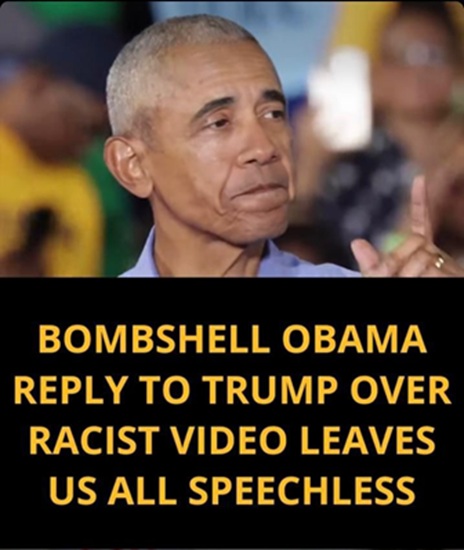
Former President Barack Obama recently reflected on the changing tone of American political discourse after a controversy erupted online involving a post shared by President Donald Trump on the social media platform Truth Social.
The situation quickly attracted widespread public attention across the United States. Commentators, journalists, and political leaders began discussing the broader implications of online rhetoric and how political messaging on social media platforms can influence public debate.
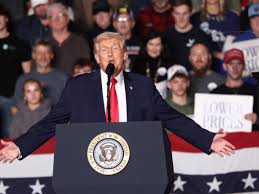
The controversy began on February 5, when a video appeared on Truth Social that included an edited segment featuring the faces of Barack Obama and Michelle Obama superimposed onto animated apes dancing in a stylized sequence.
The video clip used the well-known song The Lion Sleeps Tonight, a track that has appeared frequently in films, television programs, and advertisements for many decades, making it widely recognizable to audiences around the world.
Critics argued that the imagery carried troubling historical associations. For many observers, the depiction of Black public figures as apes echoed racist caricatures that have been used historically to demean Black individuals and reinforce harmful stereotypes.

The edited segment appeared at the end of a longer video post that also referenced claims about irregularities in the 2020 United States presidential election, claims that have been repeatedly rejected by courts and election officials.
Multiple courts, including judges appointed by both Democratic and Republican administrations, reviewed allegations related to the election and concluded that there was no evidence of widespread fraud capable of altering the outcome.
Election administrators from both parties also confirmed that the voting process had been conducted according to established procedures, reinforcing public statements that the election results were legitimate and verified.
Despite those conclusions, debates about the 2020 election have remained a recurring theme in American political discussions, particularly on social media platforms where political narratives often circulate rapidly among supporters of different viewpoints.
Within hours of being posted, the video began spreading across multiple online platforms. Clips and screenshots were shared widely on sites such as X (social network), Facebook, and YouTube.
Political commentators, civil rights organizations, and advocacy groups quickly reacted to the imagery. Many described the depiction as offensive and said it reflected a broader problem involving the tone of political communication online.
The original post was eventually removed from Truth Social. However, by the time it was deleted, copies of the clip had already circulated widely across the internet, allowing the controversy to continue developing.
Supporters of Donald Trump offered several explanations for how the video appeared on his account. Some representatives suggested that the president had not personally reviewed the entire video before it was shared.

According to those statements, Trump had only briefly viewed the beginning of the video and did not notice the edited segment appearing at the end of the post.
Trump also indicated that he initially believed the video might have been referencing popular culture imagery related to the animated film The Lion King, which includes animals and musical sequences.
He attributed the posting to staff involvement and suggested that the content had been shared without fully examining every element included in the video compilation.
Despite those explanations, critics argued that high-profile public figures must exercise particular caution when sharing material online, especially when posts originate from accounts followed by millions of people.
Because prominent political leaders hold influential platforms, analysts say that their posts can shape public narratives and influence political discussions across the country.
The controversy quickly became part of a larger debate about responsibility and accountability in digital communication. Political scientists and media experts emphasized how easily misinformation or offensive imagery can spread online.
Unlike traditional media, social networks allow content to travel globally within minutes. Even if a post is later removed, screenshots and archived copies can continue circulating indefinitely.
This dynamic has significantly transformed modern political communication. Leaders can reach voters directly without intermediaries, but the same system can also amplify mistakes or controversial messages.
Some Republican leaders also voiced concern about the imagery used in the video. Although responses varied, several politicians emphasized that political disagreements should not lead to disrespectful portrayals.
Among those who commented publicly was Senator Tim Scott of South Carolina, who said the imagery raised serious concerns about maintaining respect in public dialogue.
Scott emphasized that leaders should strive to set an example for respectful political conversation, particularly when addressing issues that involve race, identity, or historical sensitivities.

Democratic lawmakers were more direct in their criticism. Many argued that the imagery reinforced stereotypes that have historically been used to marginalize Black Americans.
Civil rights organizations also issued statements condemning the depiction. They argued that public figures should be especially careful to avoid language or imagery associated with past discrimination.
The controversy sparked renewed conversations about how race continues to influence political discourse in the United States. Scholars note that political imagery often carries historical meaning beyond its immediate context.
Images that might appear humorous or satirical to some audiences may evoke painful historical associations for others, particularly when they involve communities that have faced discrimination.
For that reason, experts frequently encourage political leaders to evaluate not only their intentions but also the potential interpretation of their public communications.
The discussion also highlighted the powerful role social media plays in shaping modern political narratives. Platforms originally designed for personal communication have evolved into central tools for political messaging.
Campaigns, advocacy groups, and government officials regularly use these networks to reach supporters, promote policies, and respond quickly to breaking events.
However, the speed of digital communication can also intensify controversy. Messages that might once have reached a limited audience can now be viewed by millions within minutes.
As the debate continued, journalists began examining the broader implications of the episode. Many asked whether social media incentives encourage increasingly provocative political messaging.
Online platforms often reward posts that generate strong reactions, whether positive or negative. Content that sparks outrage or intense debate can spread faster than more measured commentary.
That environment sometimes encourages exaggerated language or attention-grabbing imagery, which can further escalate tensions in political discussions.
Former President Barack Obama addressed the broader climate of public discourse during an interview released on February 14 with political commentator and podcaster Brian Tyler Cohen.
During the conversation, Obama reflected on how political debate has evolved in recent years and how social media has changed the way citizens interact with political information.
Although he did not explicitly name Donald Trump when discussing the controversy, many listeners interpreted his remarks as referencing the broader environment surrounding the viral video.
Obama suggested that everyday interactions among Americans often remain far more respectful than the political rhetoric frequently seen online or on television.
“As I’m traveling around the country,” he said during the interview, “you meet people who still believe in decency, courtesy, and kindness.”
According to Obama, those values remain widely shared among ordinary citizens even though online debates sometimes create the impression that society has become more hostile.
He contrasted those everyday interactions with what he described as a “clown show” atmosphere that sometimes dominates certain forms of political media.
Obama argued that some parts of the modern media ecosystem reward spectacle and controversy rather than thoughtful discussion of complex issues.
In his view, this dynamic can make political discourse appear more extreme than the attitudes held by most citizens.
He also expressed concern that expectations for public leadership may have changed over time. Historically, political leaders often faced strong pressure to maintain a sense of dignity in public communication.
“There used to be an expectation that public officials would demonstrate respect for the offices they held,” Obama explained during the conversation.
He suggested that in earlier eras, politicians who violated those expectations often faced immediate criticism from both allies and opponents.
According to Obama, the erosion of those norms may contribute to the increasingly confrontational tone visible in modern political discussions.

However, he emphasized that public discourse ultimately reflects the choices made by citizens, media institutions, and political leaders collectively.
Obama also stressed that democracy depends heavily on shared standards of honesty, accountability, and respect.
Without those norms, political disagreements can become more personal and divisive, making compromise more difficult within democratic institutions.
At the same time, Obama emphasized that the United States has experienced periods of intense political conflict throughout its history.
From the early years of the republic to the civil rights era, political debate has often been passionate and deeply contested.
Yet he argued that democratic institutions have endured because citizens repeatedly reaffirm their commitment to constitutional principles and peaceful political participation.
Obama encouraged Americans to remain engaged in civic life even when political disagreements become frustrating or emotionally charged.
He suggested that active participation in elections, public discussions, and community organizations helps sustain democratic values over time.
The interview also addressed broader policy debates, including immigration enforcement and federal law enforcement operations in various American cities.
Immigration policy remains one of the most contested issues in contemporary American politics, with strong opinions expressed by leaders and voters across the ideological spectrum.
Obama emphasized that political disagreements over immigration policy should still involve careful reasoning and empathy toward affected communities.
He noted that immigration debates often involve complex questions related to border security, economic opportunity, humanitarian concerns, and international cooperation.
Balancing these priorities requires thoughtful policymaking and collaboration between lawmakers, agencies, and local governments.
Obama suggested that responsible debate about immigration policy should focus on practical solutions rather than inflammatory rhetoric.
According to him, maintaining respectful dialogue makes it easier for policymakers to identify areas of agreement and develop durable legislative solutions.
The conversation ultimately returned to the theme of democratic responsibility. Obama argued that the tone of political culture depends largely on the expectations citizens set for their leaders.
When voters demand honesty, civility, and accountability, those expectations can influence how political figures communicate and behave.
He emphasized that democratic societies are shaped not only by leaders but also by the collective actions of millions of citizens participating in public life.
Even during periods of intense political disagreement, Obama expressed confidence that many Americans remain committed to fundamental democratic values.
Those values include respect for elections, trust in independent institutions, and belief in the rule of law.
Obama concluded that public debate can improve when citizens continue insisting on factual information, respectful dialogue, and responsible leadership.
Such principles, he suggested, remain essential for preserving democratic stability and maintaining public trust in political institutions.
The controversy surrounding the viral video continued to generate discussion across American media outlets and political circles in the days that followed. Analysts examined not only the specific post but also the broader environment in which such content spreads.
In recent years, social media platforms have become primary channels for political communication. Leaders can now address millions of followers instantly, bypassing traditional media filters that once shaped how political messages reached the public.
This direct communication has advantages, allowing public officials to speak directly to voters. At the same time, it can also increase the risk that controversial or poorly reviewed content spreads rapidly.
Political communication experts note that posts shared by national leaders often carry additional influence. Because of their visibility, such messages can shape public perception, influence news coverage, and guide the tone of national conversations.
The video controversy illustrates how even a short segment attached to a longer post can trigger widespread reactions. In the digital era, individual clips are often extracted and shared independently from their original context.
When this happens, a piece of content can travel through multiple networks simultaneously. Within minutes, posts may be viewed by audiences across different countries and political communities.
News organizations quickly began reporting on the incident, discussing both the imagery and the political responses that followed. Media coverage included commentary from journalists, political scientists, and civil rights advocates.
Many observers emphasized that political imagery carries historical meaning that audiences interpret through cultural and social experience. Symbols that may appear humorous to some viewers can carry very different implications for others.
In the United States, the comparison of Black individuals to primates has long been recognized as a racist trope used in propaganda and discriminatory rhetoric throughout earlier periods of history.
Because of that historical background, critics argued that the imagery in the viral clip could not easily be separated from those associations. Their criticism focused on the broader cultural impact of the depiction.
Supporters of Donald Trump, however, argued that the controversy was exaggerated and that the post was not intended as a racial attack. Some supporters emphasized that the video had been removed once attention focused on the edited segment.
These differing interpretations demonstrate how political events can produce sharply contrasting narratives depending on the perspectives of observers. Political polarization often shapes how individuals interpret controversial moments.
Communication scholars frequently describe this phenomenon as “selective interpretation.” Individuals tend to evaluate political information through the lens of their existing beliefs and political affiliations.
Because of this dynamic, controversies can deepen divisions even when participants are responding to the same set of events. Media discussions often reflect those competing interpretations.
Former President Barack Obama used his interview to emphasize that disagreement is a natural feature of democratic politics. However, he suggested that disagreement should not require abandoning basic standards of respect.
According to Obama, democratic societies function best when political debates focus on ideas and policies rather than personal insults or degrading imagery directed at opponents.
He explained that citizens often express far more civility in everyday life than what appears in highly visible political disputes. In community meetings, workplaces, and neighborhoods, many Americans interact respectfully despite political differences.
Obama suggested that the contrast between everyday interactions and online discourse can sometimes make public debate appear more hostile than society actually is.
Nevertheless, he acknowledged that social media platforms can amplify extreme voices and emotional reactions. Content designed to provoke anger or outrage often spreads faster than calm, thoughtful commentary.
Digital algorithms that prioritize engagement sometimes amplify posts that generate strong reactions. As a result, controversial messages can receive disproportionate attention compared with more balanced discussions.
Political leaders are aware of this dynamic and sometimes tailor messages to attract attention within crowded online environments. Analysts say this can encourage increasingly dramatic political messaging.
The debate over online responsibility has therefore become a central issue in modern political communication. Questions about how leaders should use digital platforms continue to evolve.
Some experts recommend stronger internal review processes before posts are published from official accounts. Because of the potential impact, even a brief oversight can create major public controversies.
Others argue that the most effective solution lies in cultivating stronger cultural expectations about respectful communication. When audiences reward responsible messaging, leaders may be more likely to adopt similar standards.
Obama’s comments reflected this perspective. Rather than focusing exclusively on the viral video, he framed the situation as part of a larger conversation about civic culture and shared democratic norms.
Throughout his public career, Obama has frequently emphasized the importance of respectful political engagement. He has often argued that democracy depends on the willingness of citizens to listen to opposing viewpoints.
This idea reflects a long tradition within American political thought. Many historical leaders have argued that open dialogue and mutual respect strengthen democratic institutions.
The United States Constitution itself was written following intense debate among delegates who held different visions for the country’s future. Despite their disagreements, those delegates ultimately reached compromise.
Obama referenced this tradition indirectly when discussing the importance of maintaining democratic standards. In his view, respectful dialogue allows societies to resolve disagreements without undermining institutional stability.
He also emphasized that public debate should remain grounded in factual information. In an era of rapid digital communication, misinformation can spread quickly if audiences do not verify sources carefully.
Journalists and fact-checking organizations therefore play an important role in evaluating claims circulating in political discussions. Independent reporting helps clarify which statements are supported by evidence.
Courts and election officials, for example, have repeatedly reviewed claims about the 2020 election and found no evidence of widespread fraud capable of altering the outcome.
These findings were confirmed through multiple audits, recounts, and legal proceedings across several states. Officials from both major political parties participated in these processes.
Despite this extensive verification, debates about the election continue to appear in some political conversations. This demonstrates how strongly held beliefs can persist even after official investigations conclude.
Obama emphasized that transparency and evidence-based discussion remain essential tools for addressing misinformation. When reliable information is accessible, citizens can make more informed decisions.
The interview also highlighted the ongoing importance of civic engagement. Obama encouraged citizens to participate actively in elections and community discussions rather than withdrawing from political life.
Democratic systems rely on participation from a wide range of voices. When people remain engaged, they help ensure that government decisions reflect diverse perspectives and interests.
Obama expressed optimism that many Americans remain committed to those principles. Although political disagreements can appear intense, large numbers of citizens continue participating peacefully in democratic processes.
The discussion then turned toward broader policy issues, including immigration enforcement and federal law enforcement operations. These topics remain central to political debate in the United States.
Immigration policy has been a particularly complex subject for decades. Policymakers must balance humanitarian responsibilities, economic considerations, and border security concerns.
Different political leaders propose different approaches to addressing these challenges. Some emphasize stronger enforcement and border controls, while others prioritize pathways to legal status and humanitarian protections.
Obama argued that these policy disagreements should be addressed through thoughtful legislative debate rather than emotionally charged rhetoric. In his view, constructive discussion increases the likelihood of effective solutions.
He also emphasized the importance of oversight and accountability within law enforcement operations. Clear guidelines and training help ensure that policies are implemented consistently and lawfully.
Supporters of stronger enforcement policies often argue that such measures are necessary for maintaining the rule of law and ensuring national security.
Critics, however, sometimes express concern about how enforcement practices affect immigrant communities. These debates frequently appear in national political discussions and legislative proposals.
Obama suggested that political leaders should acknowledge the complexity of these issues rather than presenting overly simplified narratives.
Immigration policy involves questions about economics, human rights, international relations, and domestic law enforcement. Addressing these factors requires careful policymaking and collaboration between institutions.
The broader theme of Obama’s remarks remained focused on civic responsibility. Leaders and citizens both play roles in shaping the tone and direction of political culture.
When individuals insist on respectful dialogue and factual discussion, those expectations can gradually influence how public figures communicate.
Political culture evolves over time through countless individual decisions made by voters, journalists, educators, and community leaders.
Obama suggested that maintaining democratic values requires continuous effort. No political system automatically sustains itself without active participation from citizens.
The viral video controversy, in this sense, became part of a larger conversation about how societies manage disagreement in an age of instant communication.
While social media can amplify conflict, it also provides opportunities for dialogue and civic engagement. Millions of people use digital platforms to share information, organize discussions, and participate in public debate.
The challenge lies in ensuring that these conversations remain grounded in respect, evidence, and democratic principles.
Obama concluded that maintaining those standards ultimately depends on collective choices made by citizens and institutions alike.
He expressed confidence that democratic traditions in the United States remain resilient, even during periods of intense political disagreement.
By continuing to participate in elections, support independent journalism, and engage in thoughtful discussion, citizens contribute to preserving the stability of democratic institutions.
In that sense, Obama suggested that controversies like the viral video serve as reminders of the importance of civic responsibility in a digital age.
Public discourse may evolve as technology changes, but the underlying principles of democracy—respect, accountability, and truth—remain essential foundations for any functioning political system.
As the discussion surrounding the viral video continued, many analysts began examining what the episode revealed about the broader evolution of political communication in the digital age. The incident quickly became part of a larger national conversation.
Over the last two decades, the way political leaders communicate with citizens has changed dramatically. Social media platforms have replaced many traditional channels, allowing public figures to share messages instantly with millions of followers.
This transformation has brought both opportunities and challenges. Leaders can respond quickly to events and speak directly to supporters, but the same speed also increases the likelihood that controversial material spreads widely.
Political scientists often point out that earlier generations of politicians communicated primarily through press conferences, interviews, and official statements that were carefully reviewed before publication.
In contrast, modern platforms encourage rapid posting and immediate reactions. This environment sometimes rewards messages that attract strong emotional responses rather than thoughtful explanations of complex policy issues.
The controversy involving the Truth Social video illustrates how quickly a single post can dominate national news coverage. Even after the original content was removed, the conversation surrounding it continued across television networks and online forums.
Journalists and commentators discussed not only the imagery itself but also the broader responsibility of political leaders when sharing content online. Many argued that public officials should review digital posts carefully before publication.
High-profile accounts operated by presidents, senators, and other leaders have enormous influence. A message from such an account can shape public discussion, influence media coverage, and reach millions of readers around the world.
Because of this reach, experts frequently stress the importance of accuracy and awareness when political figures share information or commentary. Even unintended mistakes can create widespread misunderstanding or controversy.
At the same time, the digital environment allows citizens to respond instantly to political messages. Reactions from supporters and critics appear almost immediately, creating rapid cycles of debate and analysis.
This dynamic often leads to intense online discussions in which different communities interpret events through their own political perspectives. The result can be sharply divided public narratives about the same incident.
Scholars studying media behavior note that political polarization sometimes amplifies these divisions. Individuals often seek out sources that reinforce their existing views while dismissing perspectives they disagree with.
The viral video controversy reflected this broader pattern. Some observers focused primarily on the offensive imagery and historical associations, while others emphasized the explanation that the post had been shared without full review.
These competing interpretations demonstrate how digital communication can generate multiple narratives simultaneously. Each group of observers may highlight different aspects of the same event.
Former President Barack Obama’s comments attempted to address this broader environment rather than focusing exclusively on the specific video. His remarks emphasized the importance of maintaining shared democratic values.
Throughout the interview, Obama repeatedly returned to the idea that public discourse should remain grounded in respect, truth, and accountability. In his view, these principles help sustain democratic institutions.
He argued that citizens ultimately determine the tone of political culture through their expectations and choices. When voters reward constructive dialogue, political leaders are more likely to adopt similar approaches.
Obama also highlighted the role of independent journalism in maintaining a healthy democratic system. Professional reporting and fact-checking help ensure that public debates remain connected to verified information.
In the modern information landscape, journalists often compete with social media posts and viral content for public attention. Despite these challenges, reliable reporting remains an essential source of verified information.
Fact-checking organizations and investigative reporters frequently examine political claims, compare them with available evidence, and provide detailed explanations to readers and viewers.
This process helps audiences understand complex issues and evaluate statements made by political leaders. Without such verification, misinformation could spread more easily in fast-moving digital environments.
Obama’s remarks also touched on the importance of civic education. He suggested that informed citizens are better equipped to evaluate political arguments and participate responsibly in democratic decision-making.
Educational institutions, community organizations, and media outlets all contribute to this process by providing information about history, government institutions, and public policy.
Understanding how democratic systems function can help citizens recognize the significance of elections, courts, and constitutional protections. These institutions form the foundation of the American political system.
Obama noted that disagreements about policy are inevitable in any democracy. Citizens often hold different views about taxes, immigration, economic policy, and international relations.
Healthy political debate allows those differences to be expressed and evaluated through peaceful discussion. The goal of democratic dialogue is not to eliminate disagreement but to manage it constructively.
In this sense, controversy itself is not necessarily harmful. Public debates can help societies examine difficult questions and reassess long-standing assumptions.
However, Obama argued that such debates should remain focused on ideas rather than personal attacks or degrading portrayals of political opponents.
He suggested that maintaining respectful discourse helps create an environment in which compromise and cooperation remain possible.
Political historians often note that American democracy has endured many periods of intense conflict. Disputes over civil rights, economic policy, and foreign affairs have sometimes divided the country sharply.
Despite these tensions, the system has continued functioning because institutions and citizens repeatedly reaffirm their commitment to democratic procedures.
Elections remain one of the most important mechanisms for resolving political disagreements. Through voting, citizens express their preferences and choose leaders who will represent their interests.
Obama emphasized that participation in elections is a powerful way for citizens to influence the direction of public policy and political culture.
When people vote, they help determine which ideas, values, and leadership styles shape national decision-making.
In addition to elections, civic engagement can take many forms. Community meetings, public forums, and grassroots organizations all provide opportunities for citizens to participate in democratic life.
These activities encourage dialogue among individuals who may hold different perspectives. Such interactions can strengthen mutual understanding even when disagreements remain.
Obama expressed optimism that many Americans continue to value these traditions. Despite the heated tone of some online debates, millions of citizens remain committed to peaceful political participation.
Public opinion surveys often show that most Americans support democratic principles such as free elections, independent courts, and freedom of speech.
These shared values provide stability even during periods of intense political conflict. Democratic institutions depend on widespread acceptance of these fundamental principles.
The controversy involving the Truth Social video therefore became part of a broader reflection on the state of political communication in the United States.
Observers from different backgrounds used the episode to discuss how technology, media culture, and political competition shape the tone of public discourse.
Some experts suggested that improving digital literacy could help citizens navigate complex online environments. Understanding how algorithms and viral content work allows users to interpret online messages more critically.
Others emphasized the need for political leaders to model responsible communication. When influential figures demonstrate respect and accuracy, they can encourage similar behavior among supporters.
Obama concluded his remarks by expressing cautious optimism about the future of American democracy. He acknowledged the challenges posed by polarization and misinformation.
At the same time, he argued that democratic societies possess strong traditions of resilience and adaptation. Institutions and citizens have repeatedly responded to challenges by strengthening democratic norms.
He emphasized that the responsibility for maintaining these traditions belongs to everyone, not only political leaders.
Citizens, journalists, educators, and community organizations all contribute to the culture of public discourse.
By supporting accurate information, engaging respectfully with others, and participating in democratic processes, individuals help reinforce the foundations of democratic society.
Obama suggested that moments of controversy can sometimes serve as reminders of these responsibilities.
When public debates raise questions about respect, truth, and accountability, they create opportunities for reflection about how political communication should function.
In that sense, the discussion surrounding the viral video extended beyond the specific post itself.
It encouraged broader examination of how digital platforms influence political dialogue and how citizens can respond thoughtfully to controversial content.
Ultimately, Obama emphasized that democratic culture is shaped by collective choices made over time.
The tone of political conversation, the standards applied to public leaders, and the expectations placed on institutions all evolve through the actions of citizens.
If voters continue to value honesty, respect, and evidence-based discussion, those values can guide the future direction of public discourse.
The debate sparked by the viral video therefore illustrates both the challenges and the possibilities of political communication in the modern era.
While digital platforms can amplify conflict, they also allow millions of people to participate in conversations about democracy and public life.
According to Obama, maintaining faith in democratic principles remains essential during these discussions.
By defending truth, respecting institutions, and engaging constructively with political differences, citizens help preserve the stability and integrity of democratic systems.
In the end, the episode served as a reminder that the health of democracy depends not only on laws and institutions but also on the everyday choices people make when they communicate, debate, and participate in public life.
