
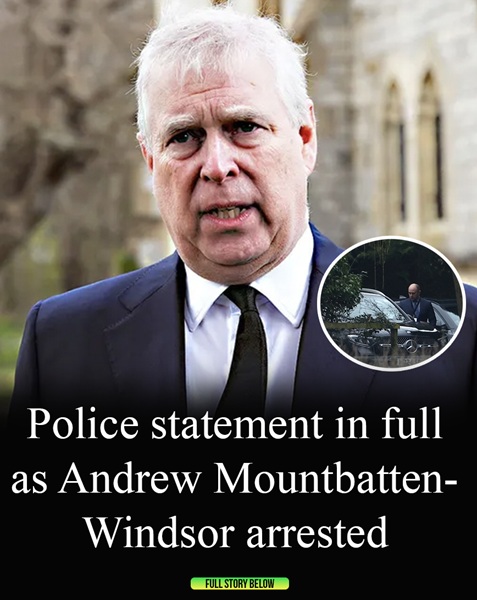
In recent years, few figures connected to the British royal family have attracted as much sustained public scrutiny as Andrew Mountbatten-Windsor, widely known as Prince Andrew, Duke of York.
Once regarded as a prominent working royal and international trade representative for the United Kingdom, he later became one of the most controversial members of the monarchy due to his association with the late convicted sex offender Jeffrey Epstein.
Although Andrew Mountbatten-Windsor has not been criminally convicted of any offence, and has consistently denied allegations of wrongdoing, his public reputation underwent significant change between 2019 and 2022. The episode raised broader constitutional questions about royal accountability, public trust, and the evolving expectations placed upon members of the British monarchy in the 21st century.
This first part examines his background, his official roles, the confirmed legal proceedings connected to his name, and the institutional response from Buckingham Palace.

Early Life and Royal Role
Andrew Albert Christian Edward Mountbatten-Windsor was born on February 19, 1960, the third child of Queen Elizabeth II and Prince Philip. As the younger brother of King Charles III, he grew up in the public eye during a period when the monarchy maintained a highly formal and structured public image.
Andrew served in the Royal Navy for over two decades, including active duty during the Falklands War in 1982. His military service was widely covered in British media at the time and contributed to his public identity as a working royal with operational experience.
In 2001, he was appointed as the United Kingdom’s Special Representative for International Trade and Investment. In this capacity, he promoted British business interests abroad, meeting foreign leaders, investors, and corporate executives. The role required international travel, diplomatic engagement, and networking across both governmental and private sectors.
For nearly a decade, he represented the UK at trade events in Asia, the Middle East, and North America. However, the same global networking that defined his professional portfolio would later draw significant scrutiny.
Association with Jeffrey Epstein
The most serious reputational damage to Andrew Mountbatten-Windsor arose from his association with Jeffrey Epstein.
Epstein was first convicted in 2008 in Florida for soliciting prostitution from a minor. He later faced federal charges in 2019 related to sex trafficking of minors before his death in custody in August 2019.
Public records, photographs, and flight logs confirmed that Andrew had social contact with Epstein during the early 2000s. A widely circulated photograph showed Andrew with Virginia Giuffre in London in 2001, though Andrew has stated he does not recall the encounter.
Andrew publicly acknowledged that he had stayed at Epstein’s residence in New York in 2010 after Epstein had already been convicted. In a BBC Newsnight interview in November 2019, he described the decision to maintain limited contact with Epstein as a mistake and said he regretted the association.
The interview, however, was widely criticized. Observers argued that his responses lacked empathy for victims and failed to resolve public concerns. Within days of the broadcast, Andrew announced he would step back from public duties.

Withdrawal from Public Duties
In November 2019, Andrew stated that he would suspend his official royal engagements “for the foreseeable future.” This marked a significant shift in his public role.
In January 2022, Buckingham Palace confirmed that Andrew would return his honorary military affiliations and royal patronages to Queen Elizabeth II. The Palace also announced that he would no longer use the style “His Royal Highness” in any official capacity.
This institutional response was interpreted by constitutional commentators as an effort to protect the monarchy’s stability and credibility during ongoing legal proceedings in the United States.
Importantly, Andrew retained his title as Duke of York, as peerages cannot be removed without parliamentary action. However, his public function within the monarchy was significantly reduced.
The 2021–2022 Civil Lawsuit in the United States
In August 2021, Virginia Giuffre filed a civil lawsuit in the United States District Court for the Southern District of New York, alleging that Andrew had sexually abused her when she was 17 years old. Andrew denied the allegations.
The lawsuit was a civil case, not a criminal prosecution. Civil litigation focuses on claims for damages rather than imprisonment.
Andrew’s legal team initially sought dismissal of the case, arguing, among other points, that a prior settlement agreement between Giuffre and Epstein precluded further claims. However, in January 2022, the presiding judge ruled that the case could proceed.
In February 2022, both parties reached an out-of-court settlement. The settlement did not include an admission of liability. A statement filed with the court acknowledged Giuffre’s suffering as an established victim of abuse and stated that Andrew regretted his association with Epstein.
Financial terms were not officially disclosed, though media outlets reported that a substantial payment was made to Giuffre and to a charitable organization supporting victims’ rights.
The case was then formally dismissed.
Legal Status: No Criminal Conviction
It is important to state clearly:
- Andrew Mountbatten-Windsor has not been convicted of any criminal offence related to Epstein.
- He has denied allegations of sexual misconduct.
- The U.S. case concluded with a civil settlement, not a criminal finding.
- British police reviewed available material in 2021 and stated they would take no further action at that time.
The distinction between civil litigation and criminal prosecution is significant. Civil cases operate on a lower burden of proof (“preponderance of the evidence”) compared to criminal cases (“beyond reasonable doubt”).

Understanding this legal framework is essential for accurate reporting and public discussion.
Constitutional Context: The Monarchy and the Law
The United Kingdom operates under a constitutional monarchy. While the sovereign enjoys certain legal immunities, other members of the royal family do not possess blanket protection from civil or criminal law.
Legal scholars have consistently emphasized that senior royals can be subject to investigation and prosecution under UK law if evidence warrants such action.
At the same time, the monarchy functions as a symbolic national institution. As a result, controversies involving individual members often have broader reputational implications.
The Andrew episode became a defining example of how modern transparency, investigative journalism, and global media scrutiny intersect with long-standing royal traditions.
Public Reaction and Media Scrutiny
Public opinion in the UK shifted significantly between 2019 and 2022. Polling data indicated declining approval ratings for Andrew. Several universities, charities, and business organizations ended their affiliations with him.
The situation unfolded during a period of heightened sensitivity about institutional accountability, particularly regarding abuse allegations worldwide.
Media coverage extended beyond the UK, with American and European outlets examining the broader implications of Epstein’s network and connections.
Throughout this period, Andrew remained largely out of public view, residing primarily at Royal Lodge in Windsor Great Park.
A Turning Point for the Royal Family
For Queen Elizabeth II, the episode represented a deeply personal and institutional challenge during the final years of her reign. Following her death in September 2022, the monarchy entered a new era under King Charles III.
Observers have noted that the handling of Andrew’s public role reflects a broader modernization effort within the monarchy — emphasizing a streamlined working royal structure and stricter expectations regarding conduct and accountability.
The situation also illustrated how global legal developments can intersect with constitutional institutions in complex ways.
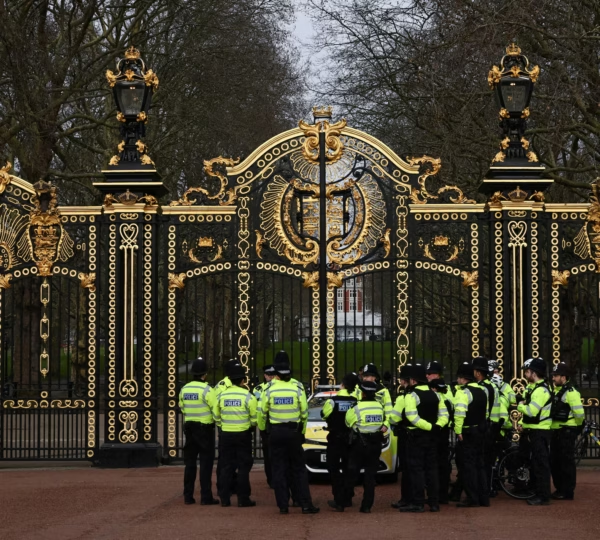
In Part One, we examined the confirmed background surrounding Andrew Mountbatten-Windsor, his association with Jeffrey Epstein, the 2022 civil settlement in the United States, and the institutional response from Buckingham Palace.
Part Two turns to a broader but essential question: How does the law apply to members of the British royal family, and what constitutional safeguards exist when controversy arises?
Understanding this requires a closer look at the UK legal framework, the concept of public office accountability, and the delicate balance between monarchy and democratic governance.
The Principle of Equality Before the Law
A foundational principle of the United Kingdom’s legal system is that no person is above the law. This doctrine — often summarized as “equality before the law” — applies to citizens regardless of wealth, title, or public office.
The British sovereign has unique constitutional immunities, rooted in the historic doctrine that “the Crown cannot be prosecuted in its own courts.” However, this protection applies specifically to the reigning monarch. Other members of the royal family do not enjoy blanket immunity from criminal or civil proceedings.
Legal scholars have consistently affirmed that a prince, duke, or other titled royal can be investigated, questioned, or prosecuted if sufficient evidence exists. In practice, any such process would be handled with procedural caution due to security, privacy, and constitutional sensitivities — but the law itself remains applicable.
This distinction became especially relevant during the period of scrutiny involving Andrew Mountbatten-Windsor. While he was no longer a “working royal” after 2019, he remained a member of the royal family and held the hereditary title Duke of York. Nevertheless, his status did not exempt him from civil litigation in the United States, nor would it exempt him from lawful investigation in the United Kingdom if circumstances required.
Understanding “Misconduct in Public Office” in UK Law
Although Andrew Mountbatten-Windsor has not been charged with misconduct in public office, public discussions surrounding his past trade envoy role have often referenced the concept. To understand the legal landscape fully, it is useful to examine what that offence entails.
“Misconduct in public office” is a common law offence in England and Wales. It applies when:
- A public officer acting as such
- Wilfully neglects to perform their duty or
- Wilfully misconducts themselves
- To such a degree as to amount to an abuse of the public’s trust
- Without reasonable excuse or justification
The offence is considered serious because it concerns the integrity of public administration. It has historically been applied in cases involving police officers, prison officials, and other public servants who misuse authority or confidential information.
Importantly, holding a ceremonial or representative role does not automatically mean the offence applies. Whether a person qualifies as a “public officer” depends on the nature of their duties, the authority granted to them, and the context in which alleged misconduct occurs.
During Andrew’s tenure as the United Kingdom’s Special Representative for International Trade and Investment (2001–2011), he acted in a formal diplomatic capacity. In that role, he promoted British commercial interests abroad. However, no UK authority has publicly alleged that he committed misconduct in public office, and British police stated in 2021 that they would take no further action following a review of available material related to Epstein.
The broader discussion about this offence often reflects public interest in accountability rather than any confirmed criminal proceedings.

The Role of Police and Prosecutors in High-Profile Cases
In the United Kingdom, criminal investigations are typically conducted by regional police forces. Once evidence is gathered, the case is referred to the Crown Prosecution Service (CPS), which decides whether charges should be brought.
The CPS applies two tests:
- Evidential Test – Is there sufficient evidence to provide a realistic prospect of conviction?
- Public Interest Test – Is prosecution in the public interest?
For high-profile individuals, the legal standards do not change. However, procedural safeguards are heightened to ensure fairness, avoid prejudicial publicity, and protect the integrity of the justice system.
British law also places restrictions on naming suspects prior to charge in many circumstances. This principle protects the presumption of innocence — a cornerstone of criminal justice systems across democratic societies.
The Andrew episode demonstrated how global media attention can complicate this process. Allegations, commentary, and legal filings circulated rapidly online, often blurring distinctions between accusation and adjudicated fact. Responsible reporting therefore became critical.
Civil Litigation vs. Criminal Prosecution
One of the most misunderstood aspects of the Andrew case involved the difference between civil and criminal law.
The 2021–2022 lawsuit filed in New York by Virginia Giuffre was a civil claim. In civil proceedings:
- The objective is typically financial compensation.
- The burden of proof is lower than in criminal trials.
- Cases can be resolved through settlement without admission of liability.
A criminal prosecution, by contrast, requires proof beyond a reasonable doubt and may result in imprisonment or other criminal penalties.
Andrew denied Giuffre’s allegations and did not admit wrongdoing as part of the settlement agreement. The resolution ended the civil case but did not constitute a criminal conviction.
This distinction is critical for legal accuracy and for understanding the boundaries of confirmed fact.
Parliamentary Authority and Titles
Public debate has periodically addressed whether Parliament could remove Andrew’s dukedom or alter his place in the line of succession.
Under the UK constitutional system, titles such as Duke of York are peerages granted by the monarch. Removing a peerage would generally require parliamentary legislation. While discussions have occurred in media and among some Members of Parliament, no such law has been enacted to remove Andrew’s title.
The line of succession is governed by statutes including the Act of Settlement 1701 and the Succession to the Crown Act 2013. Altering succession rules would likewise require legislation.
These mechanisms demonstrate that even matters involving royal titles operate within a parliamentary framework — reinforcing the constitutional principle that the monarchy functions within democratic limits.
The Monarchy in a Modern Media Era
The Andrew controversy unfolded in a dramatically different media environment than that faced by previous generations of royals.
Digital platforms, investigative journalism networks, and global document releases have reshaped how public figures are scrutinized. The exposure of Jeffrey Epstein’s network in the United States triggered international investigations and widespread publication of court filings.
In earlier centuries, royal controversies might have been filtered through limited press channels. Today, court documents, interviews, and official statements are accessible worldwide within minutes.
This transformation places unprecedented transparency pressures on constitutional institutions.
Institutional Stability and Reputation
For Queen Elizabeth II, the final years of her reign were marked by efforts to preserve stability and public confidence. The decision in January 2022 to remove Andrew’s military affiliations and royal patronages reflected a broader institutional strategy.
When King Charles III ascended the throne later that year, observers noted his emphasis on a streamlined monarchy focused on a smaller number of active working royals.
The handling of Andrew’s status illustrated how constitutional monarchies adapt to reputational challenges without altering the fundamental structure of governance.
Historical Comparisons: Royal Accountability Through Time
While Andrew’s situation was unprecedented in modern times, history contains earlier examples of tension between monarchy and legal accountability.
- In the 17th century, Charles I was tried and executed following the English Civil War — a revolutionary moment that reshaped constitutional theory.
- During the 20th century, King Edward VIII abdicated in 1936 due to constitutional crisis related to his intended marriage.
These historical events differ dramatically from contemporary legal controversies, but they illustrate that the monarchy has periodically confronted moments of institutional strain.
The modern system, however, operates within established legal frameworks, parliamentary oversight, and democratic norms.
Public Trust and the Future of Royal Accountability
Surveys conducted between 2019 and 2023 indicated generational differences in attitudes toward the monarchy. Younger demographics expressed greater emphasis on transparency and accountability.
The Andrew episode became a case study in how public trust can shift when personal conduct intersects with institutional symbolism.
At the same time, polling has generally shown continued majority support for the monarchy as a constitutional system, even when individual members face criticism.
This distinction — between personal reputation and institutional legitimacy — remains central to understanding the broader constitutional implications.
The Broader Context of the Epstein Scandal
The global scrutiny of Epstein’s associates affected numerous prominent figures in politics, business, and academia. Court documents released in U.S. proceedings fueled widespread media analysis.
It is important to emphasize that being named in court filings does not automatically imply wrongdoing. Legal documents often reference individuals in a variety of contexts, and due process requires careful distinction between allegation and proof.
British authorities reviewed material related to Andrew in 2021 and publicly stated that no further action would be taken at that time.
Responsible analysis therefore relies on confirmed procedural outcomes rather than speculation.
Legal Process and Presumption of Innocence
A central principle in democratic societies is the presumption of innocence. Allegations alone do not establish guilt. Courts, not public opinion, determine legal responsibility.
This principle applies universally — whether the individual involved is a public servant, a business leader, or a member of a royal family.
The Andrew case became a high-profile reminder of the importance of procedural fairness, careful reporting, and legal precision.
In the previous sections, we examined Andrew Mountbatten-Windsor’s verified background, his association with Jeffrey Epstein, the 2022 U.S. civil settlement, and the constitutional and legal frameworks relevant to accountability for members of the British royal family. Part Three explores the broader lessons, long-term constitutional implications, and the ongoing evolution of monarchy in the modern era, with a focus on transparency, public trust, and institutional stability.
Institutional Reform and the Modern Monarchy
Following the 2022 civil settlement, King Charles III emphasized the need for a streamlined monarchy that focuses on active engagement and accountability. This approach reflects broader societal expectations of transparency and ethical responsibility for public figures, even in hereditary institutions.
The modern monarchy under King Charles III has taken steps to clarify roles and responsibilities among working royals. By concentrating ceremonial, charitable, and diplomatic duties among fewer active members, the institution seeks to safeguard public trust while minimizing exposure to reputational risk.
Andrew Mountbatten-Windsor’s reduced public role exemplifies this principle: while he retains the hereditary title of Duke of York, his withdrawal from public engagements reflects a clear institutional boundary between personal legal matters and the monarchy’s symbolic responsibilities. This delineation ensures that individual controversy does not compromise the broader credibility of the monarchy.
Public Confidence and Media Oversight
Public opinion plays a critical role in shaping the monarchy’s perceived legitimacy. Polling data in the years following 2019 suggested that confidence in the monarchy as an institution remained relatively stable, even as scrutiny of Andrew Mountbatten-Windsor intensified. This distinction underscores an important feature of constitutional monarchies: institutional resilience does not necessarily depend on the unblemished reputation of every individual member.
Media scrutiny, both domestic and international, has transformed the landscape of accountability for public figures. The global exposure of Epstein-related documents demonstrated how digital reporting and investigative journalism can elevate local controversies to worldwide attention.
For the monarchy, this new media environment necessitates careful communication, proactive engagement with legal realities, and adherence to ethical reporting standards. Buckingham Palace’s measured responses in 2022, including statements about Andrew’s withdrawal from public duties and retention of private titles, exemplify how institutions balance transparency with discretion.
Constitutional Lessons and Legal Precedents
The Andrew case — even though it involved civil litigation and no criminal conviction in the United States — provides several constitutional lessons for the UK:
- Royal Accountability: Members of the royal family, while symbols of the state, remain subject to civil law and may be scrutinized legally. Historical precedents, from King Edward VIII’s abdication to modern peerage considerations, demonstrate that constitutional mechanisms exist to manage personal controversies without destabilizing governance.
- Separation of Public and Private Roles: Andrew’s career as a trade envoy illustrates the blurred boundary between ceremonial duties and quasi-public responsibilities. Legal scrutiny of individuals in such roles emphasizes the need to define the scope of public authority clearly.
- Parliamentary Oversight of Titles and Succession: Although Andrew retains his dukedom and place in the line of succession, Parliament possesses legislative authority to alter succession rules or peerages in extreme circumstances. This reinforces the principle that even hereditary privilege operates within a legal framework.
- Media and Public Oversight as Checks: The intense coverage of Andrew’s association with Epstein demonstrates the role of media and civil society in holding public figures accountable. While caution is required to avoid misinformation, transparency contributes to the health of democratic institutions.
Global Context: High-Profile Legal Scrutiny
The Epstein case involved individuals across multiple countries, creating a transnational legal and ethical context. Public figures, whether in politics, finance, or royalty, are now subject to scrutiny that transcends national borders. The lessons for the UK monarchy are clear: legal accountability, ethical behavior, and transparent communication are essential to maintain public legitimacy in a globalized media era.
Andrew Mountbatten-Windsor’s situation also highlights the interaction between civil and criminal legal systems internationally. While the U.S. civil settlement resolved allegations without admission of liability, the episode prompted reflection in the UK on the potential implications for public office, diplomatic conduct, and institutional safeguarding.
Institutional Risk Management and Future Safeguards
The monarchy has recognized that reputational risk extends beyond immediate legal issues. The Andrew episode has informed broader institutional strategies:
- Active monitoring of public roles: Limiting active duties to working royals who adhere to rigorous standards of conduct.
- Clear boundaries between private and official activity: Ensuring that personal associations do not inadvertently create public or legal exposure.
- Enhanced internal guidance: Strengthening advice on conflicts of interest, financial disclosure, and public engagement.
- Crisis communication frameworks: Preparing statements and responses that are factually accurate, legally vetted, and respectful of due process.
These safeguards aim to protect both public confidence and the continuity of constitutional responsibilities.
Public Discourse and Education
The Andrew case has also catalyzed public discourse on several fronts:
- Legal Literacy: Increased attention to distinctions between civil and criminal proceedings helps the public understand the limits of legal findings and the importance of due process.
- Ethical Accountability: Discussions about royal conduct provide broader societal lessons on how public figures, irrespective of status, are expected to act with integrity.
- Historical Awareness: Comparing contemporary events with historical precedents enriches understanding of constitutional monarchy and institutional evolution.
These conversations contribute to civic engagement and highlight the intersection between personal behavior, public roles, and societal expectations.
Reflections on Law, Tradition, and Modern Governance
The Andrew Mountbatten-Windsor episode illustrates a broader truth about contemporary governance in constitutional monarchies: tradition and law coexist, but neither is absolute.
- Tradition offers continuity, cultural identity, and ceremonial legitimacy.
- Law ensures that even members of hereditary institutions are accountable when acting in public capacities or interacting with legal systems.
- Modern governance balances these principles against the pressures of public scrutiny, media oversight, and global interconnectedness.
In this context, Andrew Mountbatten-Windsor’s situation represents a case study in institutional adaptation. The monarchy has demonstrated resilience, transparency in communication, and a willingness to recalibrate public roles in response to reputational and legal challenges.
Conclusion
The verified, historical record of Andrew Mountbatten-Windsor underscores several key lessons:
- Even senior royals can face significant legal scrutiny, particularly in civil matters.
- Withdrawals from public duties can protect institutional credibility while respecting individual rights.
- Constitutional and parliamentary frameworks provide structured mechanisms for managing controversies without undermining the monarchy.
- Transparency, legal compliance, and ethical behavior are increasingly central to public trust in hereditary institutions.
- Global media and digital scrutiny require modern monarchies to navigate public communication carefully, maintaining a balance between privacy, fairness, and accountability.
The monarchy’s experience with Andrew Mountbatten-Windsor demonstrates that constitutional institutions are dynamic: they adapt to societal expectations, legal realities, and historical precedent. By preserving the rule of law, respecting due process, and modernizing institutional practices, the monarchy can maintain public trust even amid complex controversies.
