Monday, November 23, 2026Independent ideas for everyday life.

Author: admin

  • Try a “Not This Week” List

    Try a “Not This Week” List

    Most of us have a to-do list that never gets shorter. Every crossed-off item seems to be replaced by two new ones, and the unfinished items at the bottom sit there week after week, quietly making us feel behind.

    The problem is not that the list is too long. It is that it only does half the job. A to-do list tells you what to do. It never tells you what you are allowed to leave alone.

    The problem with to-do lists

    A standard list treats every item as active. The tax paperwork, the garage you keep meaning to clear out, the friend you need to call back and the side project you are excited about all sit at the same level, all technically waiting on you.

    Psychologists have long observed that unfinished tasks tend to linger in the mind more than finished ones. A list full of things you are not going to touch this week is, in effect, a list of reasons to feel guilty.

    How the list works

    The idea is simple. At the start of each week, alongside your normal plan, write a second short list titled Not This Week. On it, put three to five things you are deliberately choosing not to work on over the next seven days.

    Next to each one, write the date you will look at it again. That is the key step. The item is not abandoned, just scheduled for a later decision.

    What belongs on it

    Good candidates are things that are real but not urgent:

    • Projects you care about but cannot give proper time to right now.
    • Home tasks that will be just as doable in two weeks.
    • Decisions that do not need to be made yet.
    • Invitations or requests you have decided to decline or postpone.
    • Ideas you are excited about but have not yet earned a slot.

    What does not belong there are genuine deadlines and anything with real consequences if it slips. The list is for choices, not for avoidance.

    Why it helps

    The guilt around an unfinished task usually comes from its being undecided. As long as it might be today's job, part of your attention keeps checking on it. Writing it down as a deliberate not-now turns an open question into a closed one, at least until the review date.

    It also makes your priorities visible. When something lands on the list for the third week in a row, that is useful information. Either it matters and needs a real block of time, or it does not matter and can be dropped altogether.

    Say it out loud

    If you share responsibilities at home or at work, consider sharing the list. Telling a partner or a colleague that the spare room project is officially paused until next month prevents misunderstandings and removes the background pressure of an unspoken expectation.

    For many people, hearing someone else say that makes sense is the moment the guilt finally lets go.

    Review and repeat

    At the end of the week, look at both lists. Move anything whose review date has arrived back into consideration, and ask honestly whether each item still deserves a place. Then write next week's version.

    It takes about five minutes. In exchange, you get a week where the things you are not doing stop shouting at you, which leaves more room to enjoy the things you are.

  • The Movies You Rewatch Say More About You Than the Ones You Rate

    The Movies You Rewatch Say More About You Than the Ones You Rate

    Ask someone for their favorite movie and they will usually give you a serious answer: an acclaimed drama, a classic, something they are proud to have loved. Ask them what they put on at the end of a long, bad week and you will often get a completely different title.

    That second answer is more honest, and probably more interesting.

    Two kinds of favorites

    There are the films we admire and the films we return to. The first group is a statement about taste. The second is a record of need. A movie you have seen once and rated highly tells people what you think is good. A movie you have seen fifteen times tells them what you reach for when you are tired, lonely, celebrating or trying to fall asleep.

    Streaming services and rating apps are built around the first kind. They ask what you thought, then try to sell you something new. Almost nothing in the experience is designed to honor the second kind, the familiar film you watch again and again.

    What rewatching is really doing

    The obvious appeal of a rewatch is that you know what happens. That can sound like a drawback, but it is the point. With the suspense removed, the experience becomes predictable in a way very little else in life is. You know the hard scene is coming and that it resolves. You know the joke is about to land.

    That predictability is restful. On a day when everything else feels uncertain, a story whose ending you already know offers a small, reliable kind of control.

    You never watch the same film twice

    The strange part is that a rewatch is never quite the same movie. On a first viewing, most of your attention goes to following the plot. Once you know the story, that attention is free to go elsewhere: to a performance in the background, the way a scene is lit, a line of dialogue you missed, a piece of music that sets up a moment long before it arrives.

    You also change. A film you loved at eighteen can look completely different at forty. A character you once found heroic may seem reckless, and a parent you once thought was the villain may suddenly make sense. Rewatching is one of the few ways to see how far you have traveled.

    The rewatch as a mirror

    It can be revealing to list the films you have seen more than three times. Many people find a pattern they did not expect. Some reach for stories about found family, others for competence and people being very good at their jobs, others for a particular warmth or a specific kind of humor.

    That pattern says something real about what comforts you. It may even be more useful than any personality quiz.

    Rewatch on purpose

    If rewatching is part of how you look after yourself, it is worth doing deliberately:

    • Keep a short list of comfort films organized by mood, so you are not scrolling when you are already drained.
    • Once a year, rewatch something you loved a decade ago and notice what has changed.
    • Watch a familiar favorite with someone who has never seen it and watch them instead of the screen.
    • Pay attention to one craft element on each rewatch, like the music, the editing or a single actor.

    No guilt required

    There is a quiet pressure in an endless catalog to always try something new, as though rewatching wastes an opportunity. It does not. Novelty and familiarity do different jobs, and both are worth having.

    The next time you put on a film you can practically recite, you are not being lazy. You are visiting an old friend, and noticing how you both have changed.

  • The Case for Being Bored on Purpose

    The Case for Being Bored on Purpose

    Think about the last time you were genuinely bored. Not stressed, not busy, just sitting with nothing to do and no screen to fill the gap. For many of us it is hard to remember. The line at the pharmacy, the wait for a kettle to boil and the thirty seconds before a meeting starts have all quietly been filled.

    That feels like efficiency. It may actually be a loss.

    The disappearing gap

    Boredom used to be built into ordinary life. Commutes, waiting rooms and long car rides came with stretches of time when there was nothing in particular to do. People stared out of windows, let their minds drift and got, as they would have said, bored.

    Now those gaps rarely survive. A phone is always within reach, and it offers something more interesting than our own thoughts on demand. The result is a day with almost no unstructured mental time at all.

    What an idle mind is doing

    A mind at rest is not switched off. Neuroscientists have described a set of brain regions, often called the default mode network, that tends to become more active when we are not focused on an outside task. It is associated with mind-wandering, remembering, imagining the future and thinking about ourselves and other people.

    That is roughly what happens when you stare out of a window and suddenly remember something you forgot, or find the answer to a problem you stopped consciously working on. Many people notice their best ideas arrive in the shower or on a walk. Those are some of the last places the phone has not fully reached.

    Boredom is information

    Boredom is uncomfortable for a reason. It is a signal that what you are doing is not meeting some need, whether for challenge, meaning or connection. When we numb it instantly with a feed, we lose the message. Sitting with it for a moment gives you the chance to ask what you actually want to be doing instead.

    Seen this way, boredom is less a problem to solve than a nudge worth listening to.

    The cost of constant input

    When every gap is filled, the mind rarely gets to finish a thought. We switch from message to video to headline, each one small, none of them restful. Even pleasant content can leave us feeling scattered rather than refreshed, because there is no point at which attention is allowed to settle.

    Scrolling feels like rest, but for many people it does not work like rest.

    How to practice being bored

    You do not need a retreat or a total digital detox. Small experiments work:

    • Wait in one line a day without taking out your phone.
    • Take a short walk with no podcast or music.
    • Leave your phone in another room for the first fifteen minutes after you wake up.
    • Do one routine task, like washing dishes, in silence.
    • When you feel the urge to reach for your phone, notice it and wait one minute before deciding.

    The first few times will probably feel restless. That restlessness tends to fade, and what replaces it is often surprising: a memory, an idea, a plan, or simply a calmer head.

    When it is not just boredom

    Ordinary boredom passes. A persistent feeling of emptiness, or losing interest in things you used to enjoy for weeks at a time, can be a sign of depression or another health condition. If that sounds familiar, it is worth talking to a doctor or mental health professional.

    For everyone else, the prescription is pleasantly simple. Leave a few gaps in your day empty, and see what your mind does with them.

    This article is for general information and is not medical advice. Talk with a doctor or other qualified professional about your own health.

  • An Emotional Prison Visitation Behind Glass Takes an Unexpected Turn — A Reunion That Brings Tears and Warm Embraces

    An Emotional Prison Visitation Behind Glass Takes an Unexpected Turn — A Reunion That Brings Tears and Warm Embraces

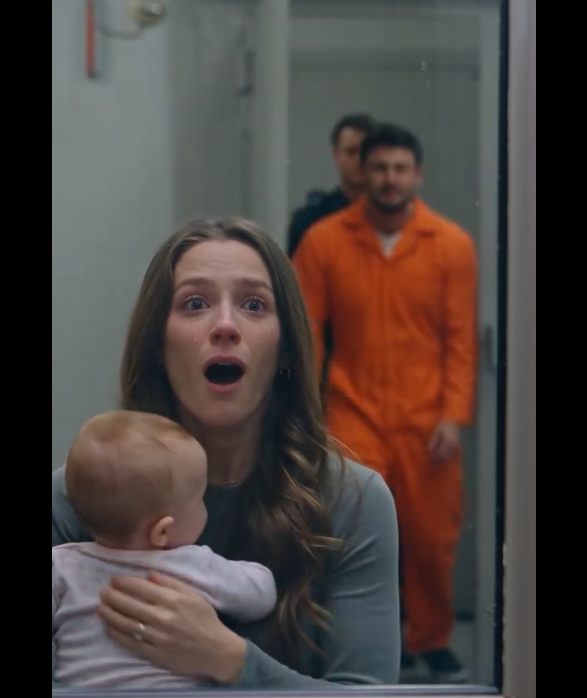
    An emotional video filmed in what appears to be a correctional facility shows a deeply moving interaction between a man wearing an orange institutional uniform, a woman holding a baby, and a uniformed officer. The recording begins inside what looks like a prison visitation room, where a large glass partition separates the man from the woman and the infant. From the very first moments, the expressions on their faces suggest that the meeting carries a great deal of emotion.

    The man stands on one side of the glass while the woman holds the baby close on the other. Although the video does not reveal who the people are or explain their personal circumstances, the interaction immediately draws attention to the emotional distance created by the barrier between them. At the beginning of the footage, the man slowly raises both hands and places them against the glass partition.

    His face appears emotional, and he seems to struggle to contain his feelings as he looks toward the woman and the baby. Across from him, the woman also appears visibly upset. She holds the infant securely in her arms while looking toward the man through the transparent barrier. The baby, dressed in a pink outfit with a small matching bow, faces the glass as the adults remain focused on one another. Their hands are separated only by the glass, creating a powerful visual moment in which they can see each other but cannot immediately share a physical embrace.

    The woman moves closer to the partition while continuing to hold the baby. She appears to be crying, and her expression suggests that the encounter is emotionally overwhelming. The man remains on the opposite side, keeping his hands raised against the glass. For a few moments, neither side of the partition changes position significantly. The camera captures their faces and hands in close detail, emphasizing the contrast between the man’s orange uniform and the woman’s gray clothing. The baby remains between the woman and the glass, looking toward the man. The recording does not include enough information to explain how long they have been apart or what circumstances brought them to this visitation area.

    A uniformed officer then becomes visible beside the man. He stands close to him and appears to guide or accompany him during the interaction. The officer places a hand near the man’s arm while the man continues facing the woman and the infant. The scene suggests that the meeting is taking place under supervision in a controlled institutional environment. However, the footage does not identify the facility, the officer, or the rules governing the visit. It also does not explain whether the man is being moved to another area or whether a change in the visitation arrangements is taking place. What is clear is that the officer remains involved as the man begins to turn away from the glass.

    Pages: 1 2 3

  • A Police Officer Stops an Elderly Man Riding an Old Motorcycle — What Happens Next Catches Everyone’s Attention

    A Police Officer Stops an Elderly Man Riding an Old Motorcycle — What Happens Next Catches Everyone’s Attention

    An unusual encounter between an elderly man and a police officer unfolds on a quiet street in this video, beginning with what appears to be a routine roadside stop and ending with an unexpected moment involving a much different motorcycle. At the beginning, an elderly man with long gray hair and a long gray beard is seen riding an old, heavily worn motorcycle along the street. He is wearing a faded orange-brown shirt and dark trousers, while the motorcycle shows visible signs of rust and age. Nearby, a police vehicle is positioned on the road with its emergency lights activated, drawing attention to the encounter.

    The setting appears to be an urban street lined with older red-brick buildings. The road is relatively quiet, and the surrounding area includes sidewalks, parked vehicles, and commercial or industrial-style buildings. As the elderly rider approaches, a uniformed police officer comes into view beside the police vehicle. The officer appears to approach the man and his motorcycle, beginning an interaction that quickly becomes the central focus of the footage. The video does not provide dialogue or explain why the officer initially stopped him, so the exact reason for the encounter remains unknown.

    The elderly man remains beside his old motorcycle as the officer approaches. The camera captures the contrast between the man’s worn clothing, the visibly aged vehicle, and the officer’s neat dark uniform. The motorcycle itself appears to have been used for a long time, with rust visible across several of its metal parts. Its headlight, handlebars, fuel tank, and other components are clearly shown as the officer stands close to it. Although the footage gives viewers a detailed look at the vehicle’s condition, it does not establish its mechanical condition or whether it was safe to ride.

    A few moments later, the officer begins handling the old motorcycle. The elderly man stands nearby while the officer takes control of the vehicle and moves it away from its original position. The camera follows this action, showing the officer guiding the motorcycle along the street. The interaction is unusual enough to make viewers curious about what is happening. However, without a confirmed explanation from the people involved, it would be misleading to claim that the officer confiscated the motorcycle, took it away for a particular legal reason, or intended to replace it.

    The officer then moves the old motorcycle toward a large metal dumpster positioned beside one of the buildings. He brings the vehicle close to the dumpster and appears to leave it in that area. The elderly man is no longer holding the handlebars during this part of the sequence. The camera captures the old motorcycle beside the container, emphasizing its worn appearance and the fact that it has been moved away from the man. The footage does not show whether the motorcycle was permanently abandoned, temporarily placed there, or handled for another reason.

    After the old motorcycle is moved, the elderly man is seen standing on the sidewalk. His posture and expression make the moment feel different from the opening scene, when he was still beside his vehicle. The camera then shows him sitting down on the edge of the curb near the brick building. He leans forward slightly, with his hands resting near his knees, while the street remains visible behind him. The video does not reveal what he is thinking or whether he is upset, tired, or simply waiting, so his emotional state should not be assumed.

    The scene becomes especially interesting because the officer does not remain beside the old motorcycle. Instead, the footage later shows him returning from the street on a different vehicle. This time, he is riding a black sport-style motorcycle that looks very different from the rusty machine seen earlier. Its dark bodywork, large front fairing, windshield, and modern design make it stand out immediately. The contrast between the two motorcycles is one of the most noticeable details in the entire video.

    As the officer approaches, the elderly man remains seated near the curb. The black motorcycle is brought closer and positioned in front of him. The officer slows down and stops near the man, creating a new interaction between the two. The camera captures the modern motorcycle from the front, showing its headlights, windshield, and overall appearance. Compared with the old, rust-covered motorcycle from the opening moments, this vehicle appears considerably more modern and better maintained.

    The officer then gets off the black motorcycle and stands beside it. He appears to position the vehicle so that the elderly man can approach it. The man looks toward the motorcycle and begins to rise from the curb. The sequence creates a striking contrast: earlier, he was standing beside an old motorcycle that the officer had moved away, while now he is looking at a completely different machine. This change gives the video an unexpected direction and encourages viewers to wonder what the officer intends to do.

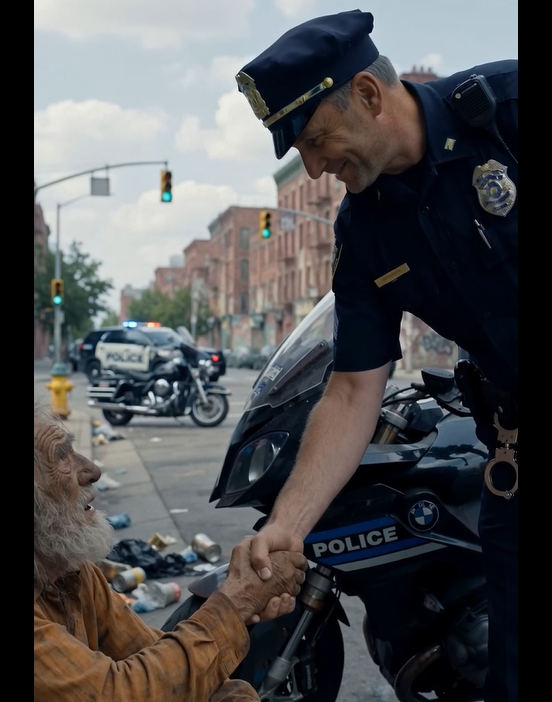
    The elderly man gradually approaches the black motorcycle. The officer remains beside the vehicle as the two stand close to one another. Their body language appears friendly during this final interaction, although the footage does not provide any spoken explanation. The man looks at the motorcycle and then turns his attention toward the officer. The camera captures the two men together beside the vehicle, making this the central image of the closing sequence.

    In the final moments, the elderly man and the officer exchange a friendly gesture. The man brings his hands together in front of him, while the officer reaches toward him. Their interaction appears warm and positive, offering a very different atmosphere from the uncertainty surrounding the earlier roadside stop. The video ends shortly afterward, without showing whether the elderly man rides the black motorcycle, receives ownership of it, or takes it away from the location.

    That final detail is important when describing the story accurately. Some viewers may interpret the sequence as a generous surprise in which the officer replaces the elderly man’s old motorcycle with a modern one. It is an understandable interpretation of the order of events, especially because the officer first moves the rusty motorcycle away and later returns on a different vehicle. However, the footage does not explicitly confirm that the black motorcycle is a gift, that it belongs to the officer, or that ownership is being transferred to the elderly man.

    Even without knowing the full background, the contrast between the two vehicles makes the video memorable. The first motorcycle appears old and heavily weathered, while the second has a modern sport-style design. Their appearance creates a clear visual difference that viewers can recognize immediately. The change also gives the footage a surprising ending, as the officer returns with something very different from the vehicle that was present at the beginning.

    The encounter may also encourage viewers to reflect on how important transportation can be in everyday life. For some people, a motorcycle or bicycle is more than a way to travel; it can be an important part of their daily routine. A vehicle that has been used for many years may carry personal value, even when its condition is visibly poor. At the same time, older vehicles can require maintenance and safety checks, particularly when important components have deteriorated through long-term use.

    The video also draws attention to the different roles police officers can have during interactions with members of the public. A police officer’s presence is often associated with traffic enforcement, public safety, and responding to incidents. Yet individual encounters can also include conversations and gestures that viewers may interpret in different ways. In this footage, the officer is shown approaching the elderly rider, moving the old motorcycle, and later returning on a black sport-style motorcycle. The exact reason behind those actions is not explained.

    It is important not to add a dramatic backstory that the footage cannot support. There is no confirmed information about the elderly man’s name, his personal circumstances, his financial situation, or how long he has owned the old motorcycle. The video also does not identify the officer, the police department, or the city where the encounter took place. Without reliable information from the people involved or an independent source, those details should remain unknown rather than being presented as established facts.

    The same care should be applied to the black motorcycle. Although it appears in the final part of the video and is brought close to the elderly man, the footage does not prove that it is brand-new, privately owned, or being given to him. It also does not show the man receiving keys, signing documents, or riding away on the vehicle. Describing it as a confirmed gift would therefore go beyond what the recording actually establishes.

    What viewers can clearly see is a sequence of events that develops in an unexpected way. An elderly man arrives on an old, rusty motorcycle, a uniformed officer approaches him, and the officer later moves the old vehicle toward a dumpster. The man then sits on the curb, before the officer returns on a black sport-style motorcycle. The two men stand together beside the modern vehicle and exchange a friendly gesture. These visible moments provide the foundation for the story without requiring assumptions about what happened outside the camera’s view.

    Ultimately, the video captures an unusual roadside interaction that leaves viewers with questions about the intention behind the officer’s actions. The difference between the old motorcycle and the black sport-style vehicle gives the footage a memorable visual ending, while the friendly interaction between the two men adds a human element. Whether the final motorcycle was intended as a gift or was brought there for another reason is not established by the video. What remains clear is that the encounter takes an unexpected turn and ends with the elderly man standing beside a very different motorcycle from the one he was riding at the beginning.


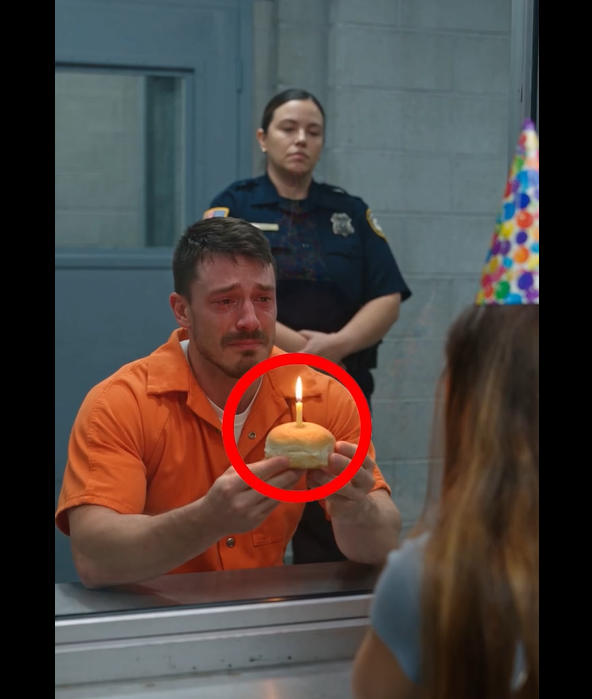
  • A Birthday Behind Glass Takes an Emotional Turn as a Man Gets an Unexpected Moment With His Loved Ones

    A Birthday Behind Glass Takes an Emotional Turn as a Man Gets an Unexpected Moment With His Loved Ones

    An emotional birthday celebration unfolds inside what appears to be a correctional facility in this touching video. A man who appears to be an inmate is seen on one side of a glass partition, while a woman and a baby stand on the other side. Wearing an orange uniform, the man sits close to the glass as he shares a special birthday moment with the visitors. Instead of celebrating in an ordinary setting surrounded by family and friends, he appears to be marking the occasion inside a secure environment, separated from the people standing nearby.

    At the beginning of the footage, the man is seated beside the glass partition, holding a small birthday cake in his hands. A single candle can be seen burning on top of it as he looks toward the woman and the baby. The woman is wearing a party hat, and the baby also appears to have a colorful birthday hat. Their presence gives the scene the atmosphere of a family celebration, even though the glass barrier prevents them from being physically together at that moment. The camera focuses on the people involved and the small cake, highlighting the unusual circumstances surrounding the occasion.

    The birthday cake is modest in size, but it becomes the center of attention. The man holds it carefully while looking toward the visitors on the other side of the glass. The woman remains close to the partition with the baby in her arms, sharing the moment with him from a distance. The colorful party hats add a festive detail to an otherwise plain institutional setting. The contrast between the birthday decorations and the surroundings makes the occasion stand out, showing how a personal milestone can still be meaningful even in a difficult or restricted environment.

    The man appears visibly emotional during the interaction. His facial expression suggests that the occasion means something important to him, although the video does not provide his thoughts or explain exactly what he is feeling. The woman remains close to the glass, keeping the baby beside her as they share the birthday moment. Without a confirmed account from the people involved, it would not be accurate to describe the precise reason for his reaction. What the footage does show is a man who appears to be an inmate celebrating his birthday while separated from two visitors by a glass partition.

    A uniformed staff member can be seen standing behind the man during the early part of the video. The surroundings include a glass partition, a doorway, and plain walls, all of which contribute to the impression that the scene is taking place inside a controlled facility. The staff member remains nearby as the birthday interaction continues. Although the setting appears to be a correctional facility, the footage does not identify the institution, the location, or the official roles of everyone shown. Those details cannot be confirmed from the images alone.

    As the video progresses, the situation begins to change. The man is no longer shown only sitting beside the glass with the small birthday cake. A uniformed staff member accompanies him toward a doorway, and the footage shows him moving away from his original position. This becomes an important moment because it changes the distance between him and the woman. Until then, the glass partition had separated them, allowing them to see one another but preventing a direct embrace.

    The door is shown opening as the man moves through it, accompanied by the uniformed staff member. He walks into the adjoining area rather than suddenly appearing beside the woman. The sequence gives viewers a clear view of the transition from the separated birthday greeting to a face-to-face interaction. The woman is visible nearby, waiting as he approaches. The atmosphere becomes more emotional as the man, who appears to be an inmate, is finally able to stand close to her without the glass between them.

    When the man reaches the woman, the two embrace. It is one of the most touching moments in the footage, especially because the earlier scenes showed them celebrating from opposite sides of a partition. The woman places her arms around him, and he leans toward her during the embrace. Their body language suggests that the meeting is meaningful to them, although the video does not establish their exact relationship or explain the circumstances that led to the encounter. The moment is powerful without needing an invented explanation about their personal history.

    The baby remains part of the celebration, adding another emotional detail to the scene. The child is shown with the woman during the earlier interaction and is also present as the celebration continues. The colorful party hat and the attention given to the birthday cake create a warm atmosphere. The video does not provide the baby’s name or age, nor does it confirm the child’s relationship to the man. It is therefore important to describe only what is visible rather than make assumptions about the family.

    After the embrace, the scene continues to develop into a larger birthday celebration. A bigger cake decorated with several lit candles is brought into the area. The cake is noticeably more elaborate than the small one seen at the beginning, and it becomes the focus of the final moments. The man, the woman, and the baby are gathered close together as the cake is presented. Other uniformed staff members can also be seen nearby, watching the celebration.

    The arrival of the larger cake changes the atmosphere once again. What began as a brief birthday moment across a glass partition now appears to have become a shared celebration in the same room. The candles are lit, and the people around the cake appear to be participating in the occasion. The contrast between the first small cake and the larger cake at the end gives the video a sense of progression. It creates a memorable ending centered on togetherness and a birthday being celebrated in an unexpected environment.

    For many viewers, the most striking part of the footage may be the transition from separation to an embrace. At first, the man who appears to be an inmate and the woman can only interact through the glass. Later, the door opens, and they are shown standing together. This simple change in the scene carries much of the emotional weight of the video. It highlights how meaningful physical presence can be during an important personal occasion, particularly when people are unable to spend that moment together in an ordinary way.

    Birthdays often bring people together through familiar traditions such as candles, cake, photographs, and time spent with loved ones. Yet not every celebration takes place in a home, restaurant, or party venue. Some occasions happen in settings where access and movement are controlled, and where visits may follow specific procedures. The footage offers a visual example of a birthday celebration taking place in what appears to be a correctional facility. It shows that even a small gesture, such as bringing a cake or arranging a visit, can become an important part of someone’s day.

    The presence of uniformed staff is also part of the story shown in the video. Staff members appear to remain close to the man as he moves through the doorway and joins the woman. Later, additional uniformed individuals are visible near the larger cake. Their presence suggests that the interaction is taking place under supervision, which is consistent with the controlled environment shown in the footage. However, the video does not explain whether the celebration was officially arranged by the facility, requested by the visitors, or organized through another process.

    It is important to remember that the images do not reveal the full background of the event. Although the man appears to be an inmate, the footage does not establish his identity, the reason for his detention, or whether he has been convicted of any offense. It also does not confirm how long he may have been separated from the woman or the baby. Although viewers may naturally interpret the scene as a family reunion, the exact relationship between the people shown cannot be verified from the footage alone.

    The video also does not establish where or when the celebration took place. Without a reliable source identifying the location and confirming the circumstances, it would be misleading to present a specific institution, city, date, or personal history as fact. A responsible account should avoid adding dramatic details simply to make the story more emotional. The visible sequence already provides enough material to describe the occasion in a meaningful way.

    What makes the footage memorable is the way the celebration unfolds. It begins with a small cake held behind glass, continues with the opening of a door, and reaches an emotional moment when the man and the woman embrace. The final scenes bring the group together around a larger birthday cake with several candles. Each stage adds something to the scene, allowing viewers to follow the celebration from a moment of separation to a moment of closeness.

    For people watching, the story may bring to mind the importance of family connections, personal milestones, and the value of being present for someone on a special day. It can also encourage reflection on how ordinary traditions can take on a different meaning when people are unable to celebrate in familiar surroundings. A birthday cake may seem like a simple object, but in the context shown here, it becomes a symbol of attention, celebration, and a shared moment.

    Ultimately, the video captures an emotional birthday celebration in an unusual setting. A man who appears to be an inmate begins the occasion on one side of a glass partition, sharing a small cake with a woman and a baby from a distance. Later, a door opens, he walks into the adjoining area, and the two share an embrace before a larger cake is brought out. The complete story behind the event remains unknown, but the visible moments offer a warm reminder that even a brief opportunity to celebrate together can mean a great deal.

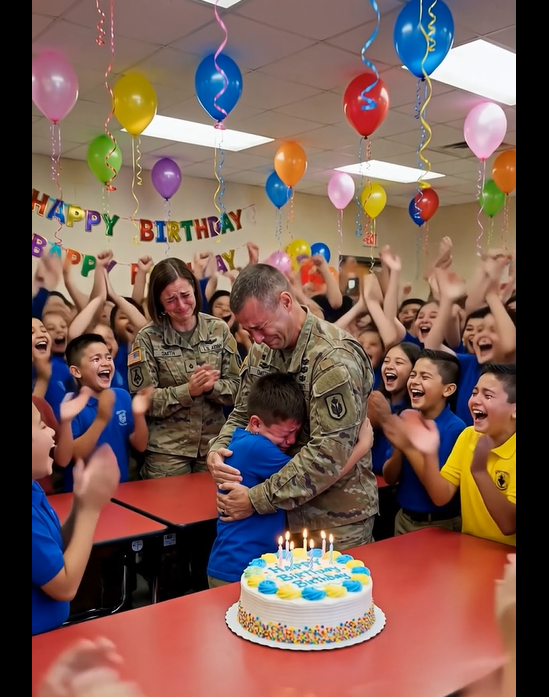
  • An Emotional Moment in a School Cafeteria Takes an Unexpected Turn — A Surprise That Brings Smiles and Tears

    An Emotional Moment in a School Cafeteria Takes an Unexpected Turn — A Surprise That Brings Smiles and Tears

    A quiet moment in a school cafeteria takes an emotional turn in this video, as a young boy sitting at a table appears visibly upset before an unexpected surprise changes the atmosphere around him. At the beginning, the boy is seen wearing a blue shirt and sitting alone with a meal in front of him. Other students can be seen in the background, going about their usual lunchtime activities. However, the boy’s expression is noticeably different from the cheerful atmosphere around him. He looks down, and his face appears emotional as the camera focuses on him.

    The opening moments invite viewers to pay attention to the boy’s reaction rather than the busy surroundings. He remains seated at the table, with his food in front of him, while the people nearby continue their activities. The video does not explain what happened before the recording began, so the reason for his emotional state cannot be confirmed from the footage alone. Nevertheless, his expression gives the scene a deeply personal feeling and makes viewers curious about what might happen next.

    A photograph then becomes part of the sequence. The image appears to show a young person standing beside someone wearing military-style clothing. Although the photograph is briefly visible, the video does not establish who the people are or what their relationship may be. It may be meaningful to the boy, but the exact story behind it remains unknown. Rather than assuming a family connection or inventing a history, it is important to recognize that the photograph is simply one of the details shown during this emotional moment.

    The camera then moves to other people inside the cafeteria. A woman wearing a light-colored top is seen standing near another boy dressed in green. Their interaction suggests that something is happening beyond an ordinary lunchtime scene. The woman appears attentive, while the younger boy looks toward the activity taking place. The footage does not provide their names or explain their roles, but their presence adds to the sense that the moment may have been planned or prepared in advance.

    As the sequence continues, the woman is shown using a telephone. The video does not reveal the person on the other end of the call or the exact words exchanged. It would therefore be impossible to confirm what was discussed. Still, the phone call appears shortly before the next important moment, making it part of the sequence that leads viewers toward the surprise. The atmosphere gradually changes as attention shifts back to the boy sitting at the table.

    The woman later approaches the boy with a birthday cake decorated with colorful details and several lit candles. The cake is brought toward his table, creating a clear birthday-style celebration in the cafeteria. The boy remains seated as the cake is presented to him. What had initially appeared to be a difficult moment now begins to look more cheerful, with the arrival of the cake adding a sense of celebration and anticipation.

    Birthday celebrations can carry special meaning, particularly when they take place in an environment surrounded by classmates and familiar faces. A cake, a few candles, and the presence of people who have taken time to participate can turn an ordinary day into a memorable occasion. In this video, the cake becomes an important part of the scene because it changes the focus from the boy’s earlier expression to the celebration taking place around him.

    However, the most striking part of the footage comes shortly afterward. A man wearing a military-style uniform enters the scene and approaches the boy. The boy appears to recognize him or respond emotionally to his arrival, although the video alone cannot establish their relationship. The man bends down toward him, and the two share an embrace. It is a powerful visual moment, especially after the boy was shown looking so upset at the beginning.

    The embrace becomes the emotional center of the video. The boy’s reaction, together with the man’s arrival, gives the impression of a meaningful personal moment. Many viewers may interpret it as a family reunion or a surprise visit from someone important in the boy’s life. Those interpretations are understandable, but the footage does not independently confirm whether the man is his father, another relative, a family friend, or someone else close to him.

    What can be said with confidence is that a man in military-style clothing approaches the boy and embraces him in the cafeteria. The camera captures the interaction as the people nearby remain part of the scene. The contrast between the boy’s emotional expression at the beginning and the embrace at the end is what makes the sequence particularly moving. It gives the video a clear emotional progression without requiring viewers to know every detail of the people’s personal lives.

    The setting also plays an important role. A school cafeteria is usually associated with everyday routines: students sitting together, eating lunch, talking with friends, and returning to class afterward. In this case, the familiar environment becomes the setting for a moment that appears much more personal than an ordinary school day. The presence of the cake and the arrival of the uniformed man make the event stand out from the usual lunchtime activity.

    For children and young people, important personal moments can become especially meaningful when they happen in a familiar environment. A surprise visit, a birthday celebration, or the arrival of someone they care about may create emotions that are difficult to hide. The boy’s visible reaction in this footage reminds viewers that even a short interaction can carry a great deal of meaning for the people involved. At the same time, every child’s experience is different, and the full circumstances behind this particular moment remain unknown.

    The video may also encourage viewers to think about the people who make time to be present for important occasions. A birthday is not only about the cake or the candles. For many people, it is also about sharing a moment with someone whose presence matters to them. The man’s arrival and the embrace that follows create an image that viewers may associate with love, support, and the importance of personal connections.

    It is equally important not to assume that the uniform proves a particular military deployment, service history, or reason for the man’s arrival. The footage shows military-style clothing, but it does not provide enough information to establish the man’s position, where he has been, or how long he may have been away. Similarly, the video does not confirm that the event was organized by the school or explain who arranged the cake and the apparent surprise.

    The strongest way to understand the footage is to focus on the sequence that is actually visible. A boy sits in a school cafeteria and appears emotional. A photograph is briefly shown, a woman is seen interacting with another student and using a telephone, and a birthday cake is brought to the boy. Then a man in military-style clothing approaches and embraces him. These are the details that form the story captured by the camera.

    Although many questions remain unanswered, the final scene offers a warm and memorable image. The boy is no longer shown alone at the table in the same way as at the beginning. Instead, the camera captures him sharing an embrace with the man who has just arrived. For viewers, this change creates an emotional ending and serves as a reminder of how meaningful a moment of connection can be.

    Ultimately, this video is a reminder that some of the most touching moments are not defined by elaborate celebrations or expensive gifts. Sometimes, a simple cake, an unexpected arrival, and a heartfelt embrace can create a scene that people remember. The complete background of the event is not provided, and the identities and relationships of those involved remain unconfirmed. Even so, the visible interaction offers a positive message about human connection, celebration, and the importance of being present for meaningful moments.

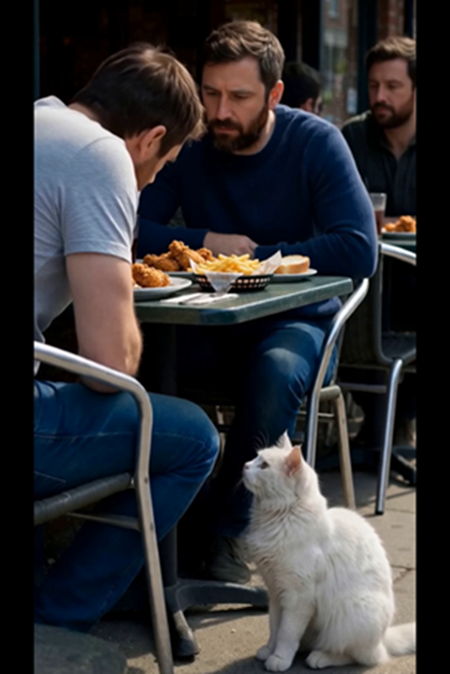
  • A White Cat and Her Kittens Catch the Attention of Two Men — A Small Act of Kindness Makes a Heartwarming Scene

    A White Cat and Her Kittens Catch the Attention of Two Men — A Small Act of Kindness Makes a Heartwarming Scene

    A simple moment involving a white cat and several tiny kittens creates a heartwarming scene in this video, reminding viewers how meaningful even small acts of kindness can be. The footage begins near what appears to be an outdoor restaurant or café, where several people are sitting at tables and enjoying their food. Close to one of the tables, a white cat can be seen on the ground, seemingly moving around the area while people continue their meal. The scene is ordinary at first, but the cat soon becomes the focus of attention.

    As the video continues, a man sitting at the table appears to notice the cat nearby. The camera briefly focuses on the interaction, showing the man reaching down while the white cat remains close to the table. Although the footage does not provide any conversation or explanation, the moment suggests that the animal has caught his attention. It is a small interaction, but it introduces the central subject of the video: the connection between people and animals, and the importance of noticing animals that may need care.

    The setting then changes, moving away from the restaurant area to an outdoor space. The white cat is now seen close to several small kittens, including kittens with different coat colors. They are gathered together on the ground, and the footage gives viewers a closer look at the animals. The kittens appear very young and stay close to the white cat. While the video does not confirm their exact relationship, the scene may lead viewers to wonder whether the white cat is their mother and whether they are being cared for together.

    A few moments later, two men appear in the outdoor area. They approach the place where the cats are gathered, and the animals remain visible near them. One of the men seems to pay particular attention to the cats, while the camera captures the group from different angles. There is no confirmed information about who these men are or whether they have previously encountered the animals. Nevertheless, their presence becomes an important part of the sequence, as the footage begins to show a possible effort to provide food for the cats.

    The video then returns to one of the men near the restaurant. He is shown carrying a large plate of food, which he appears to be bringing outside. The camera follows him as he moves through the doorway and toward the area where the cats were previously seen. This moment gives the footage a clear change in direction: what began as an ordinary scene near a dining area now appears to involve an effort to offer food to the animals outside.

    When the man reaches the cats, the plate is brought close to them. The footage shows the white cat and the kittens gathered around the food, creating one of the most memorable moments in the video. The animals appear interested in what has been placed in front of them, while the man remains nearby. The scene does not establish how hungry the cats were before the food arrived, but it does show that food was brought to their location and placed within their reach.

    The presence of the kittens makes the moment especially touching. Small animals depend heavily on their surroundings and on the care available to them, particularly when they are very young. Seeing several kittens gathered together beside an adult cat naturally draws attention to their vulnerability. Their small size and close proximity to the white cat make the scene easy for viewers to connect with, even though the video does not provide details about their background or living conditions.

    What makes this footage interesting is not a dramatic event or a complicated story, but the simple sequence of actions shown on camera. A cat is noticed near a place where people are eating, the footage later shows the animal with several kittens, and a man eventually brings food outside. These moments come together to create a scene that many animal lovers may find meaningful. Sometimes, an ordinary gesture can become memorable simply because it involves an animal that cannot ask for help in words.

    For people who care about cats, the video may also bring attention to the needs of stray and outdoor animals. Cats living outside can face challenges such as finding reliable food, clean water, safe shelter, and protection from harsh weather. Kittens may be especially vulnerable because they are still developing and cannot always protect themselves. When people encounter animals in these circumstances, responsible assistance can make a positive difference, provided it is offered in a safe and appropriate way.

    At the same time, feeding unfamiliar cats requires some thought. Not every type of human food is suitable for cats, and certain ingredients can be harmful to them. A balanced cat food, along with clean drinking water, is generally a more appropriate choice than heavily seasoned or processed meals. People who regularly help outdoor cats may also consider contacting a local animal welfare organization or veterinarian for guidance, particularly when young kittens appear to need additional care.

    The video also highlights something that is easy to overlook in everyday life: animals are often present around restaurants, streets, buildings, and other places where people gather. Some passersby may notice them, while others continue with their routines without paying much attention. A moment of awareness can encourage people to think about whether an animal has access to basic necessities. That does not mean every encounter requires the same response, but it does remind viewers that kindness can begin with simply noticing what is happening around them.

    There is also an important difference between what a video shows and what viewers may imagine happened before or after the recording. The footage does not identify the men, explain whether they know the cats, or confirm how long the animals have been in that location. It also does not establish whether the kittens belong to the white cat or whether the animals received further assistance after the recorded moment. Keeping these details clear allows the scene to be appreciated without adding claims that cannot be verified.

    Even without a complete background story, the sequence offers a positive reminder about compassion toward animals. The image of a white cat surrounded by tiny kittens, followed by a man bringing food close to them, is enough to make many viewers pause. It encourages a simple question: how often do we notice the animals around us, and what small, responsible action might help improve their situation?

    Ultimately, this video captures a brief interaction that may inspire viewers to show greater consideration for animals in their communities. It does not need an invented rescue story, an unknown identity, or an unverified explanation to communicate its message. The visible moments speak for themselves: a cat, several kittens, two men, and food brought outside. Sometimes, the most meaningful stories are those that remind us that kindness does not always require a grand gesture. It can begin with a small act of care and a willingness to pay attention.

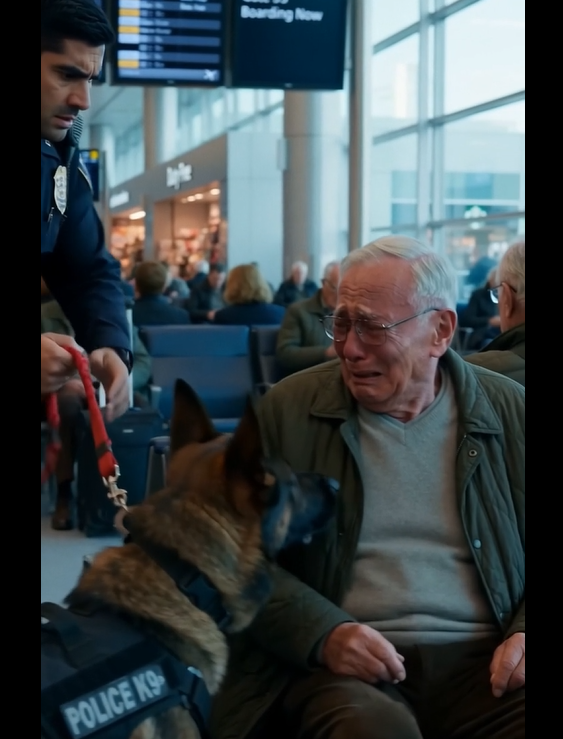
  • A Police Dog Suddenly Approaches an Elderly Man at the Airport — What Happens Next Is Truly Heartwarming

    A Police Dog Suddenly Approaches an Elderly Man at the Airport — What Happens Next Is Truly Heartwarming

    An ordinary day at an airport can sometimes turn into a moment that people would never expect. Passengers arrive, families say their goodbyes, travelers wait for their flights, and airport employees continue with their daily responsibilities. Amid all the movement and activity, most people are focused on reaching their destinations.

    However, in this emotional scene, the attention gradually shifts toward an elderly man sitting quietly in the waiting area. He appears to be keeping to himself, surrounded by the usual sounds and activity of the airport. Nothing about the situation initially suggests that something particularly unusual is about to happen.

    Nearby, two uniformed police officers are walking through the terminal with a German Shepherd wearing a working harness. The dog appears attentive and alert, as would be expected of an animal accompanying officers in a busy public environment. Its ears are raised, and its attention seems focused on the people and surroundings. The officers continue walking through the airport, maintaining control of the dog while observing the area around them. Their presence appears to be part of the ordinary security activity taking place inside the terminal. At this point, the elderly man is still sitting quietly, apparently unaware that the dog is about to draw everyone’s attention.

    Pages: 1 2 3 4 5 6 7 8 9 10