
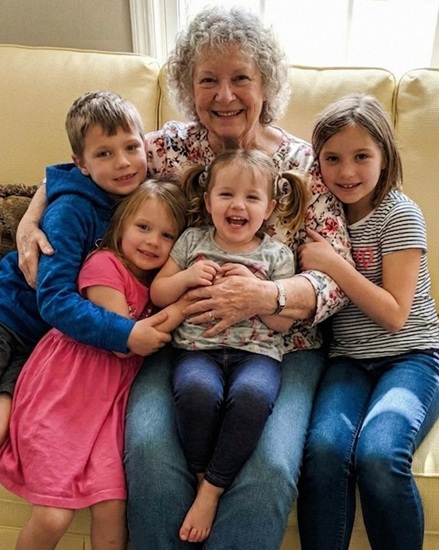
Six months ago, my life changed forever, splitting into the world before and after tragedy struck. At 71, I became the guardian of four children I had once thought of as only my grandchildren.
Their parents, my daughter Darla and her husband, were lost in a plane crash while traveling for work, leaving me to manage the unimaginable responsibility of caring for children grieving the sudden loss of both parents.
The news of the crash came as a horrifying shock, and for days afterward, our home felt like a void where laughter once lived.
The children were devastated. Lily, at nine, tried to be strong but often retreated into silence, her young mind struggling to process the permanence of death. Ben, seven, acted out with tears and frustration, wetting the bed for the first time in years.
Molly, five, oscillated between confusion and bursts of emotion, while Rosie, barely four, continued to believe her parents were simply on a long trip, insisting every morning that they would return. Each day presented new challenges, and I found myself overwhelmed, balancing grief, childcare, and the practical demands of providing for all of them.
At first, I didn’t know how to explain the situation to Rosie. Her small, trusting eyes sought reassurance that I couldn’t fully provide. I told her her mother was on a long trip and promised I would always be there. It was a lie, yes, but one wrapped in protective love.

The early weeks were filled with tears, sleepless nights, and endless questions from children too young to comprehend death fully. Yet, I pressed on, knowing that maintaining some sense of stability, even if imperfect, was essential for their survival.
My own life took a sudden and dramatic turn. I was 71, retired, and not prepared for full-time parenting of four children. My modest pension was insufficient to support our new household. Reluctantly, I sought employment, eventually finding work at a small diner on Route 9.
The job was physically demanding—wiping tables, washing dishes, taking orders—but it allowed me to keep the household afloat. Evenings were spent knitting scarves and hats to sell at the weekend market, providing a little extra income. Every day was a balancing act of survival and care.
Despite exhaustion, I established a daily routine. Mornings began with breakfast and preparation for school and daycare, followed by a long day of work.
Afternoons were filled with homework, meal preparation, and bedtime rituals. Each night, I read stories to the children, trying to preserve normalcy. Slowly, we established a rhythm, though grief remained a silent companion. It never left, merely learning to sit quietly in the corner of our lives, ever present but manageable.
Six months passed, and we survived each day as best we could. I often questioned whether I was doing enough. The responsibilities were immense, and the emotional weight unbearable at times.
Every milestone—school events, birthdays, and holidays—reminded us of the parents who would never return. I kept telling myself that simply keeping the children safe and fed was enough, yet a lingering doubt haunted me: was I truly preserving their childhood or merely sustaining their survival?
One morning, a seemingly ordinary errand turned extraordinary. On my way to work, I realized I had forgotten my purse and returned home, only to find a delivery truck outside. The package was enormous, labeled simply: “To My Mom.” It took three men to carry it inside.

The box, larger than a small refrigerator, held dozens of smaller boxes inside, each carefully labeled by Darla for milestones in her children’s lives, from birthdays to first achievements. The meticulous planning revealed a side of her I had not fully understood—the foresight to protect her children even after her death.
Among the boxes was a letter from Darla, dated three weeks before her passing. The opening line crushed me emotionally: she had known she would not survive and had prepared these gifts to ensure her children would continue to feel her presence at important moments.
Her words described both her love and her intention to shield me from the full horror of her illness, asking me to care for the children while keeping some truths private. I sat in stunned silence, tears flowing, realizing the immense love and courage my daughter had mustered in her final days.
Carefully unpacking the gifts, I discovered items for every milestone she anticipated: journals, keepsakes, and personal letters for each child. Darla had meticulously planned every birthday, school achievement, and significant life event until they reached adulthood, leaving an indelible mark of love and guidance.
At the bottom of the package, another letter directed me to an address in the city, promising to reveal a hidden truth about her life. That day, my grief intertwined with urgency and curiosity, driving me to seek answers about the life she had kept private until the very end.
The address led me to a small, unassuming house on the outskirts of the city, the kind of place that didn’t draw attention yet held secrets that would shatter my understanding of the past months.
I knocked on the door with trembling hands, unsure of what awaited me inside, the weight of Darla’s final instructions pressing heavily on my mind.
A man in his late thirties answered. His calm eyes immediately conveyed a sense of familiarity with my situation. “Can I help you?” he asked, voice measured.

I introduced myself, explaining that I was Darla’s mother and that the package had directed me to this location. His expression softened as he nodded. “Carolyn, please, come in. I’ve been expecting you.”
The man introduced himself as William, my daughter’s doctor. He gestured toward a chair, inviting me to sit. My heart pounded as he retrieved a folder filled with papers. With careful precision, he revealed that Darla had been diagnosed with stage four cancer a year prior, a fact she had chosen to hide from nearly everyone, including me.
I couldn’t find words. The room seemed to spin as he explained that the disease had progressed rapidly and aggressively.
Darla had less than a year to live, yet she had devoted that time to creating something extraordinary for her children. Each gift and letter was meticulously planned to provide love, guidance, and reassurance for milestones she would never witness.
William described how Darla had visited him privately after noticing symptoms and receiving confirmation of the diagnosis. Despite the pain and fear, she remained resolute in her decision not to burden me with this knowledge, believing I had endured enough already. She had entrusted him with the package and its contents to ensure her children were cared for and remembered.
As he spoke, I understood the depth of her sacrifice. Darla had considered every eventuality, anticipating birthdays, school achievements, and significant personal milestones for each child. She had designed these gifts to carry her presence forward, so her absence would not feel like abandonment, but rather like a continuum of her love and guidance throughout their lives.
At the bottom of the package, William handed me a small box, delicate and gold. Inside was a locket, containing a photograph of the four children hugging me, taken the previous summer. I broke down completely, realizing this was Darla’s way of preserving moments of happiness, a tangible memory she wanted me to hold onto in her absence.
I asked William if Darla’s husband had known about the diagnosis. He shook his head. Darla had never told him, and the tragic crash had ended all possibilities of revealing her illness. It became clear that she had also hidden her illness to prevent him from influencing the children’s inheritance of memories, gifts, and milestones, ensuring her legacy remained untouched by betrayal.

Returning home, I read Darla’s letter again, absorbing the final lines I had initially overlooked: “It’s better for some truths to remain buried. Take care of the kids, Mom.” Those words carried a profound responsibility. She had trusted me with the full weight of her intentions, knowing I would protect her children from both the truth of her death and the actions of their father.
The next morning, the discovery of a drawing in Molly’s notebook added another layer to the mystery. Among stick figures of our family was another labeled “Mommy 2.” After gentle questioning, Molly explained that this figure represented a woman who had come to the house when Darla was away at work, someone her father had hugged, hinting at a betrayal my daughter had been silently aware of.
I contacted Darla’s neighbor, who confirmed the presence of this woman, Jessica, a nanny who had spent considerable time with the family. I eventually found Jessica, who admitted to an inappropriate relationship with my son-in-law. Darla had discovered the truth, fired her immediately, and kept this from me to protect both her children and me from further heartbreak.
The revelation left me reeling. Darla’s foresight, her courage, and her devotion were staggering. She had not only planned for every significant moment in her children’s lives but had also shielded them from painful truths about their father’s actions. I realized that all the gifts, letters, and instructions were acts of profound love, ensuring her children would grow up surrounded by love, even in her absence.
By the end of that day, I understood my role fully. I would honor Darla’s wishes, protect her children from unnecessary pain, and carry forward her vision. Her meticulous planning, her foresight, and her courage were not just gifts—they were a roadmap for survival, love, and resilience, ensuring that the children could experience their lives with their mother’s love always present, even if invisible.
Returning home, I carefully carried the large package to my bedroom, aware that each gift held months of planning, love, and foresight from Darla. I locked the door, needing privacy to process everything while ensuring the children remained unaware of the full truth.
That evening, after the children were asleep, I sat quietly on my bed, staring at the locket and photographs. I replayed William’s words and Darla’s letters in my mind, realizing how much courage and thought she had poured into every detail of this extraordinary gesture.
The next morning, it was Lily’s tenth birthday. I brought out the box labeled for her, and her eyes widened with excitement as she opened it carefully. Inside was a journal, with the first page already containing a handwritten note from her mother, expressing pride and encouragement for her dreams.

Lily clutched the journal to her chest and began to cry softly, overwhelmed by the presence of her mother in such a tangible, thoughtful gift. I sat beside her, tears streaming down my own cheeks, feeling the weight of Darla’s love and preparation wash over me.
Over the next few days, I opened each of the milestone boxes with careful attention. Each one was labeled for specific birthdays, first school days, and personal achievements. Darla had written notes, provided small keepsakes, and included guidance for life lessons she wished to impart to her children.
For Ben, there was a box for his first day of middle school. Inside, he found a notebook with his mother’s encouragement to embrace challenges and pursue his passions with confidence. I could see his face light up as he read her words, feeling her presence and guidance despite her absence.
Molly’s first bike ride box included protective gear, a personalized water bottle, and a heartfelt note reminding her to persevere and celebrate her successes. Rosie, the youngest, received a box for her fifth birthday, complete with art supplies, small toys, and a loving message encouraging her creativity and imagination.
As the days passed, I realized that Darla had not only provided physical gifts but also emotional tools for each child. Her foresight ensured that at every critical moment, they would feel supported, loved, and guided, even without her physically present.
I also reflected on the lessons she had imparted through these gestures. Despite the betrayal and pain surrounding their father, Darla had chosen to shield her children from unnecessary heartbreak. She had entrusted me to carry that burden, demonstrating the ultimate act of love and trust.
The realization hit me fully: Darla’s love extended beyond her life, shaping the foundation of resilience, strength, and joy for her children. Each carefully planned box became a symbol of her enduring presence and guidance, reminding us that love transcends even the greatest loss.
From that moment forward, I committed myself to honoring her wishes. I became the guardian of these carefully curated memories, the protector of her children’s innocence, and the conduit of her wisdom and love. It was the responsibility she had entrusted to me, and I vowed to uphold it.
The weeks following were both emotional and healing. I watched as the children interacted with the gifts, discovering notes and items that prompted laughter, reflection, and sometimes tears. Each discovery reaffirmed Darla’s thoughtfulness, ensuring her children never felt abandoned or unloved.
I also realized that my role as both grandmother and guardian was now intertwined with Darla’s vision. I became the bridge between her love and their everyday lives, teaching, nurturing, and celebrating alongside the ongoing presence of her carefully planned surprises.
Looking back, I understood that this experience had transformed our family. Darla’s foresight gave her children a sense of stability and continuity. Despite the tragedy, her planning and love created a roadmap for them to navigate life confidently, always feeling the protective embrace of their mother.
In the quiet moments at night, I would sit with the children, reading letters or showing keepsakes from the boxes. Each item sparked conversation, reflection, and laughter, allowing them to experience their mother’s guidance and affection in a way that words alone could not convey.
Ultimately, Darla’s final act of love revealed a profound truth: protecting those we love sometimes means carrying burdens that others may never know. Her legacy was not just in the gifts but in the enduring care and foresight she had shown for her children’s happiness.
Through this journey, I learned that grief and love coexist. Even amidst heartbreak, planning, presence, and devotion can create moments of joy and continuity. Darla’s careful preparations ensured that her children could grow up with her influence shaping their lives, even in her absence.
And so, I continued each day guided by her trust. Every decision I made, every birthday I celebrated, every milestone I helped them reach was informed by the care, foresight, and love Darla had instilled in her letters and boxes. Her presence was woven into the fabric of our family, eternal and unwavering.
