
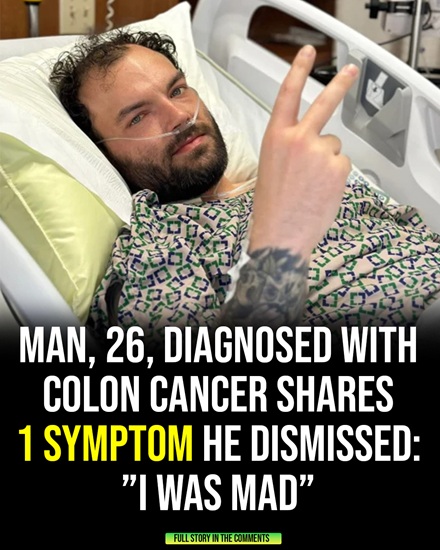
At only 26 years old, David Lyon considered himself a healthy and active young man, with no serious medical history beyond occasional minor injuries related to sports and everyday physical work.
Living in Erie, Pennsylvania, he maintained a demanding job in a sheet metal shop, where long hours and physical effort were part of his daily routine, leaving little time to focus on potential health concerns.
When he first noticed something unusual, including traces of blood after using the bathroom, he did not immediately associate it with anything serious or life-threatening.
Instead, he assumed there might be a simple explanation, possibly linked to his work environment, where small cuts and minor injuries were common and often went unnoticed during busy workdays.

Like many young adults, David believed that serious illnesses such as colorectal cancer were unlikely at his age, especially since he felt otherwise strong, capable, and physically active.
“I didn’t think much of it at first,” he later explained, reflecting on how easily early warning signs can be overlooked when they seem minor or easy to explain.
However, over time, his symptoms began to change, gradually becoming more noticeable and increasingly difficult to ignore as they started affecting his comfort and daily activities.
Abdominal pain developed and intensified, eventually reaching a point where it interfered with his ability to stand upright comfortably, forcing him to adjust his posture to find temporary relief.
At that moment, he realized something was not right and made the decision to seek medical attention, understanding that the symptoms required professional evaluation rather than assumptions.
Doctors began a series of examinations, including diagnostic procedures designed to identify the cause of his symptoms and rule out possible conditions.
A colonoscopy revealed a concerning finding: a mass in his colon, which led to further imaging tests to determine the extent and nature of the issue.
The results confirmed a diagnosis that would change his life completely. The cancer had already spread to his liver, placing him at stage 4 colorectal cancer at just 26 years old.

Receiving such news at a young age can be overwhelming, and David described his initial reaction as a mixture of shock and anger rather than sadness or fear.
“I was angry more than anything,” he shared, explaining how difficult it was to accept that such a serious illness could affect him despite his age and lifestyle.
Medical professionals noted that while colorectal cancer cases among younger adults have been increasing, diagnoses in individuals in their twenties remain relatively uncommon.
Researchers continue to study the reasons behind this trend, examining factors such as diet, environmental influences, lifestyle patterns, and genetic predispositions.
Although there is no single confirmed cause, experts emphasize that awareness and early detection are becoming increasingly important as more young individuals are affected.
Faced with a challenging journey ahead, David made a personal choice that helped him manage the emotional burden of his diagnosis.
He decided not to focus on every detail of his prognosis, allowing his mother to handle much of the medical information while he concentrated on maintaining a positive outlook.

This approach allowed him to protect his mental well-being, giving him the strength to face treatments without becoming overwhelmed by fear or uncertainty.
From the beginning, he was determined not to let cancer define his identity or take control of how he lived his life.
Despite undergoing intensive chemotherapy over several years, David continued to stay active and engaged in the activities that brought him joy and a sense of normalcy.
One of his strongest sources of motivation was hockey, a sport he had grown to love and which provided him with an escape from the realities of treatment.
Even during difficult periods, he found ways to remain connected to the game, using time on the ice as a way to clear his mind and focus on something positive.
Physical activity also played an important role in maintaining his strength, helping him cope with both the physical and emotional challenges of his condition.
As treatment progressed, the tumor in his colon responded to chemotherapy, allowing doctors to move forward with surgical intervention.
In 2022, he underwent surgery to remove the tumor and affected lymph nodes, marking a significant step forward in his treatment journey.

However, the presence of cancer in his liver meant that additional treatment was necessary, requiring further medical intervention and careful monitoring.
Advancements in medical science have made liver transplants a potential option for certain colorectal cancer patients, offering improved outcomes in specific cases.
In 2024, David underwent a liver transplant, a major procedure that ultimately removed the remaining cancer and gave him a renewed chance at recovery.
The surgery was successful, and follow-up evaluations showed no detectable signs of cancer, allowing him to begin the process of rebuilding his health and life.
Throughout his journey, he received strong support from family members, who stood by him during every stage of treatment and recovery.
Another important source of comfort was his dog, Sully, a St. Bernard he had adopted shortly before his diagnosis.
Sully remained by his side through hospital visits, recovery periods, and everyday moments, offering companionship and emotional reassurance during difficult times.

The bond between them became an important part of his healing process, demonstrating how companionship can positively impact emotional well-being.
Now 31 years old, David is cancer-free and no longer undergoing treatment, with doctors describing his prognosis as excellent.
His experience highlights the importance of paying attention to early symptoms, even when they seem minor or easy to dismiss.
Healthcare professionals emphasize that signs such as blood in the stool, persistent abdominal pain, or changes in bowel habits should always be evaluated by a medical professional.
Other symptoms to be aware of include unexplained weight loss, ongoing fatigue, and a feeling that the bowel does not fully empty after use.
Raising awareness about these signs is especially important as colorectal cancer continues to appear more frequently in younger populations.
Early detection plays a critical role in improving outcomes, making timely medical evaluation essential for anyone experiencing unusual or persistent symptoms.
David’s journey reflects not only the physical challenges of cancer but also the mental strength required to face such a diagnosis with determination.
His ability to stay positive, remain active, and focus on what he could control played a key role in his recovery.
While each individual’s experience with cancer is unique, his story offers encouragement and hope to others facing similar challenges.
It also highlights the importance of support systems, including family, friends, and companions who provide strength during difficult times.
Through perseverance, medical care, and emotional resilience, David was able to overcome a life-threatening condition and move forward with a renewed outlook on life.
Today, he continues to share his story to encourage awareness and remind others not to ignore changes in their bodies, regardless of age.
His experience stands as a powerful example of how early action, combined with modern treatment and determination, can lead to positive outcomes even in difficult circumstances.
