
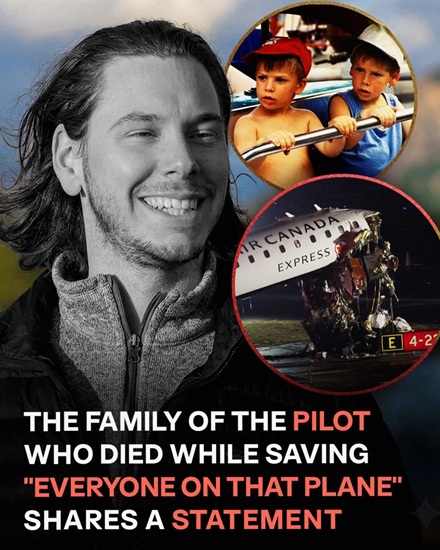
What began as a routine international flight to New York’s LaGuardia Airport turned into one of the most carefully scrutinized aviation incidents in recent memory.
On the night of March 22, 2026, Air Canada Express Flight 8646, operated by Jazz Aviation, was completing its scheduled journey from Montréal–Trudeau International Airport en route to LaGuardia with 76 people on board.
The Bombardier CRJ‑900 regional jet had already encountered delays before departure, leaving many passengers anxious but hopeful for a smooth landing in Queens.
Intense focus was on routine procedures, weather reports, and the familiar hum of aircraft systems as the flight approached New York’s busy airspace.

Shortly before the accident, air traffic control was managing unrelated complications involving another aircraft, United Flight 2384, which had declared an emergency due to a strange odor and symptoms among its flight attendants.
Emergency vehicles, including a Port Authority fire truck designated Truck 1, were dispatched to assist that situation on the ground.
As the Air Canada Express jet descended toward Runway 4 at LaGuardia late that night, the runway appeared clear, and the approach was described as normal by passengers and crew.
However, behind the scenes, controllers were juggling multiple tasks — coordinating emergency responses, handling air traffic, and attempting to secure a gate for the flight dealing with the reported odor issue.
The critical moment occurred when the fire truck was cleared to cross Runway 4 while Flight 8646 was on final approach.
Minutes later, in a desperate attempt to reverse the earlier clearance, controllers repeatedly broadcast urgent stop commands to Truck 1, but the message came seconds too late.

At approximately 11:38 p.m. local time, as Flight 8646 touched down, the CRJ‑900 collided with the fire truck on the active runway. The impact crushed the cockpit and forward fuselage, instantly killing both pilots.
The names of the flight crew — Captain Antoine Forest and First Officer Mackenzie Gunther — quickly spread across news outlets worldwide as loved ones, colleagues, and strangers alike absorbed the shocking reality of the loss.
The collision was severe. The cockpit section of the aircraft was destroyed, and the ground vehicle was overturned, yet astonishingly, many passengers survived the crash.
Emergency responders rushed to the scene, initiating evacuation procedures for passengers and crew, many of whom were shaken but conscious.
A total of 41 individuals were hospitalized, including passengers, the four crew members from Flight 8646, and the two occupants of the fire truck, both of whom suffered serious but non‑fatal injuries. Some victims were later released, while others remained under medical care for more severe trauma.
Within hours, LaGuardia Airport was closed as investigators from the National Transportation Safety Board (NTSB), the Federal Aviation Administration (FAA), and the Transportation Safety Board of Canada began combing through wreckage, radio transmissions, surveillance data, and air traffic control recordings.

Audio released from the tower frequencies captured a tragic sequence of radio calls — from clearance to cross the runway, to urgent pleas to stop the vehicle, and finally, the emotional acknowledgment of responsibility by one air traffic controller who said, “I messed up.” Another controller, attempting comfort, responded that he had “done the best you could.”
The crash prompted immediate questions about airport runway safety, communication protocols, and the role of critical safety equipment.
Initial investigative findings noted that the fire truck did not have a transponder capable of sending location data to the airport’s ground radar system, a safety gap that complicated situational awareness for controllers.
Aviation experts and safety advocates quickly called for a review of runway crossing procedures, transponder requirements for emergency vehicles, and staffing measures in control towers, especially during peak travel periods and emergency responses.
Passengers described the terrifying moments of impact and evacuation, recalling jolts, chaos, and screams before being led off the aircraft by flight attendants and emergency personnel. Many expressed gratitude for surviving what could have been a far more devastating catastrophe.
Among the passengers and crew, heroes emerged by virtue of their decisive actions — evacuating others, assisting injured travelers, and maintaining calm amid tragedy.
Family members of the pilots, when publicly sharing memories and photos, added a deeply human dimension to the narrative.

Images of Antoine Forest in childhood beside his sibling circulated widely, reminding the world that the professional aviators were also sons, friends, and cherished family members whose lives extended far beyond their final moments.
Officials from Air Canada, the Port Authority, and aviation safety boards offered condolences and pledged full cooperation in the ongoing investigation, emphasizing that transparency and accountability were paramount in preventing future incidents.
As the NTSB continues its detailed analysis of flight recorders and tower communications, investigators are expected to publish interim findings and safety recommendations in the coming months, with a final report likely taking up to two years.
Meanwhile, LaGuardia Airport resumed limited operations once debris was cleared and runways inspected, though the legacy of the crash lingered in the memories of travelers, families, and the aviation community at large.

The collision of Flight 8646 with the fire truck remains one of the rare fatal commercial aviation accidents in the United States and the first at LaGuardia in decades, marking a somber moment in aviation history.
Beyond the mechanics of what went wrong — communications, clearances, systems, and protocols — the incident showed how split‑second decisions, professional dedication, and human compassion can shape outcomes even in the face of tragedy.
For those aboard that flight, the impact was not only physical but emotional — a reminder that every journey carries lives, stories, and loved ones waiting at the destination.
