

The Milan–Cortina Winter Games delivered a powerful reminder of why the Olympic Games continue to occupy a unique place in global culture.
Across disciplines, venues, and nations, the Games unfolded as a series of moments that transcended scores and medal tables, capturing the emotional depth and human complexity that define elite sport.
From breathtaking demonstrations of athletic creativity to moments that tested discipline, composure, and responsibility, the Winter Olympics once again revealed the full spectrum of human performance under pressure.
Each competition carried the weight of years—sometimes decades—of preparation, sacrifice, and expectation. Within these fleeting moments of execution, the Olympics reaffirmed their enduring relevance.
At their core, the Winter Games are not merely a contest for podium positions. They are a living narrative of ambition and restraint, innovation and tradition, triumph and vulnerability.
The Milan–Cortina edition embodied all of these elements, offering audiences a rich tapestry of stories that extended far beyond the ice, snow, and slopes.

The Olympics as a Living Narrative
Every Olympic cycle builds anticipation not only around who will win, but around how athletes will rise—or struggle—under the extraordinary weight of the occasion.
Unlike most sporting events, the Olympics offer no second chances. For many competitors, this stage represents a singular moment in a lifetime, where years of work converge into minutes, or even seconds, of performance.
This intensity is what gives Olympic moments their emotional power. A flawless routine can define a career. A single mistake can rewrite years of preparation.
The Milan–Cortina Games showcased this reality repeatedly, reminding viewers that behind every performance lies a deeply personal journey shaped by resilience, discipline, and belief.
A Performance That Blended Skill, Risk, and History
Among the many highlights of the Games, one performance stood out for its rare combination of technical mastery and historical significance. During the team figure skating event, American skater Ilia Malinin delivered a moment that electrified the arena and quickly became one of the most widely discussed highlights of the Winter Games.
Known for his athleticism and innovative approach to skating, Malinin entered the competition with considerable anticipation surrounding his program. His skating style—characterized by power, precision, and modern technical ambition—had already positioned him as a symbol of the sport’s evolving direction.
As he took to the ice, the atmosphere shifted. The audience sensed that something extraordinary was about to happen.
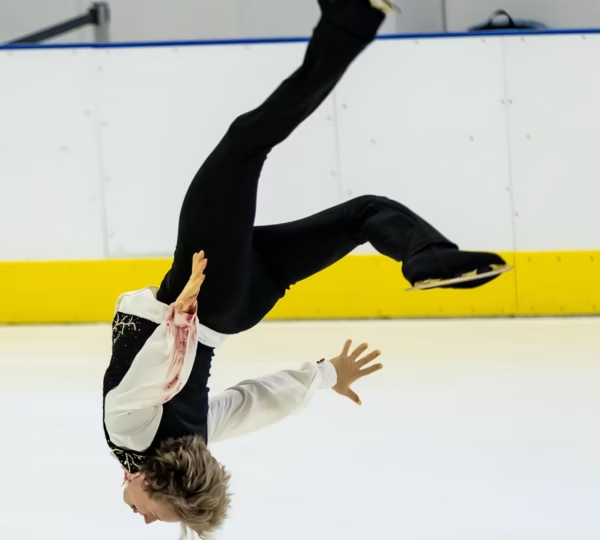
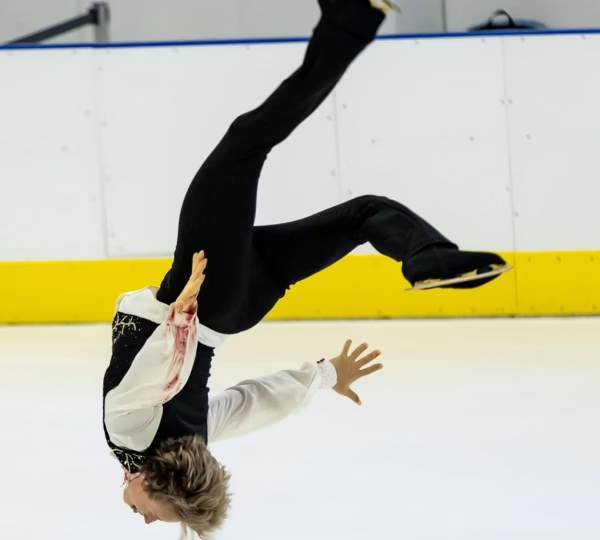
Midway through his routine, Malinin launched into a backflip—executed cleanly and with confidence. The reaction was immediate and unmistakable. The crowd erupted, not merely in excitement, but in recognition of a moment that bridged generations of figure skating history.
The Complicated Legacy of the Backflip
The backflip holds a unique and controversial place in figure skating’s history. Once viewed as a thrilling display of athleticism, the move was later banned from sanctioned competition due to safety concerns. Its execution involves landing on both feet after a backward rotation, introducing risks that earlier eras of the sport were not equipped to mitigate safely.
The last time a backflip appeared legally in Olympic competition dates back to the 1970s. For decades afterward, the maneuver existed only in exhibition programs—spaces where skaters could experiment creatively without the constraints of competitive regulation.
As the sport evolved, so too did training methods, conditioning standards, and safety protocols. Advances in technique and athlete preparation prompted governing bodies to re-evaluate long-standing restrictions.
Eventually, rule adjustments allowed for the cautious reintroduction of certain previously prohibited elements, provided they met updated safety criteria.
Innovation Within Modern Figure Skating
Malinin’s performance exemplified this evolution. His backflip was not a reckless flourish, but a calculated element integrated into a broader, technically demanding program. It reflected a generation of skaters raised within advanced training systems that emphasize strength, control, and risk management.
While Malinin’s overall result in the event earned him a second-place finish, the significance of his performance extended far beyond rankings. Within hours, footage of the backflip circulated across global media platforms, sparking widespread discussion among fans, commentators, and former athletes.
For many observers, the moment symbolized the balance modern figure skating seeks to strike—honoring tradition while embracing innovation. It demonstrated that the sport remains dynamic, capable of redefining its own boundaries while maintaining respect for safety and artistic integrity.
Why Certain Moments Resonate Beyond Medals
What made this performance particularly memorable was not just its difficulty, but its timing and context. Olympic moments resonate most deeply when they combine athletic risk with historical meaning. In this case, the backflip represented both a nod to the sport’s past and a statement about its future.
Such moments often become reference points in Olympic history. They are remembered not because they secured gold medals, but because they changed perceptions—about what is possible, what is permitted, and how sport can evolve responsibly.
For younger athletes watching, performances like Malinin’s serve as inspiration. For veterans of the sport, they invite reflection on how far training, technique, and understanding have progressed.
The Olympic Balance Between Creativity and Responsibility
The return of the backflip to Olympic competition also highlighted a broader theme present throughout the Milan–Cortina Games: the ongoing negotiation between creativity and responsibility.
Athletes continually push boundaries, seeking new ways to stand out in highly competitive fields. At the same time, sports federations must ensure that innovation does not compromise athlete safety or the integrity of competition.
This balance is particularly delicate in winter sports, where environmental conditions and high speeds amplify risk. The Games provided multiple examples of how innovation can be embraced thoughtfully—through rule changes, improved equipment, and enhanced safety oversight.

Malinin’s moment on the ice encapsulated this philosophy. It was bold, historic, and disciplined all at once—an expression of creativity grounded in preparation and control.
Setting the Tone for the Games
As the Milan–Cortina Winter Games continued, performances like this set the tone for what would follow. They reminded audiences that while medals may define official results, the true legacy of the Olympics is shaped by moments that capture imagination and emotion.
These defining instances form the connective tissue of the Games, linking events across disciplines and days into a coherent narrative. They invite viewers not just to watch, but to feel—to engage with the courage, risk, and vulnerability inherent in elite competition.
And as the Games progressed, it became increasingly clear that innovation would be only one part of the story. Discipline, sportsmanship, and resilience would soon take center stage as well.
As the Milan–Cortina Winter Games unfolded, it became increasingly clear that athletic brilliance alone would not define this Olympic chapter. Beyond innovation and spectacle, the Games revealed a deeper layer of competition—one governed by discipline, emotional control, and the ability to uphold Olympic values under extraordinary pressure.
While moments of creativity captured global attention, other incidents quietly reminded audiences that the Olympic stage magnifies every action. At this level, athletes are not only performers but representatives of their countries, their sports, and a tradition built on mutual respect.
The Mental Demands of Olympic Competition
The physical demands of winter sports are widely understood. Less visible—but equally decisive—are the psychological challenges athletes face.
Competing at the Olympics places competitors under an intensity unmatched by any other event. Every movement is scrutinized. Every reaction is recorded. Every decision can echo far beyond the arena.
Athletes train for years to master their bodies, yet many discover that mental resilience is what ultimately determines success or failure. The ability to remain composed after a mistake, to respect opponents in defeat, or to manage frustration under public scrutiny often separates champions from contenders.
Throughout the Milan–Cortina Games, viewers witnessed both extremes: remarkable emotional control and moments where pressure revealed vulnerability.
Sportsmanship Under the Spotlight
Sportsmanship is often discussed as an abstract ideal, but the Olympics transform it into a visible, measurable standard. Gestures of respect—helping a fallen competitor, applauding a rival’s performance, accepting results with grace—carry profound symbolic weight when broadcast worldwide.
Several moments during these Games reinforced the importance of such conduct. Athletes who demonstrated humility in victory and dignity in defeat earned admiration that extended beyond medal standings. In contrast, lapses in composure, even brief ones, quickly became focal points of public discussion.
These moments underscored a crucial truth: at the Olympics, behavior matters as much as performance.
When Rules and Emotions Collide
Elite competition operates within strict regulatory frameworks designed to ensure fairness and safety. However, the emotional stakes of the Olympics can sometimes bring athletes into conflict with these boundaries.
During the Milan–Cortina Games, officials were required on multiple occasions to intervene—issuing warnings, penalties, or formal reviews. Such actions are never taken lightly. They reflect the delicate responsibility of maintaining order while acknowledging the immense pressure competitors face.
For athletes, these interventions can be deeply frustrating. A single ruling can alter years of preparation. Yet the Olympic framework exists precisely to protect the integrity of competition, ensuring that no moment of emotion undermines the broader principles of fairness and respect.
Risk, Courage, and Physical Consequences
Winter sports inherently involve risk. High speeds, complex maneuvers, and unforgiving conditions create an environment where injury is always a possibility. The Milan–Cortina Games provided sobering reminders of this reality.
Several competitors faced crashes, falls, or near misses that instantly shifted focus from results to well-being. In these moments, the Games revealed a quieter form of heroism—not defined by podium finishes, but by resilience.
Athletes who returned to competition after setbacks, or who accepted withdrawal for the sake of long-term health, demonstrated a maturity that resonated deeply with audiences. Their decisions reflected an evolving understanding within elite sport: that longevity and well-being matter as much as medals.
The Role of Officials and Governance
Behind every Olympic moment stands a complex network of officials, judges, medical teams, and organizers. Their work often goes unnoticed until a controversial decision or emergency arises.
At Milan–Cortina, governance played a crucial role in shaping the Games’ narrative. Clear communication, transparent decision-making, and consistent enforcement of rules helped preserve trust in competition outcomes—even when decisions were unpopular.
This institutional backbone is essential. Without it, innovation would become chaos, and competition would lose credibility. The Games demonstrated that strong governance allows athletes to push boundaries while maintaining a shared framework of accountability.
Public Reaction in the Digital Age
Unlike past Olympic eras, today’s Games unfold simultaneously across stadiums and digital platforms. Social media amplifies reactions instantly, turning individual moments into global conversations within minutes.
Performances, rulings, and emotional reactions from Milan–Cortina sparked intense online discussion. Praise and criticism traveled rapidly, often blurring the line between analysis and judgment.
This digital environment adds another layer of pressure for athletes, who must now navigate not only competition but also real-time public opinion. The Games highlighted the growing need for emotional resilience and media awareness as integral components of modern athletic preparation.
Why These Games Will Be Remembered
The legacy of the Milan–Cortina Winter Games will not be defined solely by medal counts or records broken. Instead, it will be shaped by the moments that revealed the human dimension of sport.
From bold innovation on the ice to quiet acts of sportsmanship, from emotional strain to disciplined restraint, the Games painted a complex portrait of elite competition in the modern era.
They reminded the world that the Olympics are not about perfection. They are about striving—within limits, under pressure, and in full view of a global audience.
The Enduring Meaning of the Olympic Ideal
At its heart, the Olympic movement exists to celebrate more than victory. It honors effort, respect, and the willingness to compete honorably—even when the stakes are overwhelming.
The Milan–Cortina Winter Games reaffirmed this ideal. They showed that progress and tradition can coexist, that creativity must be balanced with responsibility, and that the true measure of an athlete is revealed not only in triumph, but in conduct.
As the final events concluded and athletes departed the Olympic stage, what remained was not just a list of champions—but a collection of moments that spoke to resilience, discipline, and the enduring power of sport to reflect the best, and sometimes the most vulnerable, parts of humanity.
As the Milan–Cortina Winter Games unfolded, it became increasingly clear that athletic brilliance alone would not define this Olympic chapter. Beyond innovation and spectacle, the Games revealed a deeper layer of competition—one governed by discipline, emotional control, and the ability to uphold Olympic values under extraordinary pressure.
While moments of creativity captured global attention, other incidents quietly reminded audiences that the Olympic stage magnifies every action. At this level, athletes are not only performers but representatives of their countries, their sports, and a tradition built on mutual respect.
The Mental Demands of Olympic Competition
The physical demands of winter sports are widely understood. Less visible—but equally decisive—are the psychological challenges athletes face.
Competing at the Olympics places competitors under an intensity unmatched by any other event. Every movement is scrutinized. Every reaction is recorded. Every decision can echo far beyond the arena.
Athletes train for years to master their bodies, yet many discover that mental resilience is what ultimately determines success or failure. The ability to remain composed after a mistake, to respect opponents in defeat, or to manage frustration under public scrutiny often separates champions from contenders.
Throughout the Milan–Cortina Games, viewers witnessed both extremes: remarkable emotional control and moments where pressure revealed vulnerability.
Sportsmanship Under the Spotlight
Sportsmanship is often discussed as an abstract ideal, but the Olympics transform it into a visible, measurable standard. Gestures of respect—helping a fallen competitor, applauding a rival’s performance, accepting results with grace—carry profound symbolic weight when broadcast worldwide.
Several moments during these Games reinforced the importance of such conduct. Athletes who demonstrated humility in victory and dignity in defeat earned admiration that extended beyond medal standings. In contrast, lapses in composure, even brief ones, quickly became focal points of public discussion.
These moments underscored a crucial truth: at the Olympics, behavior matters as much as performance.
When Rules and Emotions Collide
Elite competition operates within strict regulatory frameworks designed to ensure fairness and safety. However, the emotional stakes of the Olympics can sometimes bring athletes into conflict with these boundaries.
During the Milan–Cortina Games, officials were required on multiple occasions to intervene—issuing warnings, penalties, or formal reviews. Such actions are never taken lightly. They reflect the delicate responsibility of maintaining order while acknowledging the immense pressure competitors face.
For athletes, these interventions can be deeply frustrating. A single ruling can alter years of preparation. Yet the Olympic framework exists precisely to protect the integrity of competition, ensuring that no moment of emotion undermines the broader principles of fairness and respect.
Risk, Courage, and Physical Consequences
Winter sports inherently involve risk. High speeds, complex maneuvers, and unforgiving conditions create an environment where injury is always a possibility. The Milan–Cortina Games provided sobering reminders of this reality.
Several competitors faced crashes, falls, or near misses that instantly shifted focus from results to well-being. In these moments, the Games revealed a quieter form of heroism—not defined by podium finishes, but by resilience.
Athletes who returned to competition after setbacks, or who accepted withdrawal for the sake of long-term health, demonstrated a maturity that resonated deeply with audiences. Their decisions reflected an evolving understanding within elite sport: that longevity and well-being matter as much as medals.
The Role of Officials and Governance
Behind every Olympic moment stands a complex network of officials, judges, medical teams, and organizers. Their work often goes unnoticed until a controversial decision or emergency arises.
At Milan–Cortina, governance played a crucial role in shaping the Games’ narrative. Clear communication, transparent decision-making, and consistent enforcement of rules helped preserve trust in competition outcomes—even when decisions were unpopular.
This institutional backbone is essential. Without it, innovation would become chaos, and competition would lose credibility. The Games demonstrated that strong governance allows athletes to push boundaries while maintaining a shared framework of accountability.
Public Reaction in the Digital Age
Unlike past Olympic eras, today’s Games unfold simultaneously across stadiums and digital platforms. Social media amplifies reactions instantly, turning individual moments into global conversations within minutes.
Performances, rulings, and emotional reactions from Milan–Cortina sparked intense online discussion. Praise and criticism traveled rapidly, often blurring the line between analysis and judgment.
This digital environment adds another layer of pressure for athletes, who must now navigate not only competition but also real-time public opinion. The Games highlighted the growing need for emotional resilience and media awareness as integral components of modern athletic preparation.
Why These Games Will Be Remembered
The legacy of the Milan–Cortina Winter Games will not be defined solely by medal counts or records broken. Instead, it will be shaped by the moments that revealed the human dimension of sport.
From bold innovation on the ice to quiet acts of sportsmanship, from emotional strain to disciplined restraint, the Games painted a complex portrait of elite competition in the modern era.
They reminded the world that the Olympics are not about perfection. They are about striving—within limits, under pressure, and in full view of a global audience.
The Enduring Meaning of the Olympic Ideal
At its heart, the Olympic movement exists to celebrate more than victory. It honors effort, respect, and the willingness to compete honorably—even when the stakes are overwhelming.
The Milan–Cortina Winter Games reaffirmed this ideal. They showed that progress and tradition can coexist, that creativity must be balanced with responsibility, and that the true measure of an athlete is revealed not only in triumph, but in conduct.
As the final events concluded and athletes departed the Olympic stage, what remained was not just a list of champions—but a collection of moments that spoke to resilience, discipline, and the enduring power of sport to reflect the best, and sometimes the most vulnerable, parts of humanity.
