
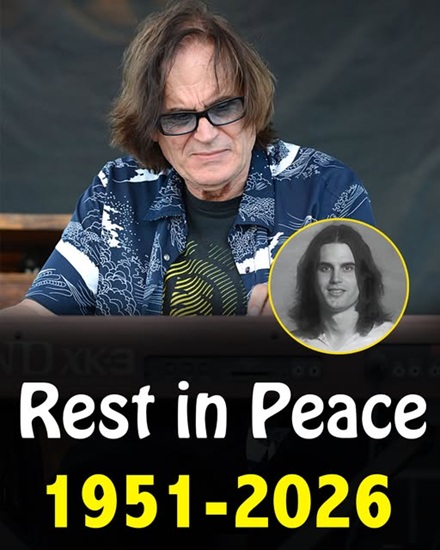
Christopher Reed North, the celebrated founding keyboardist of the American rock band Ambrosia, died on March 30, 2026, at age 75, leaving behind a legacy that helped shape progressive and soft rock for decades.
Born on January 26, 1951, in San Francisco, North developed a passion for music early, performing with bands in junior high and high school before mastering the Hammond B3 organ and other keyboards.
By the late 1960s, North had gained experience in several local rock groups and formed the psychedelic band Blue Toad Flax before his rise to prominence with Ambrosia.
In 1970, North co‑founded Ambrosia in Los Angeles with guitarist and vocalist David Pack, bassist Joe Puerta, and drummer Burleigh Drummond, marking the start of a musical collaboration that would span decades.
The group blended influences from progressive rock, jazz, and pop, using layered arrangements and complex harmonies that soon caught the attention of record labels and audiences alike.

Ambrosia’s self‑titled debut album in 1975 introduced their sound to the world, featuring early hits like “Holdin’ on to Yesterday,” which charted on Billboard and showcased North’s skillful keyboard work.
North’s intense and expressive organ and piano parts became central to Ambrosia’s identity, elevating their recordings with spirited solos and emotional depth that distinguished them from many contemporaries.
His organ playing ranged from atmospheric textures to commanding leads, helping create the band’s signature “aural landscapes” that balanced technical mastery with memorable melodies.
The band achieved commercial success throughout the mid‑1970s, building a dedicated fan base with their mix of progressive and accessible sounds that appealed to both radio and album listeners.
Ambrosia’s 1976 album Somewhere I’ve Never Travelled further refined their sound while deepening their musical explorations, earning critical attention for innovative arrangements and creative ambition.
During the late 1970s, while recording Life Beyond L.A., North experienced personal and health challenges that briefly led him to step away from the band’s studio sessions.
Despite his temporary absence, Ambrosia continued to evolve and scored their first major pop breakthrough with “How Much I Feel,” which reached No. 3 on the Billboard Hot 100 charts in 1978.

By the end of the decade, the group’s 1980 album One Eighty delivered two of their biggest hits, including “Biggest Part of Me,” another No. 3 chart success and a song that remains emblematic of the era.
Also on One Eighty, “You’re the Only Woman (You & I)” became a Top 20 hit, cementing Ambrosia’s place in classic rock and adult contemporary music history.
North returned to full participation during this period, contributing both to the band’s recordings and their energetic live performances that delighted fans across the U.S. and abroad.
Ambrosia’s music from this era resonated with audiences for its blend of technical precision, emotional accessibility, and lush harmonic textures anchored by North’s keyboard work.
The band continued into the early 1980s, releasing Road Island in 1982 before initially disbanding, only to reunite in 1989 for touring and further musical projects.
North stayed with Ambrosia for its reunions and largely continued performing with Puerta and Drummond for decades, deepening the connection between the band and its longtime followers.
Outside of Ambrosia, North also contributed his talents to other musicians, notably appearing on the 1976 Alan Parsons Project album Tales of Mystery and Imagination.

His versatility on keyboards — including organ, piano, and synthesizers — made him a sought‑after collaborator in the music community and a respected figure among fellow artists.
North’s performances were not just technically impressive, but emotionally engaging, often noted for their intensity and the way he connected with bandmates and audiences alike.
Fans and colleagues affectionately referred to him as the “Hammond B3 King,” celebrating his mastery of the instrument and his influence on rock and soft rock music.
Despite his success, North faced significant health struggles in later years, including a battle with throat cancer diagnosed in 2024 that he fought courageously with the support of family and fans.
In October 2025, he suffered serious injuries after being struck by an out‑of‑control vehicle while walking into a restaurant, an accident that led to an extended hospital stay.
Though initially reported as “fighting for his life,” North survived that ordeal but later developed pneumonia, which ultimately weakened his body in early 2026.
He was hospitalized for nearly three weeks as doctors worked to treat his pneumonia and complications from earlier health issues before he passed away peacefully.

Ambrosia announced North’s death on social media, praising him as “a keyboard wizard who brought unmatched intensity and emotional depth to every performance” during his long career.
The band’s tribute also noted that North’s contributions “created ‘aural landscapes’ that balanced virtuosity with soulful, radio‑friendly hooks,” ensuring his music will be remembered for generations.
Ambrosia’s statement expressed gratitude for North’s fierce passion for music and his lasting impact on fans, bandmates, and the rock genre itself.
Christopher North’s influence is heard in every era of Ambrosia’s catalog — from their early prog‑rock beginnings to their polished soft‑rock hits that remain staples of classic rock playlists.
Songs like “Holdin’ on to Yesterday,” “How Much I Feel,” “Biggest Part of Me,” and “You’re the Only Woman (You & I)” continue to garner millions of streams, fueled in no small part by North’s signature keyboard lines.
Many fans credit Ambrosia’s success to the emotional textures North wove into the music, elevating what could have been simple pop arrangements into compelling musical journeys.
His influence extended to aspiring keyboardists, organists, and rock musicians who studied his work for its blend of melodic intuition and technical flair.

North is survived by his brother Richard and his children Reed and Crystal, who have received an outpouring of condolences and tributes from around the world.
Family members, fans, and fellow musicians continue to share memories and performances online, celebrating his life and the joy his music brought to millions.
Tributes from listeners span generations, with older fans recalling the band’s heyday and younger audiences discovering Ambrosia’s catalog through digital streaming platforms.
Musicians have praised North’s contributions as both foundational and enduring, noting that his work helped bridge the gap between classic rock’s ambition and popular accessibility.
Local and national media have remembered him not just as a talented musician, but as an artist whose passion for his craft resonated far beyond the stage.
His decades‑long career stands as a testament to dedication, creativity, and the power of collaboration in rock music history.
Christopher North’s legacy is defined by his artful command of keyboards, his dynamic performances, and his heartfelt connection with audiences around the world.
In the world of classic rock and beyond, his influence remains a vital part of the musical tapestry that shaped popular music in the late 20th century.
Though he has passed away, his music lives on in the countless recordings, performances, and hearts he touched during his remarkable life.
