
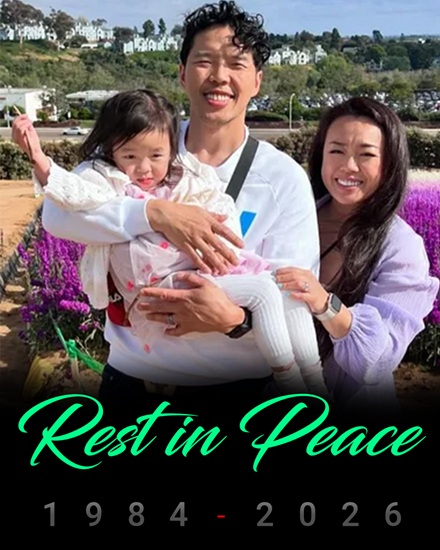
The entertainment community is in deep mourning following the death of comedian and actor Alex Duong, who tragically passed away at 42 after a severe battle with alveolar rhabdomyosarcoma, a rare and aggressive cancer.
Alex gained widespread recognition through appearances on “Jeff Ross Presents Roast Battle” and “Blue Bloods,” earning praise for his sharp humor, fearless comedic timing, and ability to captivate audiences both on screen and live.
His death on March 28, 2026, came peacefully at home surrounded by close friends and family who had been his unwavering support throughout his grueling months of treatment and hospitalizations.
Before his illness, Alex’s career trajectory was rapidly accelerating. He had roles in shows such as Pretty Little Liars and Netflix’s Historical Roasts, marking him as one of the most promising comedians of his generation.
Plans for 2025 included performances across 41 U.S. states, indicating his rising popularity, and discussions about additional television opportunities hinted at a significant breakthrough in both comedy and scripted acting.

The first concerning symptom appeared as a mild headache, which Alex initially dismissed. Within days, swelling around his eye made it clear that something far more serious was developing inside his body.
Medical examinations confirmed the presence of a tumor pressing on his optic nerve, cutting off blood flow to his eye, and a subsequent biopsy revealed alveolar rhabdomyosarcoma, a particularly aggressive form of cancer rarely seen in adults.
The diagnosis left Alex and his family in shock. Doctors advised immediate treatment, including chemotherapy and surgery, but the aggressive nature of the tumor presented immense challenges for effective intervention.
Even as the prognosis worsened, Alex’s comedic spirit remained intact. He frequently joked with friends and social media followers, using humor as a coping mechanism amid the stress and fear of his diagnosis.
He once quipped, “If you want a clean comedy show, you don’t book Doug Stanhope. You’re not gonna book the Legion of Skanks for your Toyotathon,” demonstrating his irrepressible sense of humor even in crisis.
Within weeks, Alex lost vision in his left eye, adding to his frustration and driving his determination to seek alternative medical opinions and more effective treatment options beyond his initial care plan.
In a bold move, Alex left the hospital in the middle of the night and took an Uber to UCLA at 2 a.m., seeking specialized care, showcasing both courage and desperation in confronting a life-threatening condition.
He endured major surgery, repeated chemotherapy, and the debilitating side effects of treatment, all while attempting to maintain quality time with his daughter Everest and support his wife Christina in their daily lives.

As the cancer spread to his spine, Alex became bedridden, experiencing severe pain that limited mobility and further complicated efforts to continue performing professionally or manage his personal affairs.
In December 2025, he suffered a seizure in front of his young daughter, a moment that highlighted the extreme severity of his condition and intensified the emotional toll on his family.
Despite these challenges, Alex openly expressed his desires, saying he wanted to perform, make people laugh, and spend meaningful time with his family, rather than be forced into a narrative of public inspiration or forced heroism.
“I don’t want to be strong! I just want to go tell my d— jokes, make people laugh, and hang out with my family,” he said, reflecting his wish to preserve normalcy and joy in his final months.
While Alex managed his physical battle, his wife Christina faced the enormous responsibility of caring for him, managing the household, supporting their five-year-old daughter, and juggling financial obligations amid mounting medical bills.
The family struggled with enormous financial strain. Hospital bills and necessary treatments created significant economic pressure, threatening the security of their home and overall family stability.
A fundraiser highlighted the family’s needs, noting that despite Christina’s full-time work and diligent efforts, a gap remained due to Alex’s inability to work and the substantial costs of ongoing treatment and care.
Even everyday events, like their daughter’s birthday, were overshadowed by hospital visits, medical procedures, and emotional stress, illustrating how the illness infiltrated every aspect of family life and routine.
On March 27, 2026, an urgent update on Alex’s social media indicated that he had gone into septic shock, leaving friends, fans, and family anxiously awaiting news about his critical condition.

Tragically, the next day brought confirmation of his passing. Alex died peacefully, surrounded by loved ones, relieved from suffering, and able to experience the comfort of being with family during his final moments.
He was able to say goodbye to Everest, creating one last memory filled with love, affection, and paternal connection that reflected the heart of his life’s priorities above all else.
Following his death, social media users revisited Alex’s accounts, noticing a simple yet powerful post documenting Everest’s first school performance, capturing her excitement and pride in a series of photos and videos.
The images showed Everest smiling with flowers in hand, performing on stage, and sharing moments with friends while her parents observed proudly, reflecting the significance of family milestones in Alex’s life.
The post read: “✨Everest’s first show at school. 💜🫶🏼🥺,” a simple caption that gained new meaning in the context of his passing, resonating as a tribute to the moments that mattered most to him.
There was no dramatic farewell or staged public statement—just the quiet, intimate celebration of his daughter’s accomplishment, illustrating what Alex truly valued above fame or accolades.
Fans reflected on the poignancy of this post, seeing it as emblematic of Alex’s final months: cherishing small, meaningful family moments even as he battled a devastating, terminal illness.
Alex’s story brings into focus the human realities of terminal illness, highlighting not only physical suffering but the emotional toll on families navigating rare and aggressive diseases under extreme pressure.
His legacy includes laughter, honesty, and dedication, reminding the entertainment industry and the public that personal connections, family, and authentic experiences often outweigh professional recognition.

The emphasis on his daughter and family moments underscores a universal truth: even amid pain and loss, love and family provide meaning, and small joys can become profound sources of comfort.
Colleagues remember Alex as fearless on stage, devoted as a father, and supportive to friends, leaving an enduring impact on everyone he worked with and inspired through his performances.
His approach to social media was candid and authentic, sharing personal experiences and family milestones that offered followers insight into his life beyond comedy and acting.
Even as the family navigated financial stress and medical complexity, Alex’s focus remained on what truly mattered: cherishing his daughter, creating memories, and maintaining a sense of joy and humor wherever possible.
Fans globally expressed grief and admiration, highlighting how his comedic talent and authenticity had brought joy, laughter, and perspective into their lives, even during difficult times.
Alex’s death is a reminder of life’s unpredictability, the fragility of health, and the reality that even vibrant, talented individuals can be taken too soon by aggressive disease.
His legacy continues through his body of work, the memories he created, and the love he shared with his daughter Everest and his wife Christina, illustrating a life defined by humor, family, and courage.
Ultimately, Alex’s story emphasizes life’s essential truths: love, laughter, and meaningful human connections endure beyond tragedy, and family remains the most profound source of joy and inspiration.

His life, work, and the final moments shared with his daughter serve as a lasting testament to a man who faced unimaginable challenges with humor, dignity, and devotion.
Even in grief, the focus on his family, humor, and authenticity provides an enduring lesson: life’s most meaningful moments often exist in quiet, everyday connections that bring love and comfort.
Alex Duong will be remembered for his talent, resilience, and unwavering devotion to family, leaving a legacy that inspires fans, colleagues, and anyone touched by his work and life story.
The images of Everest’s first school performance now stand as a permanent tribute, symbolizing the fatherly love, joy, and priorities that defined Alex’s final months and the heart of his legacy.
Even as the entertainment world grieves, Alex’s story encourages reflection on family, priorities, and the importance of embracing meaningful moments before they pass, highlighting empathy, love, and the human experience.
