
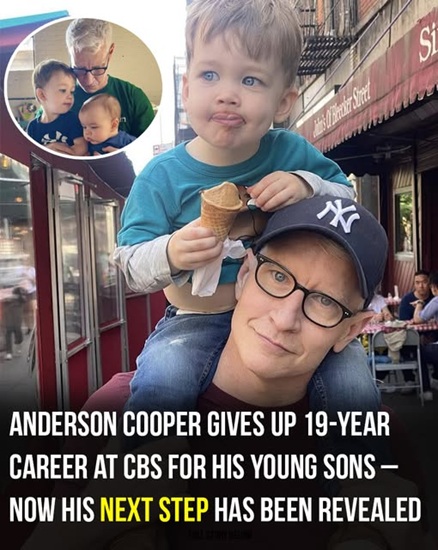
Veteran journalist Anderson Cooper has announced that he will be stepping down from his role as a correspondent on 60 Minutes.
Concluding a nearly two-decade-long chapter of one of the most remarkable careers in modern broadcast journalism.
His decision, rather than being prompted by any professional controversy, contractual disputes, or declining performance, reflects something deeply personal and profoundly human: a desire to spend more time with his young children during the formative years of their lives.
This move comes as a striking reminder of the delicate balance between professional ambition and personal fulfillment, a balance that even the most accomplished figures must navigate at some point.
For many viewers, Cooper’s presence on 60 Minutes became synonymous with careful storytelling, empathetic yet rigorous reporting, and the kind of investigative work that is rare in contemporary journalism. Over the course of nearly 20 years with the program, Cooper carved out a reputation as a journalist who could handle the gravest of topics with dignity and compassion while maintaining a firm commitment to factual reporting.
His departure marks not only the end of a significant era for Cooper himself but also a notable transition for 60 Minutes, a program that has influenced American broadcast journalism for generations and remains a benchmark for investigative news reporting.

A Career Defined by Excellence and Storytelling
To understand the magnitude of Cooper’s decision, it is important to appreciate the breadth and depth of his career. Over the years, Cooper has received 16 Emmy Awards, a testament to his skill in navigating complex stories while maintaining a clear and accessible narrative for viewers.
His work spans local, national, and international reporting, with assignments ranging from natural disasters to political upheavals, from intimate cultural profiles to high-stakes interviews with world leaders. Cooper has consistently demonstrated a unique ability to combine investigative rigor with narrative sensitivity—a rare skill that allows audiences to connect emotionally with global events without compromising journalistic integrity.
In addition to his role at CBS, Cooper has remained a central figure at CNN, where he anchors Anderson Cooper 360°, one of the network’s flagship programs. Balancing responsibilities between CNN and 60 Minutes meant navigating an exceptionally demanding schedule.
Cooper frequently traveled to regions experiencing conflict or natural disasters, often reporting on stories that required both logistical precision and emotional resilience. His assignments have included coverage of major hurricanes in the United States, humanitarian crises in war-torn regions, and politically sensitive stories around the globe. Each segment demanded meticulous preparation, careful fact-checking, and an awareness of the ethical responsibilities inherent in journalism.
Cooper’s colleagues often describe him as someone whose work ethic is matched only by his empathy. Former producers and editors have praised his willingness to listen, to ask difficult questions, and to treat subjects with respect while still holding institutions accountable. His storytelling style—calm, authoritative, yet warm—allowed him to navigate some of the most challenging assignments in television journalism while connecting with audiences in a deeply human way.
Gratitude and Reflection on Nearly Two Decades
In mid-February, Cooper issued a public statement reflecting on his tenure at 60 Minutes, calling it “one of the highlights” of his professional life. He expressed gratitude not only for the opportunities to report stories that mattered but also for the people behind the scenes—the producers, editors, camera crews, and research teams—who collectively brought each story to life. He highlighted the collaborative nature of the broadcast as central to its enduring quality, noting that every successful segment was the result of countless hours of coordination, research, and creative problem-solving.
CBS News responded warmly to Cooper’s announcement, emphasizing that his contributions had been “invaluable” and expressing appreciation for the dedication he brought to the program. The network underscored that while Cooper’s departure marks the end of an era, the door remains open should he choose to return in the future. This acknowledgment reflects not only professional respect but also a recognition of the broader personal motivations underlying his decision—a prioritization of family over career in a field that often demands the opposite.
The Shift in Priorities: Time and Parenthood
Cooper’s decision to step away from 60 Minutes is rooted in a profound and universal realization: time with young children is fleeting, and the years of early childhood—full of discovery, curiosity, and emotional development—cannot be reclaimed once they pass. In his statement, Cooper candidly explained that, while he had long managed to balance his dual responsibilities at CNN and CBS, the arrival of fatherhood changed the calculus. “I have little kids now,” he said. “And I want to spend as much time with them as possible, while they want to spend time with me.”
This statement resonates with many parents and professionals who grapple with the tension between career obligations and family life. For Cooper, who became a father later in life, this decision carries special significance. After decades of immersing himself in high-pressure journalism, from international crises to domestic political developments, the opportunity to witness and participate in his children’s formative years represents a deeply meaningful and transformative chapter of life.
The Arrival of Wyatt and Sebastian: Fatherhood as a Life-Altering Experience
On April 30, 2020, during a broadcast of Anderson Cooper 360°, Cooper shared the news that would reshape his personal and professional priorities: he had become a father. Three days earlier, his first son, Wyatt Morgan Cooper, had been born via surrogate. The announcement was poignant and deeply personal, as Cooper introduced his son to the public and later shared photos on social media. Wyatt’s name carries familial significance: he was named in honor of Cooper’s father, Wyatt Emory Cooper, who passed away when Anderson was just ten years old, while the middle name, Morgan, was a tribute to a name once considered by Cooper’s own parents for him.

Cooper has described fatherhood as life-changing in a way that no professional accomplishment could replicate. In interviews, including one with People magazine, he spoke of a love and sense of purpose previously unknown to him—a daily immersion in the needs, emotions, and rhythms of another human being. This new chapter brought both joy and vulnerability, reshaping his understanding of what it means to live fully and to prioritize connection over achievement.
In 2022, Cooper welcomed his second son, Sebastian Luke Cooper, also born via surrogate. The arrival of Sebastian further solidified Cooper’s desire to restructure his professional life around fatherhood. He has spoken openly about the challenges and blessings of parenting two young children simultaneously, balancing the demands of his public career with the intimate responsibilities of raising a family. For Cooper, these experiences represent not just milestones in his personal life but a fundamental recalibration of his sense of purpose.
Co-Parenting, Partnership, and Family Dynamics
Fatherhood, as Cooper has described, transformed not only his daily routines but also the structure of his personal life. Though he and his former partner, Benjamin Maisani, ended their romantic relationship in 2018, the two have maintained a close friendship and a cooperative co-parenting arrangement. Their partnership demonstrates a modern, intentional approach to family life—one that prioritizes stability, mutual respect, and the well-being of their children over conventional expectations of family structure.
Cooper has openly acknowledged that their arrangement may seem unconventional to some. Yet, he emphasizes that it functions effectively because both parents are deeply committed to their roles. He often remarks on Maisani’s dedication, stating that he “always knew Benjamin would be a devoted father.” Together, they live close to one another, coordinate schedules meticulously, and actively participate in every aspect of Wyatt and Sebastian’s upbringing. From attending school events to sharing in daily routines like bedtime stories, mealtimes, and weekend adventures, their cooperative approach ensures that the children experience a stable and nurturing environment.
This level of transparency about his family life has resonated with many viewers and admirers of Cooper. As one of the most prominent openly gay journalists in American media, his journey into parenthood carries symbolic as well as personal significance. Cooper has often reflected on his younger self—specifically, as a 12-year-old boy realizing he was gay, he assumed that becoming a parent would never be possible. He has described the sadness and uncertainty of that time, acknowledging the broader societal limitations that once seemed insurmountable. Decades later, holding his sons in his arms, Cooper has expressed a profound appreciation for the evolution of both his personal life and social acceptance of diverse family structures.
Through interviews, social media posts, and public appearances, Cooper has shared aspects of his parenting journey that highlight both joy and vulnerability. These insights are not only intimate but also culturally impactful, offering a model of modern fatherhood in which love, dedication, and collaboration take precedence over traditional norms. In doing so, Cooper contributes to a broader conversation about family, identity, and the changing nature of parenthood in the 21st century.
The Emotional Impact of Parenthood
Cooper’s reflections on fatherhood reveal an emotional depth that has profoundly influenced his priorities. In multiple interviews over the past several years, he has described the early years with his sons as the most rewarding and transformative period of his life. He often speaks of the small but meaningful moments—morning cuddles, bedtime stories, and spontaneous laughter—that provide a grounding counterbalance to the high-stakes world of journalism.
For a journalist accustomed to covering crises, political upheavals, and human tragedies, these experiences offer a form of emotional restoration. Cooper has noted that moments of “bliss, humor, gentleness, and sheer delight” with his children catch him by surprise, creating a sense of presence and fulfillment that differs entirely from professional accolades. This emotional recalibration highlights a broader truth: success can be defined in multiple ways, and fulfillment often lies as much in personal connection as in career achievement.
Even amid the pressures of anchoring Anderson Cooper 360° and developing other journalistic projects, Cooper has prioritized being emotionally available to his children. His interviews suggest that these early years of childhood—the stages of curiosity, learning, and imaginative play—are fleeting and deserve undivided attention. In choosing to step back from 60 Minutes, Cooper is not abandoning his career; rather, he is actively reprioritizing, shifting focus from the external recognition of professional success to the intimate, day-to-day joys of fatherhood.

Professional Life Reimagined
Although he is leaving 60 Minutes, Cooper is not retreating from journalism entirely. He will continue to anchor Anderson Cooper 360° on CNN, ensuring that he remains a prominent voice in news coverage while maintaining a schedule that allows him to be present at home. Additionally, he hosts The Whole Story with Anderson Cooper, a long-form program that allows him to explore stories with depth and nuance, a format that aligns well with his investigative strengths and personal availability.
Beyond television, Cooper has also ventured into podcasting, creating content focused on grief, resilience, and emotional healing. Inspired in part by his own experiences with loss—including the death of his father when he was just ten—his podcast engages with themes of human vulnerability, resilience, and the ways people process life-altering events. By choosing topics that resonate with universal human experiences, Cooper continues to engage audiences meaningfully, demonstrating that impactful storytelling need not always be tied to traditional broadcast platforms.
This phase of his career highlights a deliberate recalibration: rather than pursuing every professional opportunity, Cooper has chosen projects that allow him to remain influential while also providing the flexibility necessary to invest fully in his family life. In doing so, he sets an example of how one can maintain professional relevance without sacrificing the priorities of the home—a balancing act many professionals aspire to but few execute so publicly and effectively.
Public Reception and Cultural Resonance
Stepping back from a platform as prestigious as 60 Minutes inevitably invites public scrutiny. Yet in Cooper’s case, the rationale behind his departure has been widely accepted and respected. Unlike other high-profile exits that generate speculation about conflicts or controversies, Cooper’s explanation has been straightforward, transparent, and deeply relatable: he wants to be an actively present parent.
The public response has been overwhelmingly positive. Social media posts, opinion columns, and fan commentary have celebrated his honesty, applauded his commitment to family, and reflected on the broader significance of his choices. In a media landscape often dominated by scandal, ratings battles, and professional posturing, Cooper’s story stands out as a reminder that even those at the pinnacle of their careers must make intentional choices about how they allocate their time, energy, and emotional resources.
Moreover, his openness about his family life carries broader societal implications. By publicly embracing a nontraditional co-parenting model, openly discussing his identity as a gay man and a father, and highlighting the joys and challenges of modern parenthood, Cooper contributes to a richer, more inclusive understanding of family in the 21st century. His narrative resonates not only with parents but also with anyone grappling with life transitions, career pressures, or the quest for meaningful human connection.
Anderson Cooper’s contributions to 60 Minutes over nearly two decades represent more than just decades of professional achievement; they reflect a commitment to journalistic integrity, empathetic storytelling, and meticulous investigative work. 60 Minutes, which first aired in 1968, has long been regarded as a cornerstone of American investigative journalism, earning critical acclaim for its in-depth reporting and the caliber of its correspondents. By joining this elite roster, Cooper placed himself among legendary journalists, inheriting a tradition of rigor, credibility, and cultural influence.

During his tenure, Cooper reported on a wide range of issues that required both courage and discernment. He covered humanitarian crises in war zones, political scandals at the highest levels of government, natural disasters that devastated communities, and social issues that demanded sensitivity and context. His segments were characterized by careful research, ethical consideration, and a commitment to presenting the stories of ordinary people alongside those of prominent figures. Cooper’s calm, authoritative presence, combined with his willingness to engage deeply with interview subjects, strengthened the program’s reputation for credibility and reliability.
CBS News publicly acknowledged the impact of Cooper’s work, noting that his storytelling elevated the program and left a lasting imprint. Though he is stepping away, the network emphasized that the relationship remains positive and that Cooper would be welcomed back should he ever choose to return. This underscores both professional respect and recognition of the personal motivations driving his decision—a decision that, while significant, does not diminish his achievements or the esteem in which he is held by colleagues and audiences alike.
Continuing Engagement in Journalism
Even as Cooper departs from 60 Minutes, he remains fully engaged in journalism and public discourse. Anchoring Anderson Cooper 360° on CNN allows him to maintain a central role in covering breaking news, global events, and critical stories that shape public understanding. The program, which combines investigative segments with real-time reporting, continues to serve as a platform where Cooper can apply his expertise, judgment, and ethical standards.
In addition, Cooper’s work on The Whole Story with Anderson Cooper and his podcast on grief and resilience demonstrates his ability to adapt to evolving media landscapes. These projects allow him to explore complex topics at a deeper level, offering audiences context, insight, and narrative depth. His podcast, in particular, delves into universal human experiences—loss, mourning, resilience—and reflects his personal journey as someone who has navigated significant life transitions, including the loss of his father and the transformative experience of parenthood.
By selectively engaging in projects that align with both his professional strengths and personal availability, Cooper illustrates a deliberate strategy for balancing meaningful work with family priorities. This approach challenges conventional notions that professional success must come at the expense of personal life and provides a model for how high-profile professionals can redefine success on their own terms.
Reflections on Ambition, Identity, and Life Balance
Cooper’s decision to step away from 60 Minutes highlights a universal theme: the evolving definition of success and fulfillment. For decades, Cooper’s professional identity was defined by accolades, awards, and high-profile reporting assignments. Today, he measures success through the moments that cannot be quantified—morning cuddles, bedtime stories, laughter shared with his children, and the quiet satisfaction of being present for formative experiences.
This recalibration of priorities is emblematic of a broader societal shift. Professionals across fields increasingly recognize that true achievement encompasses both career accomplishments and the quality of personal relationships. Cooper’s transparency about his decision contributes to a cultural conversation about work-life balance, parental involvement, and the value of intentionally shaping one’s life around what matters most in the present moment.
His journey also underscores the intersection of personal identity and public life. As an openly gay journalist, Cooper’s experiences challenge historical assumptions about family formation and representation in media. By sharing his story of co-parenting, surrogacy, and raising two sons, he offers visibility to diverse family structures and demonstrates that love, commitment, and presence are the defining elements of parenthood. The symbolic power of this narrative is especially significant for LGBTQ+ audiences who may have previously believed that traditional pathways to family were inaccessible.
The Power of Presence and Intentional Choices
Ultimately, Cooper’s departure from 60 Minutes is not a retreat but a conscious and intentional choice to prioritize the fleeting, formative years of his children’s lives. In interviews, he emphasizes that while professional achievements are rewarding, they cannot replace the value of being present for the daily joys and challenges of parenting. His story resonates because it reflects a truth many parents understand intuitively: time with young children is limited, and the opportunity to shape their early experiences is profound and irreplaceable.

Supporters, colleagues, and audiences alike have responded positively to his announcement, often highlighting the courage it takes to make such a decision publicly. Cooper’s transparency reinforces an important lesson: even in high-profile careers, personal fulfillment and emotional presence can—and sometimes must—take precedence.
Looking Forward
As Cooper moves forward, his priorities remain clear: being actively involved in his sons’ lives, fostering meaningful relationships, and continuing to engage in journalism on his own terms. He has expressed openness to potentially expanding his family in the future, though there are no immediate plans. Professionally, his continued work at CNN and his creative projects demonstrate that he is not stepping away from public life but rather reshaping it to reflect his evolving values.
His departure from 60 Minutes underscores the idea that life’s most significant accomplishments are not always those recognized with awards, accolades, or public acclaim. Success can also be measured in laughter at the breakfast table, bedtime stories, and shared milestones. Cooper’s story, spanning professional excellence and personal transformation, offers a compelling blueprint for how ambition, identity, and love can coexist—and even complement each other—when approached with intentionality and heart.
In closing, Anderson Cooper’s choice reminds us all of a simple but profound truth: the seasons of life demand different focuses, and the courage to recalibrate priorities can be as meaningful as any career achievement. By stepping away from one of television’s most prestigious platforms, he leaves behind a legacy of journalistic excellence while embracing the most important role of all—that of a father, partner, and present, engaged human being. His story resonates far beyond the newsroom, offering insight, inspiration, and a model of intentional, value-driven living that many will continue to admire for years to come.
