
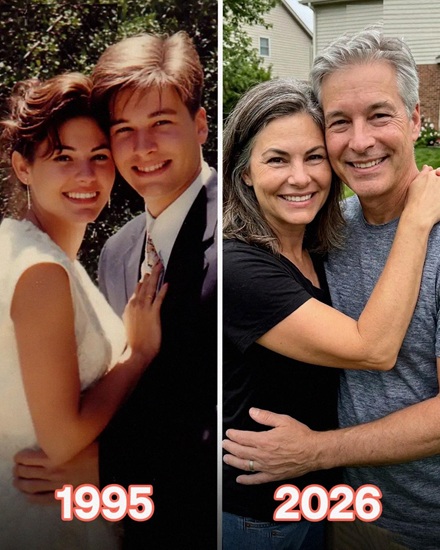
For most of my adult life, I believed I knew every corner of my husband’s past.
After more than three decades of marriage, you assume there are no mysteries left. You’ve shared too many breakfasts, too many arguments about bills, too many quiet evenings on the couch for anything significant to remain hidden. You believe you know the person sleeping beside you — not just who they are now, but who they’ve always been.
That belief lasted until the night my husband, Mark, was rushed to the hospital.
What started as a frightening medical emergency slowly turned into something else entirely — a discovery that forced me to question everything I thought I knew about the man I had built my life with.
And it all began with a key.
The Night Everything Changed
That evening started normally.
Mark had complained earlier in the day about a sharp pain in his stomach, but he insisted it was nothing serious. He had always been stubborn about his health, the kind of man who believed a strong cup of coffee and a good night’s sleep could fix almost anything.
But by evening, the pain had become impossible to ignore.
He doubled over at the kitchen table, gripping the edge so tightly his knuckles turned white.
“Something’s wrong,” he said quietly.
Those three words were enough to make my heart drop.
Within minutes I had called an ambulance.
The next hour passed in a blur of flashing lights and urgent voices. Paramedics moved quickly through our house, attaching monitors and asking questions I struggled to answer.

“How long has he had the pain?”
“Does he take any medications?”
“Any history of surgery?”
The ride to the hospital felt both incredibly fast and painfully slow.
I sat beside him in the ambulance, holding his hand as the vehicle bounced over city streets. The harsh fluorescent lights overhead made everything feel unreal.
Mark tried to smile at me, but I could see the fear behind it.
“It’ll be fine,” he whispered.
But the paramedic standing nearby didn’t look convinced.
When we arrived at the emergency room, everything happened even faster. Doctors and nurses surrounded Mark, wheeling him through hallways while discussing test results and possible complications.
Words like “internal bleeding” and “we need to operate now” floated through the air.
I barely had time to process them before we reached a set of double doors leading to the operating wing.
A nurse stopped me gently.
“You can’t go any farther,” she said kindly.
I watched as they pushed Mark through the doors.
Then they closed.
The sound echoed in my chest in a way I’ll never forget.
Waiting
Anyone who has waited during surgery knows how strange time becomes.
Minutes stretch into long, uncertain hours.
Every small sound — a phone ringing, footsteps in the hallway — makes your heart jump, wondering if someone is coming to deliver news.
I sat in the waiting area staring at the floor, replaying memories of our life together as if they might somehow protect him.
Thirty-one years.
Thirty-one years of shared mornings, holidays, and quiet routines.
We had met when we were young adults still figuring out who we were. Mark had a calm steadiness about him that drew people in. He wasn’t the loudest person in a room, but when he spoke, people listened.
Over time that steadiness had become the foundation of our marriage.
He was the one who fixed things when they broke.
The one who stayed calm during stressful moments.
The one who reminded me that problems could always be solved if you approached them patiently.
And now he was lying somewhere beyond those doors, surrounded by machines and strangers.
Finally, after what felt like an entire lifetime, a doctor appeared.
He approached slowly, still removing surgical gloves.
“Mrs. Carter?” he asked.
I stood so quickly the chair behind me scraped loudly across the floor.
“Yes.”
“The surgery went well,” he said.
Relief hit me so suddenly my knees nearly gave out.
But the doctor continued speaking.
“Your husband had a serious complication, but we were able to address it. He’ll remain under anesthesia for several hours while his body recovers.”
“Can I see him?”
“Soon,” the doctor replied. “But not right away.”
He explained that Mark would remain in the hospital for several days so they could monitor his recovery.
Then he placed a reassuring hand on my shoulder before walking away.
For the first time since the ambulance ride, I allowed myself to breathe.

Going Home
A nurse eventually suggested I go home for a while.
“You should bring him some comfortable clothes,” she said. “And anything else he might want while he’s recovering.”
The idea of leaving the hospital felt wrong at first. I didn’t want to be anywhere except near him.
But the nurse was right.
Mark would need things from home.
I called a taxi and returned to the house we had shared for most of our married life.
When I stepped inside, the silence felt heavy.
Homes develop a certain energy over the years — the quiet hum of daily routines, the familiar sounds of someone moving from room to room.
Without Mark there, the house felt strangely empty.
Almost as if it knew something I didn’t.
Searching for the Keys
I moved through the rooms slowly, gathering the items Mark might need.
A small bag sat open on the bed while I packed a few changes of clothes, his toothbrush, and the phone charger he always seemed to misplace.
I worked almost automatically, letting routine guide my hands while my mind remained at the hospital.
Eventually I zipped the bag closed and headed toward the door.
That’s when I realized something.
My car was still at the repair shop.
Mark’s car was the only one available.
And his keys were missing.
Normally he left them on the small counter by the front door — the same place every day for years.
But they weren’t there.
I checked the kitchen.
Then the living room.
Then the hallway table where he sometimes dropped his wallet.
Nothing.
At first I felt mildly annoyed.
“Where did you put them?” I muttered to the empty house.
I searched the kitchen again, opening drawers and checking under stacks of mail.
Still nothing.
My frustration began turning into something sharper.
I checked his jacket pockets hanging near the door.
Then the drawer by the sink where we sometimes tossed random items.
The keys were nowhere to be found.
Finally I remembered something.
Mark kept a spare key somewhere in our bedroom.
He had mentioned it years ago, though I had never needed to use it.
The Drawer
I walked into the bedroom and stood beside his dresser.
The top drawer on his side was where he kept things he didn’t want to throw away but rarely used — old receipts, spare cords, loose coins.
It was the kind of cluttered drawer every long marriage eventually develops.
I pulled it open.
Inside were exactly the kinds of items I expected.
A handful of crumpled receipts.
An outdated phone charger.
A small collection of coins.
But something else caught my attention.
A wallet.
It looked old and worn, the leather softened from years of use.
And I immediately knew something was wrong.
Because it wasn’t the wallet Mark carried every day.

I picked it up slowly.
In thirty-one years of marriage, I had never seen it before.
My chest tightened slightly as I opened it.
Inside there was no money.
Just keys.
Several of them.
House keys, perhaps.
Maybe an old office key from a previous job.
But one key stood out.
It had a small plastic tag attached to it — the kind used by storage facilities.
A unit number was written across the tag in thick black marker.
I stared at it for several seconds, trying to understand what I was seeing.
Mark had never mentioned renting a storage unit.
Not once.
We shared everything — our finances, our schedules, even the small details of our daily lives.
At least, I thought we did.
The idea that he had been paying for a storage unit without ever telling me felt impossible.
Yet the key in my hand suggested otherwise.
A Choice
I found the spare car key inside the same wallet.
That part made sense.
But the storage key remained in my hand.
I hesitated.
Part of me wanted to ignore it.
To put the wallet back in the drawer and pretend I had never seen it.
But another part of me felt something stronger.
Curiosity.
And a growing sense that I deserved an explanation.
“I’ll just look,” I whispered to myself.
“Nothing more.”
I slipped the storage key into my pocket and returned the wallet exactly where I had found it.
Then I grabbed the bag I had packed for Mark and headed back to the car.
Back at the Hospital
When I arrived at the hospital again, Mark was still unconscious.
Machines beeped softly around his bed while nurses moved quietly through the hallway outside.
I sat beside him and took his hand.
His skin felt warm, but his grip remained completely still.
For a long time I simply sat there watching him breathe.
Searching my own thoughts for guilt.
If I went to that storage unit, would I be violating his privacy?
Perhaps.
But something about the situation felt different.
After thirty-one years of honesty and openness, discovering a secret like this felt like a crack in the foundation of our life.
And I needed to understand it.
“I love you,” I whispered quietly.
“But I need the truth.”
Half an hour later, I walked out of the hospital.
And instead of driving home…
I headed toward the storage facility listed on that small plastic tag.
What I would discover there would change everything I thought I knew about my husband.
The storage facility sat on the edge of town, in a quiet industrial area surrounded by warehouses and empty parking lots.
I had driven past places like it hundreds of times before without ever giving them a second thought. Rows of identical metal doors. Tall fences topped with wire. A keypad at the entrance where renters entered their codes.
Simple.

Anonymous.
The kind of place people used when they had things they didn’t want cluttering their homes.
Or, I realized uneasily as I parked my car, things they didn’t want anyone asking about.
The evening air had grown cooler while I drove. A faint wind moved across the asphalt lot, rattling the loose chain on the gate.
I stepped out of the car slowly, my fingers brushing against the key in my pocket.
For a moment, I stood still.
This was the point where I could still turn back.
I could go home.
Pretend I had never opened that drawer.
Pretend the key didn’t exist.
But once curiosity takes hold, it’s hard to silence.
Especially when it concerns the person you’ve trusted for most of your life.
So I walked toward the gate.
The Storage Unit
The keypad beeped softly as I entered the access code printed on the tag attached to the key. The metal gate slid open with a low mechanical hum.
Inside, the rows of storage units stretched in neat lines beneath tall security lights.
The number written on the tag led me to a unit halfway down one of the aisles.
I stopped in front of the metal door.
The number matched.
My heart was beating faster now, though I couldn’t fully explain why.
Maybe because secrets have weight.
Even before you uncover them, you can feel their presence.
I slid the key into the lock.
For a brief moment, my hand hesitated.
Then I turned it.
The lock clicked open.
The metal door rolled upward with a loud rattling sound that echoed through the quiet facility.
And suddenly I was standing at the entrance to a part of my husband’s life I had never known existed.
Inside the Unit
The space was larger than I expected.
Boxes were stacked neatly along the walls, carefully labeled in Mark’s familiar handwriting. There were plastic storage bins, photo albums, and a single garment bag hanging from a metal hook near the back.
Nothing looked chaotic or forgotten.
In fact, everything looked organized.
Preserved.
As if these items weren’t simply stored away — they were being protected.
I stepped inside slowly.
The concrete floor felt cold beneath my shoes.
For several seconds I simply stood there, absorbing the strange feeling of being surrounded by objects that clearly meant something to my husband… but meant nothing to me.
Thirty-one years of marriage.
And yet I had never seen any of this.
Finally, I reached for the closest box.
The Photographs
Inside the box were photographs.
Dozens of them.
Some were loose, while others were arranged in small albums.
I picked up the first one carefully.
The man in the picture looked familiar immediately.
Mark.
But younger.
His hair was darker, his face smoother, but the smile was unmistakable. Even the way he stood — hands casually resting in his pockets — was exactly the same way he still waited for me outside grocery stores or coffee shops.
For a brief moment, I felt a strange warmth seeing this younger version of him.
Then I noticed something else.
He wasn’t alone.
Standing beside him was a woman I had never seen before.
She was smiling brightly at the camera, leaning slightly toward Mark as if the two of them belonged together.
Which, I realized with a sudden tightening in my chest…
They probably had.
I flipped through more photos.
They appeared younger in each one — laughing on a beach, standing in front of a small house, posing with friends at what looked like a dinner party.
And always together.
Mark and this woman.
The timestamps printed along the edges of several photographs confirmed what I had already begun to suspect.
These pictures were taken years before I ever met him.
More Evidence
My hands trembled slightly as I placed the photos back into the box and opened another container.
Inside were documents.
The first one I unfolded was a wedding invitation.
The elegant printed script made my stomach drop.
It invited guests to celebrate the marriage of Mark Carter and Elaine Parker.
I stared at the names for a long moment.
Elaine.
The woman from the photographs.
Mark had been married before.
That fact alone wouldn’t have shocked me.
Many people have past relationships before meeting their lifelong partner.
But the fact that he had never mentioned it in thirty-one years felt impossible to ignore.
I dug deeper into the box.
There were more papers.
A lease agreement signed by both of them.
Holiday cards addressed to “Mark and Elaine.”
Birthday messages written in looping handwriting.
Each document painted the same picture.
A life Mark had lived long before me.
A life he had carefully erased from every conversation we had ever shared.
The Death Certificate
Then I found the document that made everything else feel heavier.
A death certificate.
The paper looked official, stamped and signed by authorities.
Elaine Parker Carter.
The cause of death was written in careful, clinical language.
But the wording explained almost nothing.
I sat down slowly on a nearby plastic bin.
“No,” I whispered to the quiet storage unit.
The word echoed faintly against the metal walls.
“No… no… no.”
My husband had not only been married before.
His first wife had died.
And he had never told me.
Not once.
The Letter
After several minutes, I forced myself to keep searching.
If Mark had hidden this part of his life so carefully, there had to be a reason.
And maybe the answers were here.
Near the bottom of one box I found an envelope.
The paper had yellowed slightly with age.
The name written on the front read:
Elaine
Inside was a letter from a woman named Susan.
The tone of the letter suggested closeness — shared memories, references to family gatherings, and small personal details that only relatives usually mention.
Near the bottom of the letter was a phone number and address.
I read through the letter twice.
The last name matched Elaine’s.
Susan was likely her sister.
My mind began piecing together the possibilities.
If anyone knew what had really happened in this hidden chapter of Mark’s life…
It would be her.
Closing the Unit
I carefully returned everything to its place.
The photos.
The documents.
The letter.
Then I stepped back outside the storage unit and lowered the metal door.
The lock clicked shut again.
For a moment I stood there staring at the number painted on the door.
It was strange to think that an entire forgotten life could fit inside a small rented space like this.
A life my husband had never shared with me.
A life that had ended in tragedy.
But the more I thought about it, the more questions began forming.
Why had Mark never told me about Elaine?
Why hide her death for more than three decades?
And why keep all these memories locked away instead of letting them go?
There was only one way to find out.
I needed to speak with Susan.
The Drive
The address from the letter was about an hour away.
During the drive, the sky slowly darkened, and the road grew quieter as the city lights faded behind me.
My thoughts kept circling the same questions.
What kind of man had Mark been before I met him?
Had he changed?
Or had I simply never known the whole truth?
By the time I reached the small neighborhood listed on the letter, night had fully settled in.
The house numbers were faded, and many of the homes looked older and worn.
Susan’s house stood near the end of the street.
The paint on the front porch was peeling, and the yard showed signs of neglect.
It wasn’t the kind of place I had expected to find.
But grief and time can reshape lives in ways outsiders rarely understand.
I parked my car and walked slowly toward the door.
My heart pounded louder with every step.
Because whatever answers waited inside…
They were about to change everything again.
The Door Opens
Susan answered after the second knock.
She looked cautious immediately.
Her eyes studied my face carefully, as if measuring whether I was someone she should trust.
“You’re Susan?” I asked gently.
“Yes,” she said slowly. “Who are you?”
I explained that I had found some belongings connected to Elaine and that I believed she might want to see them.
At the mention of her sister’s name, something shifted in her expression.
After a long pause, she opened the door wider.
But as I stepped inside…
I saw something that nearly took the breath out of my lungs.
Sitting at the small table in the living room was a boy.
He looked about eight years old.
He was quietly coloring in a notebook, completely unaware of the tension in the room.
When he looked up briefly, I felt the floor tilt beneath me.
Because the boy had Mark’s eyes.
For a moment, I simply stood there in the doorway.
The boy looked up briefly from the coloring book in front of him, studying me with the open curiosity children often have when they see someone unfamiliar.
Then he went back to his drawing.
But the brief moment our eyes met was enough.
My heart began beating so loudly I could feel it in my throat.
The boy’s eyes were unmistakable.
They were Mark’s.
The same deep shade of brown. The same thoughtful expression I had seen across the dinner table for more than thirty years.
I gripped the edge of the doorframe to steady myself.
Susan noticed.
Her gaze sharpened instantly.
“You said you were here about Elaine,” she said cautiously.
“I am,” I replied, forcing my voice to remain calm despite the storm building inside me. “And I’m truly sorry for your loss.”
Susan gave a small, humorless laugh.
“People always say that,” she replied. “But most of them don’t mean it.”
“I do,” I said quietly.
Something in my tone must have convinced her I wasn’t simply offering polite sympathy. After a few seconds of hesitation, she stepped aside and motioned for me to come in.
The house smelled faintly of coffee and laundry detergent. It was modest, worn in places, but clean.
The boy continued coloring at the small table.
Susan gestured toward the couch.
“Sit,” she said.
I did.
For a moment, neither of us spoke.
The silence stretched between us like a fragile thread.
Talking About Elaine
Susan finally broke the silence.
“How did you find my sister’s things?” she asked.
“I came across them recently,” I replied carefully.
I didn’t lie, but I didn’t reveal everything yet either.
Susan leaned back slightly, watching me with guarded curiosity.
“You knew Elaine?” she asked.
“No,” I admitted. “But I’ve seen photographs.”
Her eyes softened slightly.
“She was beautiful,” Susan said quietly.
I nodded.
“Yes. She was.”
Susan stared at the floor for a moment, as if sorting through memories that had been buried for years.
Then she began speaking again.
“My sister’s husband disappeared after she died,” she said.
The words landed heavily in the room.
“No warning,” she continued. “No goodbye. Just gone.”
My chest tightened.
“The police questioned him for weeks before that,” Susan added. “But after a while… they stopped asking.”
“Why?” I asked gently.
She shrugged.
“They couldn’t prove anything.”
The boy at the table shifted in his chair, humming softly while he colored.
Susan glanced toward him briefly before continuing.
“He said he needed time,” she said. “Then he never came back.”
The Question
I swallowed slowly before asking the question that had been sitting on the edge of my mind since the moment I saw the boy.
“And the child?” I asked carefully.
Susan’s entire posture changed instantly.
Her shoulders stiffened.
“Why are you asking about my son?”
The word son echoed in my mind.
My heart beat faster.
“I’m just trying to understand the situation,” I said quietly.
Susan’s eyes narrowed slightly.
“Curiosity has a price,” she replied. “What exactly do you want?”
I glanced again at the boy.
He had moved on to coloring a picture of a soccer ball.
The resemblance to Mark was impossible to ignore.
“I want to understand who my husband really is,” I said finally.
Susan’s face went completely pale.
For a moment she looked as if she might collapse.
“You’re lying,” she said quickly.
“I’m not.”
But the damage was already done.
She stood up immediately, anger flashing across her face.
“You need to leave,” she said firmly.
“Susan—”
“Now.”
She moved toward the door and held it open.
I tried explaining why I hadn’t revealed everything earlier. I told her about the storage unit, about the photographs, about the letter.
But Susan refused to listen.
The door closed behind me before I could say another word.
Returning to the Hospital
I drove back to the hospital in silence.
The entire conversation replayed in my mind over and over.
Susan’s story.
The boy’s face.
The pieces were starting to form a picture.
But I still needed the one person who could confirm it.
Mark.
When I entered his hospital room, he was finally awake.
He looked pale and tired, but his eyes focused on me immediately.
“Where have you been?” he asked weakly.
The question carried more weight than the words themselves.
I pulled a chair closer to his bed and sat down.
“I went to your storage unit,” I said.
His reaction was immediate.
“You shouldn’t have done that.”
“I already did.”
The room fell quiet.
“So you might as well start talking.”
The Truth
Mark stared at the ceiling for several seconds before speaking.
“You had no right,” he said softly. “That place was private.”
“I’m your wife,” I replied quietly.
“At least I thought I was.”
He turned his head away from me, looking toward the wall.
For a long moment he said nothing.
Then I spoke again.
“Her name was Elaine.”
His shoulders sagged.
“I know she was your wife,” I continued. “I know she died.”
Silence.
“And I know you disappeared afterward.”
Mark closed his eyes.
“I was hoping you’d never find that wallet,” he said.
“That isn’t an answer.”
He swallowed hard.
“I didn’t kill her.”
“I didn’t say you did.”
“But something happened,” I said quietly. “Something bad enough that you ran.”
Mark finally turned toward me again.
The fear in his eyes was unmistakable.
“It was an accident,” he whispered.
Elaine’s Death
Mark’s voice trembled slightly as he continued.
“Elaine and I had been arguing that night,” he said. “It wasn’t unusual. Every couple argues sometimes.”
I listened without interrupting.
“She stormed toward the staircase,” he said. “And then she slipped.”
His hands clenched against the hospital blanket.
“I found her at the bottom of the stairs.”
His voice cracked.
“She wasn’t moving.”
The room felt unbearably quiet.
“The neighbors heard us arguing,” he continued. “So when the police arrived… they started asking questions.”
“And they suspected you.”
He nodded slowly.
“They questioned me for weeks. Every conversation felt like an interrogation. Every glance said the same thing.”
He took a shaky breath.
“They thought I pushed her.”
“But they couldn’t prove it.”
“No.”
“Then why run?” I asked.
Mark stared at the ceiling again.
“Because I broke.”
The answer was simple, but it carried years of exhaustion.
“I couldn’t stay in that house anymore,” he said. “Every room reminded me of her.”
Susan
“I tried to talk to Susan once after the funeral,” Mark continued.
“She hated me.”
I remembered the guarded anger in Susan’s voice earlier that evening.
“I don’t blame her,” Mark added quietly.
“She thought you killed her sister.”
“Yes.”
He closed his eyes.
“After a while I just… left.”
“And started over.”
“Yes.”
“And then you met me.”
He looked at me carefully.
“I didn’t plan for that,” he said quickly. “But when I met you… I thought maybe I could build something good again.”
“But you never told me the truth.”
“I was afraid,” he admitted.
“Afraid you’d see me as the man who ran away.”
The Child
I took a slow breath.
“There’s more.”
Mark’s expression tightened.
“You met Susan,” he said.
“Yes.”
“And the boy.”
I nodded.
“He has your eyes.”
Mark covered his face with both hands.
“God.”
“You knew.”
“I suspected,” he admitted quietly.
“What happened?”
“Years after I left, I went back,” he said. “I needed closure.”
“And Susan?”
“We talked,” he said. “We cried. We drank too much.”
Grief, loneliness, guilt.
All the emotions people carry after tragedy.
“One night,” he said quietly. “We made a mistake.”
“And the child?”
“It wasn’t planned,” he said quickly.
“Then why disappear again?”
Mark looked at me with deep shame.
“Because I didn’t know how to be his father.”
A Decision
Silence filled the room.
Finally I spoke.
“They’re struggling,” I said.
Mark’s eyes widened.
“Susan and the boy.”
He looked away.
“I know.”
“She didn’t ask for help,” I added. “She didn’t even know who I was.”
Mark’s voice broke slightly.
“I don’t deserve him.”
“That’s not your decision,” I replied.
“It’s his.”
He looked back at me.
“What do you want me to do?”
“I want you to meet him.”
Fear flickered across his face.
“What if he hates me?”
“Then you accept that,” I said gently.
“But at least you showed up.”
The Meeting
A week later, after Mark was discharged from the hospital, we arranged the meeting.
Susan agreed reluctantly.
“One meeting,” she said firmly.
We chose a park halfway between our homes.
The boy — Eddie — kicked a soccer ball across the grass while Mark stood nearby, unsure how to approach him.
Finally he took a step forward.
“Hi,” Mark said quietly.
Eddie looked up.
“Hello.”
“I’m Mark.”
Eddie squinted at him curiously.
“Hello, sir.”
Mark laughed softly through tears.
“Hello, Eddie.”
They talked for nearly an hour.
About soccer.
About school.
About favorite movies.
Nothing heavy.
Just small steps.
Susan watched from a distance, her eyes occasionally filling with tears.
Moving Forward
Later that evening, Mark and I sat together on a park bench as the sun began to set.
“Thank you,” he said quietly.
“For not leaving.”
“I didn’t do this for you,” I replied.
“I did it for Eddie.”
Over the following months, we began helping Susan and Eddie where we could.
Groceries.
School supplies.
Occasional help with rent when things became difficult.
Mark called Eddie every Sunday evening.
Sometimes they talked for ten minutes.
Sometimes longer.
But he always listened carefully.
A Different Kind of Marriage
Our marriage changed after that.
Secrets have a way of reshaping relationships once they surface.
But something else grew in their place.
Honesty.
One evening months later, Mark reached for my hand.
“I don’t deserve the grace you’ve shown me,” he said.
I looked at him for a long moment before answering.
“Maybe not,” I said softly.
“But love isn’t about what we deserve.”
“It’s about the choices we make.”
He squeezed my hand gently.
And for the first time since the night of the ambulance lights and hospital doors…
I finally felt steady again.
