
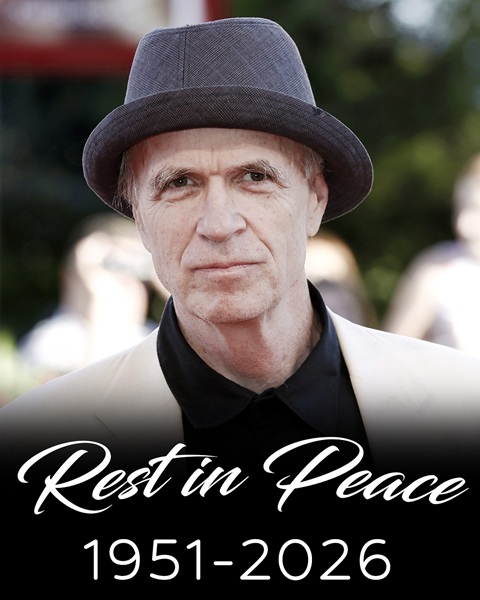
The world of film and theater has lost one of its most distinctive and quietly powerful talents. Tom Noonan, acclaimed actor, writer, and playwright, passed away on February 14, 2026, at the age of 74.
Known for his commanding screen presence and his ability to imbue every role with nuance, Noonan carved a path in Hollywood that was singularly his own—eschewing conventional leading-man stardom in favor of complex characters and emotionally layered performances.
His death has prompted an outpouring of tributes from colleagues, collaborators, and fans alike, who remember him not just for the characters he portrayed, but for the thoughtfulness, intellect, and artistry he brought to every project.
Filmmaker Fred Dekker, who directed Noonan in the 1987 cult classic The Monster Squad, first shared the news publicly. In his tribute, Dekker described Noonan’s portrayal of Frankenstein’s monster as a defining moment of his own career. He highlighted how Noonan’s performance was magnified by the celebrated makeup design of Stan Winston, sculpted by Tom Woodruff Jr. and applied with precision by Zoltan Elek.
Dekker concluded by calling Noonan “the proverbial gentleman and scholar,” emphasizing that the loss extended far beyond Hollywood, touching everyone who had the privilege to work with him. Though an official cause of death has not been released, the impact of Noonan’s legacy is already evident in the heartfelt recollections shared across social media and industry channels.

Early Life and the Foundations of a Singular Career
Born in 1951 in Greenwich, Connecticut, Tom Noonan’s path to acting was anything but conventional. Standing approximately 6 feet 5 inches tall, with a thin, angular frame and striking features, he possessed a naturally commanding presence. Rather than allowing his appearance to confine him to one-dimensional roles, Noonan embraced his unique look, which became a hallmark of his career.
From a young age, he demonstrated an intense fascination with storytelling, theater, and the intricacies of character development. His early exposure to stage performance instilled a lifelong appreciation for the subtlety and depth that acting could achieve, far beyond the surface appeal often sought by Hollywood’s leading men.
Noonan honed his craft in theater, where he could explore the emotional and psychological dimensions of human behavior in a way that would define his later work on screen. Stage work became central to his artistic identity, providing him with an arena to cultivate a quiet intensity and meticulous attention to character. Even as he transitioned to film and television, this foundation in theater informed his approach, ensuring that his performances—whether in front of elaborate prosthetics or alongside high-profile co-stars—retained authenticity and emotional resonance.
Breakthrough: Manhunter and the Birth of a Villain with Depth
Noonan’s career-defining breakthrough came with his portrayal of Francis Dollarhyde in Michael Mann’s Manhunter (1986), an adaptation of Thomas Harris’s novel Red Dragon and an early installment in the Hannibal Lecter cinematic universe. While many actors might have played Dollarhyde as a simple embodiment of evil, Noonan approached the character with precision and restraint.
His performance emphasized the duality of the serial killer: a figure capable of extreme violence yet profoundly human in his vulnerabilities. Through subtle facial expressions, deliberate speech patterns, and controlled physicality, Noonan created a character that was at once terrifying and tragically sympathetic.

Manhunter did not achieve massive box office success upon release, yet Noonan’s portrayal quickly gained recognition as a high-water mark in psychological thriller performance. Critics and film scholars have since noted that the chilling intimacy he brought to Dollarhyde’s psyche helped elevate the film above the typical slasher or serial killer narrative of the era. The role demonstrated Noonan’s ability to fuse intellectual intensity with physical menace, establishing him as an actor capable of inhabiting the most psychologically complex characters with credibility and depth.
Becoming an Icon: Frankenstein’s Monster in The Monster Squad
In 1987, Noonan took on one of the most recognizable roles in horror cinema: Frankenstein’s monster, in Fred Dekker’s The Monster Squad. While many iterations of the monster emphasize sheer terror or monstrous spectacle, Noonan’s interpretation focused on the subtle interplay between strength and vulnerability. Hidden beneath layers of prosthetic makeup designed by Stan Winston and applied by Zoltan Elek, Noonan relied entirely on body language, gestures, and minimalistic facial cues to convey emotion. His performance captured both the imposing nature of the creature and the underlying humanity that made the character compelling.
Fans and critics alike continue to regard Noonan’s Frankenstein as a standout element of the film. At conventions and retrospective screenings, audiences consistently praise his ability to evoke sympathy for a character traditionally depicted as monstrous.
The role highlighted a hallmark of Noonan’s artistry: the capacity to communicate deep emotional truths even when obscured by physical or narrative constraints. In doing so, he transformed a familiar horror icon into a character with both terror and tenderness, further solidifying his reputation as a performer capable of transcending genre limitations.
Crafting a Reputation for Complex Roles
Through the late 1980s and early 1990s, Noonan became a recognizable presence in both genre and mainstream films. In RoboCop 2 (1990), he portrayed Cain, a cult leader transformed into a cyborg antagonist. Here again, he blended intellectual precision with a palpable physical threat, creating a villain who was as cerebral as he was menacing. Later, in Last Action Hero (1993), he played the Ripper, a meta-fictional antagonist whose presence added a darkly humorous and unsettling dimension to the film. Even in roles that were technically supporting, Noonan’s commanding presence ensured that his characters lingered in the audience’s memory.
He reunited with Michael Mann in the acclaimed crime drama Heat (1995), starring Al Pacino and Robert De Niro. While his screen time was limited, Noonan’s presence contributed significantly to the film’s textured ensemble, enhancing the realism and intensity of the story. Heat is widely considered one of the defining crime dramas of the 1990s, and Noonan’s participation exemplified his ability to elevate any project with gravitas, no matter the scale of the role.

While Tom Noonan achieved recognition through mainstream films and genre work, he consistently pursued projects in independent cinema, where he could explore more intimate, character-driven stories. His interest in independent films reflected a broader artistic philosophy: the desire to illuminate the human condition, explore vulnerability, and delve into psychological complexity without the constraints of blockbuster spectacle.
One of the most significant examples of this facet of his career is the 1994 independent film What Happened Was…, which Noonan wrote, directed, and starred in. The film is a quiet, minimalist exploration of human interaction, focusing on a chance encounter between two socially awkward coworkers during a dinner that evolves into a subtle, tension-filled exploration of intimacy, communication, and miscommunication. The film’s sparse production design and deliberate pacing allowed the characters’ emotional landscapes to take center stage, demonstrating Noonan’s understanding that human connection is often nuanced, layered, and sometimes awkwardly beautiful.
What Happened Was… was lauded by critics and audiences alike for its honesty and emotional authenticity. The film won the Grand Jury Prize at the Sundance Film Festival, a testament not only to Noonan’s acting ability but also to his talent as a writer and filmmaker. Through this work, he proved that his artistic vision extended far beyond performance, showing a dedication to storytelling that emphasized human vulnerability, subtlety, and realism. Noonan’s interest in minimalism and psychological depth resonated through his independent projects, which often tackled themes of isolation, social anxiety, and the complexities of interpersonal relationships.
Following What Happened Was…, Noonan continued to explore independent cinema. He appeared in The Pledge (2001), directed by Sean Penn, a crime drama that scrutinizes obsession, grief, and the moral dilemmas faced by law enforcement. Noonan’s presence, though not the central character, added gravitas and credibility to the film’s intense, psychologically rich narrative.
Later, he collaborated with Charlie Kaufman in Synecdoche, New York (2008), an ambitious, introspective film blending surrealism, human fragility, and existential exploration. In Kaufman’s complex narrative, Noonan contributed to the layered ensemble, demonstrating his skill in embodying the subtleties of human emotion even in scenes that might be overshadowed by the film’s intricate conceptual structure.
Noonan also embraced the independent horror genre, appearing in Ti West’s The House of the Devil (2009). Here, he showed once more that his artistry could bridge multiple genres without sacrificing depth. Even in horror—a genre often driven by spectacle—he brought a quiet intensity and authenticity to his characters, proving that his approach to acting was consistently rooted in human truth rather than superficial shock value.
Television Work: Versatility and Range Across the Small Screen
In addition to his film career, Tom Noonan maintained a steady presence on television, showcasing his remarkable versatility across genres. His guest appearances on shows like The X-Files allowed him to inhabit the eerie, psychological side of storytelling that complemented his film work. On the series, he delivered performances that emphasized subtle menace, intellectual complexity, and a mysterious gravitas that made even a single episode memorable.

Noonan also appeared on procedural dramas such as Law & Order: Criminal Intent and CSI: Crime Scene Investigation, roles that often allowed him to explore morally ambiguous characters or psychologically complicated figures. His work on television was characterized by the same meticulous attention to detail and layered interpretation that defined his film performances. He understood that even a one-off appearance could leave a lasting impression, and he consistently used the medium to explore different facets of human behavior.
In anthology-style series like Tales from the Darkside, Noonan demonstrated his ability to adapt to highly varied narratives while retaining his unique presence. His television work extended his artistic reach, allowing him to experiment with storytelling formats and reach broader audiences without compromising the integrity of his performances. Whether playing menacing figures, troubled individuals, or subtly nuanced characters, Noonan’s television roles further cemented his reputation as a performer of rare intelligence and emotional resonance.
Playwriting and Filmmaking: Crafting Stories Behind the Camera
Tom Noonan’s creative genius extended well beyond acting. His work as a playwright and filmmaker revealed an artist deeply attuned to human psychology, relationships, and the complexities of social interaction. His stage plays, though often less widely publicized than his screen roles, were critically respected for their careful construction, dialogue-driven narratives, and deep exploration of character.
In theater, Noonan preferred stories that focused on human vulnerability, isolation, and interpersonal tension. He eschewed spectacle in favor of nuanced character work, often examining the internal lives of individuals navigating moral dilemmas, personal insecurity, or emotional estrangement. These themes were consistent across both his stage and screen endeavors, revealing a singular vision: an insistence on exploring the authentic, often messy, experiences of human life.
As a filmmaker, Noonan maintained this approach, creating intimate, character-focused narratives. Beyond What Happened Was…, he directed The Wife, another example of his interest in subtle emotional storytelling. While less widely known than his acting roles, his directorial work demonstrated a deep understanding of pacing, tone, and the delicate interplay between character and audience. By moving behind the camera, Noonan was able to shape every aspect of a story, from dialogue and blocking to cinematography and editing, ensuring that each project reflected his artistic sensibility.
The Artistic Philosophy: Character, Vulnerability, and Subtlety
Throughout his career, Tom Noonan remained committed to a philosophy of acting and storytelling that valued authenticity, emotional subtlety, and psychological realism. He was rarely interested in fame for its own sake; instead, his choices were guided by the challenge and depth of the work itself. Colleagues frequently described him as thoughtful, disciplined, and deeply invested in the craft. Whether on stage, in front of the camera, or behind it, Noonan approached his work with the same meticulous attention to detail, seeking to inhabit the truth of his characters and illuminate the complexities of human experience.
This philosophy allowed him to occupy a unique space in Hollywood: one where he could move fluidly between blockbuster films, independent cinema, genre work, and theater without ever compromising his artistic integrity. He was equally adept at portraying menacing villains, emotionally fragile individuals, or subtly introspective figures, and he did so with a consistency that earned him lasting respect among directors, peers, and audiences.
As the 2000s and 2010s progressed, Tom Noonan remained a reliable and compelling presence on both screen and stage. His later career was marked not by celebrity or mainstream notoriety, but by careful selection of projects that allowed him to explore complex characters and themes of moral ambiguity, psychological tension, and human fragility.
Noonan appeared in films such as Synecdoche, New York (2008), directed by Charlie Kaufman, a sprawling meditation on life, art, and the passage of time. Though part of a large ensemble cast, Noonan’s understated presence added texture and emotional resonance, providing a grounding force amid the film’s surreal and often overwhelming narrative. His ability to convey profound human emotion through minimal dialogue or gesture became particularly apparent in this work, illustrating a signature approach honed over decades.
He also contributed to independent horror and genre films that relied on atmosphere, mood, and subtle tension rather than spectacle. For example, in Ti West’s The House of the Devil (2009), Noonan’s measured performance lent credibility to a narrative steeped in suspense, paranoia, and creeping dread. Even in supporting roles, he elevated the material, proving that his contributions were essential to the films’ psychological depth and emotional authenticity.
Television in the Later Years: Versatility and Craft
Noonan’s television work continued to exemplify his versatility and skill in inhabiting morally complex or unusual characters. He returned to episodic television in series like Law & Order: Criminal Intent, CSI: Crime Scene Investigation, and The X-Files, where he seamlessly blended menace with introspection. Even guest appearances were marked by the same meticulous attention to psychological nuance that defined his film work. Noonan’s ability to transform short arcs into lasting impressions underscored his status as a consummate character actor—one whose influence extended beyond the size of the role or screen time.
Throughout these years, Noonan demonstrated a consistent commitment to his craft. He navigated between mainstream productions and experimental, character-driven projects with ease, never allowing typecasting or industry expectations to limit his creative choices. This dedication earned him continued respect from directors, co-stars, and fans, who recognized his integrity and reliability as a performer.
A Lasting Legacy in Film, Theater, and Beyond
Tom Noonan’s legacy is one of quiet, enduring artistry. He was a performer who prioritized depth, subtlety, and emotional truth over spectacle or celebrity. Whether portraying villains like Francis Dollarhyde in Manhunter, misunderstood creatures like Frankenstein’s monster in The Monster Squad, or intimate, psychologically complex figures in independent cinema, Noonan left an indelible mark on every project he touched.
Colleagues frequently highlighted his professionalism, thoughtfulness, and dedication. Director Michael Mann praised Noonan’s ability to inhabit psychologically rich characters, while Fred Dekker recalled his collaborative spirit and unwavering commitment to the craft. Audiences, too, recognized the unique power of his performances, often citing how he could evoke unease, empathy, or profound reflection with even the smallest gesture.
At fan conventions, screenings, and retrospectives, Noonan’s work continues to inspire admiration. The Monster Squad remains a cult favorite, with his Frankenstein’s monster remembered not simply as a horror icon, but as a character imbued with emotion and nuance. Similarly, his portrayal of Francis Dollarhyde in Manhunter continues to be discussed in film studies and fan circles for its groundbreaking approach to a psychologically complex antagonist. His influence is felt not only through the films themselves but through the new generations of actors, filmmakers, and theater practitioners who look to his career as a model of integrity, dedication, and artistic courage.
The Artist Beyond the Spotlight
Despite his extensive contributions to film, theater, and television, Tom Noonan never actively sought celebrity. He was a performer devoted to the substance of his work rather than the trappings of fame. This philosophy allowed him to move fluidly between genres, mediums, and artistic roles, creating a body of work that was as diverse as it was impactful.
Noonan’s work behind the camera—as a playwright, writer, and director—further reinforces this point. His films, such as What Happened Was… and The Wife, along with his stage productions, demonstrate a deep understanding of character, dialogue, and emotional rhythm. These projects reveal an artist committed to exploring human behavior in its most authentic form, whether through quiet domestic drama or psychologically charged narratives.
Colleagues remember him as thoughtful, meticulous, and deeply engaged with the craft of storytelling. He approached each role with intellectual rigor and emotional honesty, earning not only respect but also genuine affection from those who worked with him.
Final Reflections: The Enduring Impact of Tom Noonan
Tom Noonan’s passing marks the loss of a rare talent in American cinema and theater. His career was defined not by awards, box office numbers, or celebrity headlines, but by the unforgettable performances he delivered, the thoughtfulness he brought to every project, and the integrity with which he approached his craft.
Audiences may remember him for the chilling intensity of Francis Dollarhyde, the emotional depth of Frankenstein’s monster, or his nuanced presence in independent films and ensemble casts. But beyond these roles, Noonan’s enduring legacy lies in the standard he set for character actors: that subtlety, intelligence, and emotional authenticity can create a lasting impression even in a world obsessed with spectacle.
His work demonstrates that artistry is not measured by fame but by the ability to illuminate truth, evoke empathy, and explore the human condition. In remembering Tom Noonan, we celebrate a performer who consistently chose substance over superficiality, depth over immediacy, and artistic courage over conformity.
Noonan leaves behind a body of work that continues to inspire filmmakers, actors, and audiences. From cult classics to indie treasures, his performances are a testament to the power of character-driven storytelling and the enduring appeal of a deeply thoughtful artist. He is survived by a legacy that will remain woven into the fabric of modern cinema and theater—a reminder that true artistry transcends time, genre, and recognition.
In honoring Tom Noonan, we recognize a life devoted to craft, an unwavering pursuit of emotional and psychological truth, and a career that proves the quiet power of a performer who chooses depth over fame. Though his presence is now gone, his work remains a guiding light for all who aspire to act, create, and tell stories with honesty, intelligence, and heart.
