
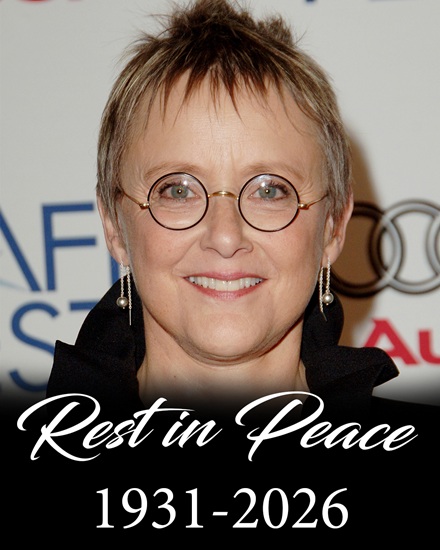
Mary Beth Hurt, the distinguished American actress celebrated for her work in The Age of Innocence, Six Degrees of Separation, and The World According to Garp, has passed away at the age of 79 following a decade-long battle with Alzheimer’s disease.
The heartbreaking announcement was made by her daughter, Molly Schrader, who shared a heartfelt tribute on Instagram, reflecting on her mother’s grace, resilience, and the immense impact she had on family, friends, and audiences worldwide.
Molly Schrader wrote, “Yesterday morning we lost my mom, Mary Beth, to Alzheimer’s after a decade-long battle. She was an actress, a wife, a sister, a mother, an aunt, and a true friend to many.”
“She took on all of these roles with a remarkable combination of strength and kindness,” Molly continued. “While our hearts are heavy, we find comfort knowing she is no longer suffering and has peacefully reunited with her sisters.”

Mary Beth Hurt was born in Marshalltown, Iowa, on September 25, 1946. She grew up in a nurturing household that encouraged creativity, imagination, and a passion for storytelling, which would later fuel her remarkable acting career.
As a child, she was uniquely influenced by performing arts, even having the famed actress Jean Seberg serve as her babysitter for a time. This early exposure planted the seeds for her lifelong devotion to acting.
She pursued formal education in theater and performance at the University of Iowa and New York University, gaining critical training that allowed her to master stagecraft and develop a versatile approach to both theater and film.
Reflecting on her early interest in acting, Hurt once recalled, “I think I was born an actress. I was always making shows, having my sisters and friends play roles, and attending plays in Des Moines with my mother.”
She described a pivotal moment in her adolescence when she realized acting could be a real career: “In eighth grade, after seeing a school production, I knew this was something I could actually do professionally and passionately pursue.”
Her professional stage debut came in 1974 with the off-Broadway play More Than You Deserve, marking the beginning of an illustrious theater career that would earn her critical acclaim and multiple Tony Award nominations over the next decade.

During the 1970s and early 1980s, she received three Tony nominations for Trelawny of the Wells, Crimes of the Heart, and Benefactors, establishing her as a formidable talent and respected presence in American theater.
Hurt made her major film debut in Woody Allen’s Interiors (1978), portraying Joey, the middle sister coping with family tensions and the emotional fallout of her mother’s mental health struggles, immediately earning critical recognition.
Her nuanced performance in Interiors led to a BAFTA nomination for Most Promising Newcomer to Leading Film Roles, solidifying her reputation as a rising star capable of delivering emotionally complex and compelling performances.
She followed this success with Chilly Scenes of Winter (1979), a role that demonstrated her ability to convey subtle emotion and character depth, further showcasing her versatility as a film actress capable of inhabiting multifaceted characters.
In The World According to Garp (1982), she continued to impress audiences and critics alike, establishing a pattern of choosing roles that balanced emotional weight, dramatic tension, and human authenticity, making her performances consistently memorable.
Her work in The Age of Innocence (1993) and Six Degrees of Separation (1993) brought her recognition alongside some of the industry’s most celebrated actors, showcasing her capacity to enhance ensemble casts with intelligence, subtlety, and gravitas.

Later roles included Autumn in New York (2000), The Exorcism of Emily Rose (2005), and Young Adult (2011), reflecting a career longevity few achieve while maintaining a commitment to thoughtful, deeply realized performances.
Hurt’s television work further expanded her influence, with memorable appearances on iconic series including Law & Order, Thirtysomething, Saturday Night Live, and Law & Order: SVU, highlighting her ability to adapt to varied formats and audiences.
She was married to actor William Hurt from 1971 to 1982, a union coinciding with the early stages of her career, before marrying filmmaker Paul Schrader in 1983. She shared two children, Molly and Sam, with Schrader.
Paul Schrader, known for writing Taxi Driver and directing American Gigolo, collaborated closely with Hurt both professionally and personally, allowing their shared artistic vision to flourish while maintaining a supportive family environment.
Hurt often expressed that she preferred supporting roles over lead parts, finding them more creatively satisfying. In a 2010 interview, she explained that secondary roles allowed her to explore a character’s nuances without bearing the pressures of a starring position.
“I’ve never been extremely comfortable playing the lead,” she admitted. “Supporting roles fascinated me because they offered richer idiosyncrasies, emotional subtleties, and a chance to inhabit someone real without overwhelming responsibility.”

Her focus on character depth over fame won her admiration from colleagues and fans alike, solidifying her reputation as a dedicated, intelligent, and profoundly thoughtful actress committed to authenticity and nuance.
Mary Beth Hurt spent her final years in an assisted living facility in Jersey City, New Jersey, after relocating from Manhattan. The move ensured she received the specialized care necessary to manage her Alzheimer’s diagnosis with dignity and comfort.
Her passing marks the loss of an extraordinary talent whose career spanned decades across stage, film, and television, leaving a legacy of intelligence, artistry, and emotional authenticity that will continue to inspire actors and audiences.
Hurt’s colleagues remember her for a presence that commanded attention quietly, yet powerfully, allowing her to enrich each production she joined and leaving indelible impressions on viewers and fellow performers alike.
Beyond her professional achievements, Hurt was celebrated for her warmth, kindness, and intellectual curiosity, qualities that complemented her acting, earning her the admiration and respect of family, friends, and peers in the entertainment industry.
Her daughter Molly Schrader’s tribute highlighted her mother’s ability to balance family life with a demanding career, noting how Hurt approached both spheres with grace, ferocity, and unwavering dedication.
Mary Beth Hurt’s influence on acting endures in her choice of roles, her methodical character exploration, and her insistence on emotional truth, inspiring generations of performers to prioritize craft over visibility or celebrity.
Her collaborations with influential directors and actors across decades reinforced her reputation as a consummate professional, adding depth, intelligence, and subtlety to projects ranging from experimental theater to major Hollywood productions.

Hurt consistently demonstrated that observation, restraint, and emotional honesty were key to compelling performance, earning her a reputation as an actor who could fully inhabit any role with authenticity and humanity.
Even in supporting roles, her presence elevated productions, providing a richness that shaped audience perception and inspired fellow cast members to deliver performances of greater emotional resonance.
Her dedication to understanding character psychology and motivation allowed her to portray complex personalities, ensuring that each of her performances left lasting impressions on viewers and critics alike.
Throughout her life, she balanced the demands of an intensive acting career with personal responsibilities, demonstrating resilience, discipline, and compassion, qualities that further defined her legacy both on and off the screen.
Mary Beth Hurt’s stage work remains a testament to her abilities, with Tony-nominated performances reflecting mastery of timing, emotional nuance, and a deep understanding of character development in live theater.
Her television appearances demonstrated versatility, adapting her theatrical and cinematic skills to small-screen storytelling, often infusing guest and recurring roles with sophistication, realism, and subtle depth.
Hurt emphasized observation, reflection, and emotional connection in her craft, inspiring both colleagues and students of acting to value authenticity, integrity, and the pursuit of truth within every role undertaken.
Her later years, while challenging due to Alzheimer’s, were characterized by family support, quiet reflection, and an enduring recognition of her body of work, which continued to resonate with fans and fellow artists alike.
The actress’s passing emphasizes the fragility of life and the value of preserving the legacy of artists whose careers leave lasting impressions through talent, dedication, and personal integrity.
Fans continue to celebrate her extensive career by revisiting her films, stage performances, and television appearances, recognizing the intelligence, depth, and humanity she brought to every role she inhabited.
Mary Beth Hurt leaves behind a legacy that blends professional excellence with personal resilience, offering inspiration to aspiring actors and a model of how to live and work with integrity, passion, and purpose.
Her death marks the conclusion of a remarkable life defined by artistic excellence, family devotion, and a quiet strength that earned her admiration, respect, and love from generations of colleagues and fans.
Mary Beth Hurt’s work will remain a benchmark for performers seeking emotional truth, subtlety, and intelligence in acting, ensuring her influence endures across stage, screen, and television for years to come.
Her passing invites reflection on the breadth and depth of her career, a body of work that exemplifies emotional authenticity, technical skill, and an unwavering commitment to creating fully realized, believable characters.
Mary Beth Hurt is survived by her children, husband Paul Schrader, extended family, and countless admirers around the world who cherish her contributions to acting and the lasting impression she left on the arts.
Her life and career provide a powerful reminder of the enduring value of talent, dedication, and artistic integrity, leaving a legacy that will continue to inspire actors and audiences for generations.
Mary Beth Hurt’s passing closes a chapter on a life marked by artistic brilliance, personal devotion, and quiet resilience, leaving a profound impact on American theater, film, and television that will not soon be forgotten.
