
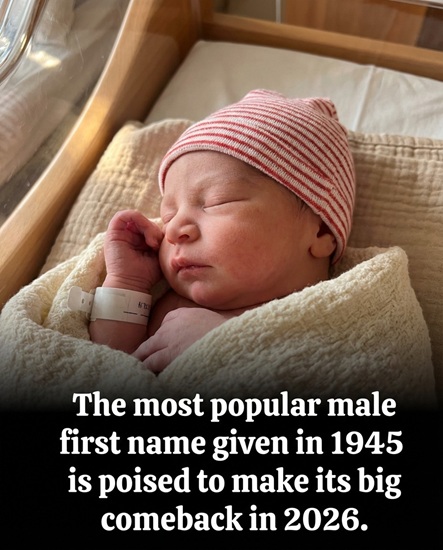
Naming trends rarely shift suddenly. They evolve gradually, shaped by layers of cultural change, economic shifts, technological advances, and collective social moods.
For decades, researchers and sociologists have tracked the subtle currents that move naming culture, observing how patterns that seem timeless are often the product of long-term societal influences rather than immediate whims.
Yet by 2026, a phenomenon in naming culture has emerged with unusual clarity: a significant and widespread move away from ultra-modern, invented, and digitally stylized names toward those rooted in history, familiarity, and enduring emotional resonance.
For more than ten years, the early 21st century witnessed a remarkable preoccupation with novelty in naming. Parents, particularly in North America and Western Europe, sought names that were unique, algorithm-proof, visually distinctive, and optimized for online spaces.

This period coincided with the rise of social media platforms, the dominance of personal branding, and the expectation that children’s names would stand out not only in classrooms but in digital search engines and social media feeds.
Names were altered, vowels omitted, letters rearranged, or entirely invented, often for the express purpose of creating something that looked contemporary and futuristic.
Such names—ranging from deliberately misspelled traditional names to wholly original constructs—reflected a broader societal context in which visibility, individualism, and differentiation were prized above continuity or tradition.
Parents were responding to a world that was increasingly hyperconnected, fast-moving, and performance-driven. A name became not only an identifier but a statement of personality, creativity, and sometimes even defiance of social norms.
Yet naming trends rarely move in a single direction indefinitely. Social patterns are cyclical, and by the mid-2020s, experts are observing a quiet but decisive counter-trend.
Today, more parents are consciously moving toward names that convey stability, meaning, and timelessness rather than novelty or spectacle. Unlike the previous era’s pursuit of visibility, the new movement prioritizes emotional grounding and long-term resonance.
From Digital Novelty to Emotional Grounding
The digital age profoundly influenced naming choices in the early 2000s and 2010s. Names were selected to capture attention—unique, algorithm-friendly, and visually striking.

Creativity often meant deviation from the familiar, sometimes resulting in names that were challenging to pronounce or culturally disconnected. Some names were carefully crafted to feel “modern” or “futuristic,” but their lifespan was uncertain, often fading quickly as trends moved on.
By contrast, parents of the mid-2020s—primarily millennials and older Gen Z adults—are increasingly skeptical of this approach. Naming specialists report that new parents are now asking a different set of questions:
- Will this name still feel appropriate when my child is 40, 50, or 70 years old?
- Does this name carry meaning beyond fleeting trend cycles?
- Does this name feel human and authentic, rather than performative or branded?
This emerging philosophy does not reject creativity; it reframes it. Modern parents are rediscovering the art of choosing names that have stood the test of time, allowing cultural and emotional depth to guide their decision-making rather than chasing novelty alone. In this context, tradition is not an anchor to the past—it becomes a framework for enduring relevance.
The Neo-Vintage Revival
Central to this trend is what experts now call the “neo-vintage” movement. Neo-vintage names are those that were once common but gradually fell out of use, only to be reintroduced as fresh and thoughtful choices for a new generation.
Unlike classic names that have never left the charts, neo-vintage names benefit from historical distance: they feel familiar, yet not overused; they carry a sense of gravitas without seeming old-fashioned; they are substantial without being heavy.
One name exemplifying this revival is Marcel.
Marcel: From Forgotten to Rediscovered
Marcel has a rich cultural and historical heritage, particularly in European contexts. It was widely used in French-speaking countries and in parts of Central Europe throughout the 19th and early 20th centuries. The name carries associations with artists, intellectuals, and craftsmen, as well as ordinary working families, giving it a balance of sophistication and accessibility.

By the early 2000s, Marcel had largely disappeared from contemporary birth registries. In many regions, it was considered “grandparental,” rarely chosen for newborns in favor of names that reflected the latest trends.
Ironically, this period of absence has contributed to Marcel’s modern appeal. To contemporary ears, the name feels deliberate rather than impulsive, chosen with care rather than for immediate recognition.
Naming analysts describe Marcel as a name of quiet character. It embodies several qualities highly valued by modern parents:
- Elegance without ostentation
- Tradition without heaviness
- Distinctiveness without unfamiliarity
Marcel does not demand attention in the way highly inventive names do, but it leaves a lasting impression, suggesting a personality capable of growth and evolution rather than fixed characteristics dictated by its novelty.
Quiet Character and Emotional Intelligence
A key factor in Marcel’s resurgence is its alignment with shifting concepts of masculinity. Whereas previous naming trends often implicitly associated strong male names with aggression, dominance, or physical strength, contemporary parents increasingly value emotional intelligence, empathy, and measured confidence.
Marcel embodies this reimagined masculinity: it conveys calm assurance, thoughtfulness, and quiet resilience rather than bravado or performative strength.
Experts note that Marcel offers flexibility across life stages. It is equally appropriate for a curious toddler, a reflective student, a professional adult, and a mature elder.
This versatility supports a growing desire among parents to select names that allow children to shape their own identities over time, without being constrained by cultural expectations tied to novelty or trendiness.
Global Appeal and Cultural Versatility
In addition to its historical and emotional appeal, Marcel performs exceptionally well across linguistic and cultural boundaries. It is easily pronounced in English, French, German, Spanish, and several other languages, making it an attractive choice for international families or parents seeking names that will travel comfortably across borders.

Unlike many invented or digitally styled names that require frequent spelling adjustments or explanations, Marcel retains its integrity and resonance globally.
This international versatility is increasingly important in a world where mobility, multicultural families, and global perspectives are the norm rather than the exception.
Parents value names that can function seamlessly in different cultural contexts while maintaining their character and meaning. Marcel’s balance of historical depth, simplicity, and adaptability exemplifies these qualities.
Psychology of Choice
The psychology behind modern naming choices reveals a fascinating dimension of this trend. Studies in social psychology and human development suggest that names associated with stability, familiarity, and historical continuity can positively influence first impressions, particularly in professional or formal contexts.
While a name does not determine destiny, it subtly shapes expectations and perceptions.
Modern parents often spend months researching potential names, considering their historical significance, phonetic appeal, cultural resonance, and potential for social acceptance.
Marcel scores highly across all these criteria: it carries emotional weight without being overwhelming, offers continuity without feeling antiquated, and communicates strength tempered by sensitivity. In psychological terms, it provides a sense of security both for the parents making the choice and for the child growing into it.
While Marcel serves as a defining example of the neo-vintage trend, it is far from an isolated case. Across Europe, North America, and even parts of Asia, parents are increasingly turning to names that evoke history, resilience, and cultural depth.
Unlike names designed to shine for a single generation, these choices prioritize longevity, subtlety, and emotional resonance. This movement, often called the “neo-vintage revival,” is not about nostalgia for its own sake. Instead, it reflects a broader societal desire for names that endure in an ever-changing world.

Other Neo-Vintage Names Making a Comeback
The resurgence of Marcel is part of a larger wave of classical names returning to contemporary usage. Experts in naming registries report increasing interest in names such as:
- Léonie: Once popular in French-speaking regions, this name conveys elegance, gentleness, and refined intelligence. It appeals to parents looking for a name that is graceful without being overly delicate.
- Augustin: A strong, historical name with roots in Roman and Christian traditions, Augustin signals intellectual depth and dignity. It has a commanding presence without being aggressive or ostentatious.
- Eugène: This name carries historical prestige and a scholarly aura. Though it faded in popularity during the mid-20th century, Eugène is now appreciated for its balance of sophistication and approachability.
- Colette: Famous for its literary associations, Colette offers a timeless charm and international versatility. Its soft phonetic structure conveys creativity, sensitivity, and refinement.
These names share essential qualities: historical depth, ease of pronunciation, cultural rootedness, and avoidance of unnecessary embellishment.
Parents choosing them often express a desire to give their children something lasting rather than fleeting. In a society facing rapid change and uncertainty, tradition provides reassurance and a sense of continuity.
Shifting Ideals of Masculinity and Femininity
The appeal of neo-vintage names also reflects evolving perceptions of gender and personality. Names like Marcel and Augustin challenge outdated notions of masculinity as synonymous with aggression or dominance. Instead, they convey emotional intelligence, calm confidence, and thoughtfulness.
Parents increasingly value qualities such as empathy, resilience, and measured strength, which are mirrored in the names they select.
Similarly, names like Léonie and Colette exemplify a modern femininity that is confident, self-assured, and versatile.
These names balance charm and authority without relying on cultural stereotypes of delicacy or fragility. Collectively, neo-vintage names reflect an ongoing redefinition of gender norms, one that prioritizes authenticity and emotional depth over performative traits.
The Influence of Globalization
Another critical factor in the neo-vintage trend is globalization. In an interconnected world, parents are more conscious than ever of how names will function across languages and cultures.
Marcel, Léonie, Colette, and similar names are easily recognized and pronounced in multiple languages, making them ideal choices for families with international backgrounds or global mobility.
In regions with multicultural populations, parents often seek names that can travel well, preserving their phonetic integrity and emotional resonance without requiring adaptation or explanation.
A globally compatible name signals openness, flexibility, and cultural awareness—qualities increasingly valued in both personal and professional contexts.
Psychological Insights Into Naming Choices
Modern parents approach naming with unprecedented deliberation. Unlike previous generations, many spend months analyzing potential names, considering historical significance, cultural resonance, linguistic appeal, and long-term social perception.
Studies in social psychology indicate that names associated with stability, familiarity, and historical depth can positively influence how individuals are perceived in educational, professional, and social settings.
By choosing names with enduring appeal, parents are making an investment not only in identity but also in social capital. A name like Marcel suggests reliability, thoughtfulness, and emotional maturity.
It communicates a sense of stability to teachers, peers, employers, and society at large. While no name guarantees outcomes, the subtle psychological effects are significant and increasingly recognized by parents and researchers alike.
Tradition as a Foundation for the Future
Importantly, the neo-vintage trend is forward-looking rather than purely retrospective. Parents are not simply trying to recreate the past; they are selecting names that provide a foundation for the future.
In this sense, Marcel and its contemporaries offer a framework for identity that is resilient, adaptable, and culturally grounded.
Experts emphasize that this approach reflects a broader cultural maturity. Societies embracing neo-vintage names are signaling an appreciation for depth, continuity, and substance over superficial novelty.
Names are no longer chosen solely for immediate aesthetic appeal or online visibility; they are seen as enduring markers of identity, capable of evolving alongside the child.
Cultural Fatigue and the Return to Stability
A key driver of this movement is cultural fatigue. For more than a decade, the demand for uniqueness led to a proliferation of invented and highly stylized names.
While these names served their purpose in an era dominated by digital performance and social media presence, they often lacked emotional permanence.
By the mid-2020s, many parents have grown weary of constant novelty. The relentless pursuit of originality, compounded by the pressures of online visibility, created a desire for something more grounding. Neo-vintage names provide this anchor: they are familiar enough to convey comfort, yet fresh enough to feel intentional and modern.
The Long-Term Perspective
One of the most striking aspects of the neo-vintage trend is its patience. Unlike viral naming trends that surge and fade within a few years, names like Marcel are experiencing a slow, steady increase in usage. This mirrors the values these names embody: careful consideration, restraint, and confidence without the need for ostentation.
Naming experts predict that neo-vintage names will continue to grow in popularity over the next decade. They are unlikely to dominate birth charts in the explosive, short-lived manner of trend-driven names.
Instead, they will quietly maintain a presence, offering parents and children a sense of continuity, connection, and understated elegance.
Broader Societal Implications
The resurgence of neo-vintage names also offers insights into wider cultural shifts. It reflects:
- A desire for emotional grounding: In a fast-paced, uncertain world, stable and familiar names provide comfort.
- A return to meaning over spectacle: Names are increasingly chosen for their resonance and significance rather than for flashiness or novelty.
- Global awareness: Parents consider cross-cultural pronunciation and recognition, reflecting the interconnected nature of modern life.
- Redefined gender ideals: Names convey qualities such as empathy, thoughtfulness, and resilience rather than aggression or performativity.
- Intergenerational continuity: Names link children to history without imposing outdated associations, creating a bridge between past, present, and future.
By selecting names that have already demonstrated cultural endurance, families are making a subtle statement about values, priorities, and the kind of society they hope to cultivate. Neo-vintage names are not merely labels—they are expressions of hope, connection, and deliberate choice.
Looking Ahead
As society continues to navigate rapid technological and cultural change, naming practices are likely to remain a reflection of broader collective priorities. Neo-vintage names like Marcel, Léonie, Augustin, Eugène, and Colette symbolize a shift toward patience, thoughtfulness, and emotional intelligence.
They suggest that the most meaningful progress does not always come from invention or novelty but from rediscovery, refinement, and thoughtful selection.
By 2026, Marcel is more than a name—it is a cultural statement. It signals that families are valuing stability, depth, and continuity over superficial distinction. In doing so, they are not merely honoring the past; they are building an identity that is robust, adaptable, and resonant for the future.
In a world that constantly pushes forward, neo-vintage names remind us that lasting significance often arises not from chasing the next trend but from choosing what has already proven its worth. Names like Marcel are quietly shaping a generation, offering a blend of history, meaning, and versatility that will endure for decades to come.
