

Stephen Colbert, one of the most recognizable figures in American television, was born in 1964 in Washington, D.C., into a large family as the youngest of ten siblings.
Growing up in both Maryland and South Carolina, Colbert experienced a childhood shaped by strong familial values, intellectual curiosity, and the devout Catholic faith of his parents.
His father, a highly respected doctor and academic, instilled a sense of discipline and curiosity, while his mother combined religious devotion with a progressive appreciation for education and culture. She once admitted that she voted for a Democrat—John F. Kennedy—only once, a testament to the family’s generally conservative leanings.
Colbert has often described himself as “rambunctious” as a child. Early on, he developed a keen awareness of how people from the South were portrayed on television.
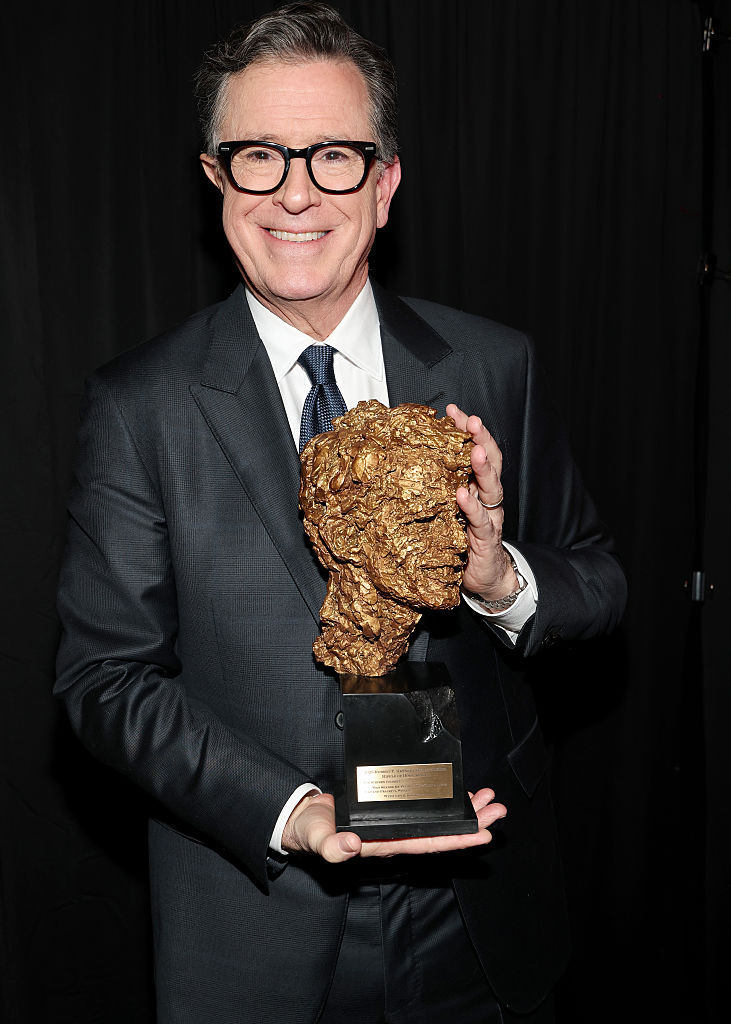
Determined not to fall into stereotypes of Southern simplicity, he taught himself to mimic the speech patterns of American news anchors, practicing diction, inflection, and articulation. This skill would later serve him well in a career that required both sharp comedic timing and eloquent delivery.
The Plane Crash That Changed Everything
In 1974, tragedy struck in a devastating and life-altering way. On September 11, when Colbert was just ten years old, Eastern Air Lines Flight 212 crashed while attempting to land in Charlotte, North Carolina. Among the 82 people aboard, only 13 survived.
Colbert’s father, along with his brothers Paul and Peter—two of his closest siblings—perished in the crash. The brothers had been traveling to enroll at Canterbury School in New Milford, Connecticut, for the new academic term.
Foggy conditions and pilot error contributed to the accident, with the National Transportation Safety Board (NTSB) attributing the crash to a lack of altitude awareness and poor cockpit discipline during the approach. For young Colbert, the event was shattering, leaving him and his remaining family members to navigate profound grief and a drastically changed household dynamic. He later reflected to Anderson Cooper:
“I was personally shattered and then you reform yourself in this quiet, grieving world that was created in the house. My mother had me to take care of, which I think was sort of a gift for her, a sense of purpose at that point. But I also had her to take care of. It became a very quiet house, very dark, and ordinary concerns of childhood kind of disappeared.”
As the youngest, Colbert spent several years almost entirely alone with his mother. His older siblings had already moved out, and the tragedy instilled in him a profound sense of responsibility and introspection at a young age.

Escaping Into Literature and Fantasy
Following the crash, Colbert initially struggled with academics and motivation. He described this period as one where “nothing made any sense after my father and my brothers died.
I kind of just shut off.” In the absence of familial guidance from his father and brothers, he found solace in the worlds of science fiction and fantasy, particularly the works of J.R.R. Tolkien.
These imaginative landscapes provided him an emotional refuge, a way to process grief and explore themes of heroism, loss, and resilience.
Alongside reading, he leaned into his Catholic faith to seek meaning in the tragedy, attempting to reconcile the enormity of loss with spiritual understanding. This early confrontation with grief would later influence his ability to combine humor and emotional intelligence in his performances.
Discovering the Stage
Colbert’s interest in performing arts gradually grew during his teenage years. Improvisation and theater offered both an escape and a new sense of purpose. He initially enrolled at Hampden-Sydney College in Virginia but soon transferred to Northwestern University in Chicago to pursue performing arts more seriously.
College was also a time of intense personal struggle. He lost significant weight and described himself during freshman year as being in “bad shape” emotionally. In a 2012 interview with Oprah Winfrey, he recounted:
“I was just green. I was just so sad about it. I just had time to sort of, I suppose, to be alone with the idea.”
Despite these challenges, his commitment to theater and performance deepened, laying the foundation for his later work in comedy and television.
The First Steps Toward Comedy
Initially, Colbert envisioned himself as a dramatic actor, with comedy not yet central to his ambitions. His career trajectory shifted after joining Second City’s touring company, where he worked as an understudy for the now-famous Steve Carell.

Here, Colbert met collaborators Amy Sedaris and Paul Dinello, who would remain integral throughout his career, particularly in shaping early comedic projects like Exit 57 and later Strangers with Candy.
Second City also offered Colbert the opportunity to refine improvisational skills, develop a strong comedic voice, and experiment with character work, all of which would become essential in his transition to late-night television. This period of creative exploration marked a turning point: the blending of his sharp intellect, satirical sensibility, and emotional depth.
After honing his craft at Second City, Stephen Colbert began to make his mark in television. His early work included writing and performing for the sketch comedy show Exit 57, which ran in the late 1980s and early 1990s.
Collaborating closely with Amy Sedaris and Paul Dinello, Colbert developed a knack for satirical humor that blended intellectual wit with absurdist comedy—a style that would become his signature.
The Daily Show and the Birth of the Satirical Persona
Colbert’s big break came when he joined The Daily Show in 1997 as a correspondent. His segments quickly drew attention for their sharp, ironic commentary, blending humor with incisive political observation. The exposure positioned Colbert as a rising comedic talent, one capable of using satire to engage audiences on serious cultural and political topics.
Building on this momentum, he launched The Colbert Report in 2005, a spin-off that would define a generation of satirical late-night programming. On this show, Colbert portrayed a conservative pundit persona, a character as sharply intelligent as it was comically exaggerated.
The irony and subtle critique of political and media dynamics showcased his unique ability to intertwine humor with thoughtful commentary. Over its decade-long run, The Colbert Report won numerous awards, including Emmys, and became a cultural touchstone for politically engaged audiences.

Colbert’s success on Comedy Central also demonstrated his skill in multi-layered satire: he simultaneously entertained, informed, and provoked discussion, earning him both critical acclaim and widespread public admiration.
His influence extended beyond the screen; in 2007, he testified before the U.S. Senate on the issue of media influence, blending humor with earnest civic engagement—a testament to the power of his platform.
Transition to The Late Show
In 2015, CBS announced that Colbert would succeed David Letterman as host of The Late Show, a role that elevated him to the pinnacle of American late-night television.
Premiering on September 8, 2015, Colbert’s version of the show marked a departure from Letterman’s approach while retaining traditional late-night elements such as celebrity interviews, musical performances, and topical monologues.
Unlike the fictionalized pundit of The Colbert Report, this show showcased the “real” Stephen Colbert: thoughtful, incisive, and socially aware, yet still capable of humor, improvisation, and playfulness.
Colbert’s monologues frequently blended comedy with commentary on politics, current events, and cultural trends, helping him secure high ratings and solidifying the program’s reputation as a leading late-night show.
Under Colbert’s leadership, The Late Show dominated ratings for nine consecutive seasons, combining intellectual engagement with mainstream entertainment. The show’s success contributed to Colbert’s financial standing, with a net worth estimated at $75 million, reflecting his impact as both an entertainer and cultural commentator.
Personal Life and Family
Behind the spotlight, Stephen Colbert has built a full and supportive family life. Married to Evelyn “Evie” McGee-Colbert since 1993, the couple has three children: Madeleine (born 1995), Peter (born 1998), and John (born 2002).

Residing in Montclair, New Jersey, Colbert has spoken frequently about the grounding influence of family, citing the importance of balancing professional responsibilities with personal commitments.
Colbert’s personal experiences with tragedy—losing his father and two brothers in a plane crash, as well as enduring periods of deep grief—have informed his emotional intelligence and empathy. He has shared candid reflections on loss and resilience, emphasizing that acknowledging grief and facing it directly is essential for personal growth. He once said:
“If you try to ignore it, it will be like a wolf at your door,” highlighting the necessity of confronting pain rather than burying it.
Health Challenges
Colbert has faced multiple health challenges throughout his career. During the height of The Late Show, he suffered a burst appendix, enduring severe pain while maintaining his professional commitments. The experience involved surgery, pain management, and even hallucinations due to strong medications.
In addition, he was diagnosed with benign paroxysmal positional vertigo (BPPV), a condition affecting balance and causing dizziness. To manage BPPV, Colbert performs regular therapeutic exercises and remains vigilant about his health, demonstrating resilience and dedication in balancing personal well-being with the demands of a daily television program.
Continuing Influence and New Projects
Even with the scheduled conclusion of The Late Show in May 2026, Stephen Colbert’s influence at CBS is far from over. In 2023, he became executive producer for After Midnight, a late-night series hosted by comedian Taylor Tomlinson. This role allows Colbert to mentor emerging talent while continuing to contribute creatively behind the scenes, ensuring the next generation of late-night hosts benefits from his experience and vision.
Colbert’s commitment to fostering new talent reflects his understanding of the evolving landscape of entertainment. By supporting fresh voices in comedy, he helps maintain the vibrancy and relevance of late-night television, blending tradition with innovation.
Legacy and Cultural Impact
Stephen Colbert’s career embodies a remarkable arc—from a young boy shaped by personal tragedy to one of the most influential figures in American comedy and late-night television. His intellectual humor, combined with heartfelt sincerity, has allowed him to connect with diverse audiences. Colbert’s work exemplifies the intersection of comedy, political insight, and human empathy, establishing him as a cultural figure capable of both entertaining and inspiring.
Through his early challenges, personal losses, and health battles, Colbert has demonstrated resilience and dedication, earning the respect of colleagues, critics, and audiences alike. His influence extends beyond his on-screen persona to the broader television landscape, shaping comedy, civic discourse, and late-night programming for decades.
Even as The Late Show comes to a close, Colbert’s legacy endures through his mentoring of emerging talent, his numerous award-winning performances, and the lasting impact of his unique blend of humor and social commentary. His life story—a combination of personal hardship, creative brilliance, and steadfast dedication—remains a testament to perseverance, intelligence, and the enduring power of laughter.
