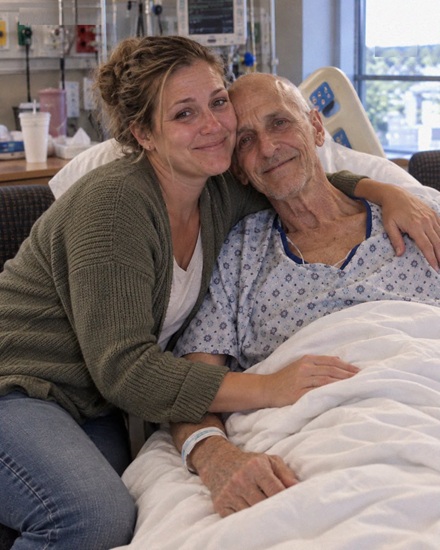
My mother had been in the hospital for almost six weeks. Her surgery was supposed to be routine. The doctors had explained the procedure, the recovery process, and the possibility that she might need a little extra time before returning home.
None of us expected her recovery to become such a long and exhausting experience.
Days turned into weeks. Every morning seemed to bring another appointment, another examination, or another small complication that delayed her discharge.
I tried to remain positive whenever I visited her, but hospitals have a way of making even the strongest people feel helpless.
The smell of disinfectant, the constant sound of monitors, the quiet conversations between nurses, and the endless waiting slowly became part of my daily routine.
I learned which elevator was usually faster, which coffee machine made the least terrible coffee, and which chairs were comfortable enough to sit in for several hours.
I also learned that sometimes the loneliest people in a hospital were not necessarily the ones receiving the most visitors.
That was how I first noticed Thomas.
His room was directly across the hallway from my mother’s.
During my first week, I began recognizing the people who visited patients in that section. Some arrived with flowers. Others brought food, magazines, or photographs.
There were husbands holding their wives’ hands, grandchildren showing their grandparents pictures on their phones, and family members gathering around beds to discuss ordinary things.
But Thomas’s room was different.
Nobody seemed to come.
He had a television mounted on the wall, a small bedside table, and a paperback book that appeared to remain open on the same page every time I passed.
Sometimes he watched old movies.
Other times, he simply stared out the window.
He looked to be somewhere in his early sixties, although the illness had clearly taken a toll on him.
His hair was mostly gray, his face was thinner than it probably had once been, and his movements were slow.
Still, there was something about his expression that suggested he hadn’t completely lost his sense of humor.
I didn’t know his name at first.
I didn’t even know why he was in the hospital.
Our first conversation happened because of a plastic cup.
One afternoon, I was leaving my mother’s room when I heard something fall.
I turned toward the sound and saw Thomas leaning awkwardly over the side of his bed.
A plastic cup had rolled across the floor, stopping just beyond his reach.
He was trying to bend farther, even though it was obvious that doing so wasn’t a good idea.
“You’re going to fall,” I said.
He looked up at me.
“So I’ve been told.”