
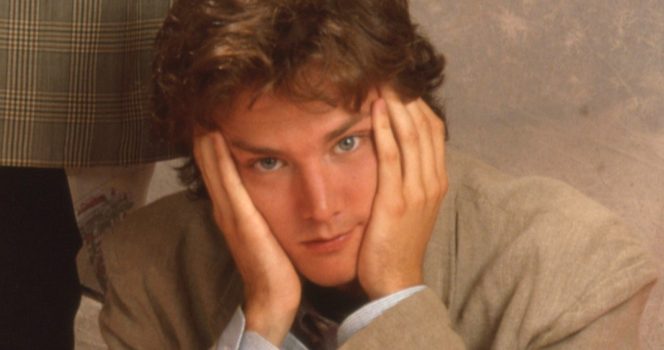
Andrew McCarthy: The ’80s Heartthrob Who Conquered Fame, Addiction, and Reinvented His Life
He was the boy every teen adored in the 1980s — the one whose tousled dark hair, soulful eyes, and understated charm made girls swoon and boys secretly envy. Posters of him plastered bedroom walls, magazines highlighted him on their covers, and fans dreamed of seeing him in theaters or at mall appearances. But behind the charismatic persona and picture-perfect smile, Andrew McCarthy faced personal challenges that no one could anticipate.
Early Life: A Humble Beginning
Andrew McCarthy was born on November 29, 1962, in Westfield, New Jersey. He was the third of four boys in a typical suburban family. His mother worked at a local newspaper, and his father managed investments — a stable, middle-class upbringing far removed from the bright lights of Hollywood.
“I was totally unprepared for any kind of success when I was a young person. I didn’t know anyone who was successful in that way in show business, or famous,” McCarthy later recalled. “I also temperamentally wasn’t particularly suited for it. Attention made me recoil.”
From a young age, Andrew was drawn to the arts. He performed in school plays, loved literature, and found solace in creative expression. Yet socially, his teenage years were challenging. “I just felt sort of very lonely at school. I just didn’t feel like I belonged there,” he admitted. Art became both an escape and a passion that would eventually shape his future.
After high school, McCarthy enrolled at New York University to study acting. However, he struggled with formal academic structures and was expelled after two years. “I didn’t really go [to class],” he said, candidly acknowledging his early struggles with discipline in a conventional setting.
Breaking Into Hollywood
Even without formal training, McCarthy’s natural talent and striking presence quickly opened doors. Shortly after leaving NYU, he responded to an open casting call for the 1983 movie Class, starring Jacqueline Bisset. Competing with hundreds of hopefuls, he was selected for the lead role of Jonathan, a character embroiled in a provocative and headline-grabbing storyline: romancing his prep school roommate’s mother.
“I waited for hours with 500 other kids, and they called me back. It was so out of the blue. One week I was in school, and the next week I’m in bed with Jacqueline Bisset. I thought, ‘I’m doing something right here,’” McCarthy recalled. NYU later offered him a way to count the film as an independent study to complete his degree, but McCarthy refused, famously stating, “I told them to go f*** themselves.”
The Brat Pack Era
In 1985, McCarthy starred in St. Elmo’s Fire, a film that became a defining symbol of 1980s youth culture. Despite mixed reviews from critics, the movie became a commercial hit, cementing McCarthy as a teen heartthrob. He joined a cohort of young actors dubbed the “Brat Pack,” including Rob Lowe, Judd Nelson, Emilio Estevez, and Demi Moore — a group that represented a new wave of Hollywood youth: talented, rebellious, and constantly under media scrutiny.
By 1986, McCarthy had solidified his reputation as a leading young actor with Pretty in Pink, alongside Molly Ringwald. Unlike some of his contemporaries, McCarthy’s charm was quiet, understated, and relatable — an everyman appeal that made audiences fall in love with him. While his peers were often characterized by arrogance or excessive partying, McCarthy maintained a more introspective and grounded persona.
The Hidden Struggles Behind the Fame
Behind the public adoration, McCarthy faced personal struggles that were largely invisible to fans and the media. Hollywood’s fast-paced lifestyle, combined with sudden fame, presented challenges he was not fully equipped to manage. In his memoir Brat: An ’80s Story, he recounts the whirlwind of hotel parties, exclusive events, and late nights at the Chateau Marmont or celebrity homes. While glamorous on the surface, these environments became breeding grounds for unhealthy coping mechanisms.
McCarthy admitted that alcohol became a key crutch. “If I was frightened, it gave me good Dutch courage,” he said. “I felt confident and sexy and in charge and in control and powerful — none of those things I felt in my life.” Alcohol temporarily masked insecurities but eventually led to dangerous consequences.
He also experimented with cocaine, saying, “If you had it, I did it,” though he noted that drug use was limited compared to alcohol and mostly fueled his drinking. Over the next few years, the combination of fame, substance use, and personal pressure led to a period he later described as “lost and painful.” Episodes of convulsions, severe hangovers, and emotional turmoil marked a difficult chapter in his early career.
A Turning Point: Choosing Sobriety
By 1989, McCarthy knew he needed a profound change. Before filming Weekend at Bernie’s, he quit drinking cold turkey and withdrew from Hollywood’s social scene. This approach aligned with his introverted nature. “I’m very comfortable being alone and I’ve always been comfortable being alone,” he explained. “I find that people go to great lengths to avoid being alone and they get themselves into a lot of trouble. I find that a lot of unhappiness is from trying not to be alone.”
Even after this decision, the temptation of alcohol resurfaced during the filming of Jours tranquilles à Clichy. A co-star offered him a beer, and as McCarthy held the can, he realized the severity of his previous habits — a clear warning to stay committed to sobriety. Soon after, he entered rehab, undertook detox, and made a life-altering commitment to remain alcohol and drug-free. This decision marked the beginning of a new chapter focused on personal growth, self-awareness, and career reinvention.
Career Evolution: Actor, Director, and Writer
Following his recovery, McCarthy transitioned into new creative avenues. He shifted from teen heartthrob to respected director, producing character-driven work on acclaimed series such as Orange Is the New Black, Gossip Girl, and White Collar. His directorial style earned praise for emotional depth, attention to detail, and the ability to bring out nuanced performances from actors.
McCarthy also explored a career as a travel writer, demonstrating versatility beyond entertainment. Recognized as Travel Journalist of the Year in 2010, he has contributed to publications like National Geographic Traveler and Men’s Journal. On this career pivot, he explained, “People say, ‘How does an actor become a travel writer? That’s interesting. They are so different.’ But they are exactly the same to me. They manifest in the same way to me, because they’re both storytelling, and that’s how I communicate.”
Personal Life: Love, Family, and Stability
McCarthy’s personal life reflects the same resilience he has applied to his career. In 1999, he reunited with his college sweetheart, Carol Schneider, marrying her after nearly two decades apart. They had a son, Sam, in 2002, who later pursued acting. The couple divorced in 2005.
In 2011, McCarthy married Irish writer and director Dolores Rice, and they have two children together: Willow and Rowan. They maintain a private family life in New York’s West Village, far from Hollywood’s glare. McCarthy has described his family as grounding: “I adore my children, naturally. They are a central part of my life.”
Reflecting on His Iconic ’80s Career
Though his films continue to hold nostalgic significance, McCarthy is humble about their lasting impact. “It’s nice,” he said about enduring fan admiration, “but it doesn’t have a lot to do with me particularly at this point. I don’t have a lot of nostalgia for my past.”
Fans, however, continue to celebrate him online: “Still as gorgeous as ever ❤️,” “He’s aged very well indeed ❤️,” and “Andrew! It’s so great to see you on Instagram, you’re more handsome than ever!” Such comments reflect the lasting impression of his early career combined with his dignified adulthood.
Lessons from Andrew McCarthy’s Life
Andrew McCarthy’s journey offers profound lessons in perseverance, self-awareness, and the power of reinvention:
- Resilience in the Face of Fame: Early stardom comes with pressures, but he learned to balance public attention with personal integrity.
- Overcoming Addiction: He turned his life around through determination, rehab, and self-reflection.
- Career Reinvention: From actor to director and writer, McCarthy’s evolution demonstrates adaptability and creativity.
- Prioritizing Family: Despite Hollywood demands, he places his family at the center of his life.
- Introspection and Self-Acceptance: His ability to embrace solitude, reflect on mistakes, and act intentionally has been critical to his enduring success.
Legacy: From Teen Idol to Inspirational Figure
Nearly 40 years after his breakout roles, Andrew McCarthy remains an enduring icon, not only for fans who grew up with him but also for aspiring artists navigating fame, creativity, and personal growth. His career spans acting, directing, writing, and travel journalism, all grounded in a commitment to authenticity and meaningful storytelling.
His life story demonstrates that it is possible to recover from the pitfalls of fame, rebuild oneself, and emerge with purpose and wisdom. McCarthy’s journey is a testament to transformation, resilience, and the enduring power of creativity and self-discipline.
In Every Sense, Andrew McCarthy’s Life is Inspiring
From suburban New Jersey to Hollywood stardom, through addiction and personal struggles, to a sober, balanced, and creative adulthood, McCarthy’s story resonates beyond the screen. It is a narrative of perseverance, reinvention, and the enduring pursuit of authenticity — an example that life, no matter how turbulent, can be reclaimed and reshaped with courage, effort, and integrity.
