
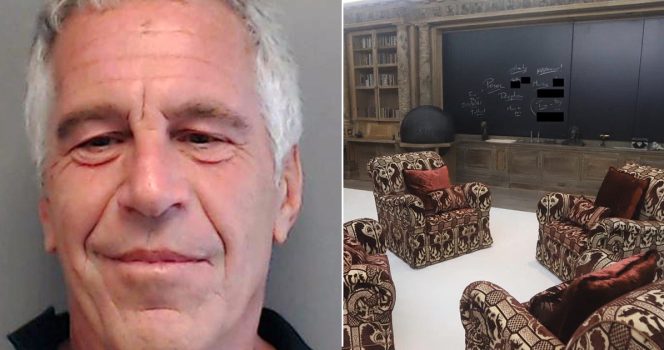
On December 3, 2025, lawmakers on the House Oversight Committee publicly released a large trove of previously unseen images and video footage showing the interior and exterior of the Caribbean estate once owned by Epstein. The materials were provided by the U.S. Virgin Islands Department of Justice
According to reporting, the release includes over 150 photos and more than a dozen video clips. Much of the footage dates back to 2020, the year after Epstein’s death — meaning the images were captured during a documented inspection by authorities rather than during his lifetime.
The visuals offer a broad look at the layout and features of what is widely referred to as Little St. James — the smaller of Epstein’s private islands in the U.S. Virgin Islands, frequently tagged in reporting as a hub for the alleged trafficking and abuse that Epstein has been accused of.
What the Images Show — Strange, Eerie, and Troubling Details
The photos and videos reveal a mixture of opulent luxury and disturbing, mysterious spaces. Some of the most striking and unsettling details include:
- Bedrooms, bathrooms, a pool area, outdoor grounds, and a helipad / coastline view — showing how the island was physically structured as a high-end, private retreat.
- A room with what appears to be a dentist‑style chair, surrounded by a wall of latex masks (male masks), an image that many observers have described as chilling given the island’s alleged history.
- A study or library‑like room featuring a large chalkboard wall. On the board are written words like “power,” “deception,” “intellectual,” “political,” “music,” and “truth.” Some portions have been redacted.
- A corded landline telephone with speed‑dial buttons; some of the names associated with those buttons have been redacted in the public release.
- Bathrooms, shower rooms, and other living spaces that suggest the estate was outfitted for extended stays and frequent occupancy.
In short, the images reveal a house that on the surface resembles a luxury Caribbean retreat — yet with interior rooms and features that many find disturbingly incongruent with normal vacation homes.
The Significance — Why This Release Matters
🔎 A Clearer Glimpse into a Secluded, Once‑Secret Estate
For years, much of what the public knew about Little St. James came from survivor testimony, media investigations, flight logs, court documents, and prior leaks. But visual confirmation — photos/videos taken by law enforcement — adds a new layer of transparency. As one lawmaker on the Oversight Committee put it: the images provide “a disturbing look into the world of Jeffrey Epstein and his island.”
For survivors and their advocates, the release offers concrete, unvarnished evidence of how the island was configured. That matters: it can help corroborate stories, guide investigative work, and potentially support legal actions, civil suits, or renewed criminal scrutiny.
⚖️ Pressure on Institutions, Banks, and Investigators
Alongside the photos and videos, the Oversight Committee also received financial records relating to Epstein’s bank accounts from institutions including JPMorgan Chase and Deutsche Bank — documents that lawmakers say they intend to release pending review.
That dual release — of visual evidence and financial data — heightens pressure on financial institutions, legal authorities, and past investigators to account for what they knew, what they did (or didn’t do), and who else may have been involved.
🔐 Survivor Rights, Transparency, and Public Accountability
The photos and videos come at a time when survivors, advocacy groups, and many lawmakers are demanding greater transparency and justice — not just for Epstein’s crimes, but for systemic failures that allowed those crimes to continue for decades. The public release aims to support these demands and keep pressure on to fully unseal and examine all pertinent documents.
Given the scope of Epstein’s alleged trafficking network, his high-profile connections, and long history of secrecy, many view this as a possible turning point in reinforcing public accountability.
What Remains Unknown — And Why Redactions Are Causing Concern
Even though the release is substantial, much remains unclear — sometimes intentionally so. Several key issues remain unresolved, and redactions have sparked confusion and speculation:
- The redacted names on the telephone speed‑dial: It’s unknown whether they refer to associates, employees, potential witnesses, accomplices, or other visitors. The redactions raise concerns over transparency — especially among those seeking full accountability.
- The full content of the chalkboard: While words like “power,” “deception,” and “truth” are visible, many other parts are blacked out — fueling theories but leaving real meaning ambiguous. Some who have seen older, un‑redacted photos suggest the board previously included phrases like “mirror in face,” “time,” “appears!” and even a so‑called “Dank Brain” — though none of these appear in the official public release.
- The purpose of the bizarre rooms: The dentist‑chair room with masks, for example — investigators, journalists, and survivors debate whether it served a medical function, a disguise function, a form of psychological manipulation or intimidation, or something worse. No definitive explanation has been released.
- The full extent of visitor lists, financial flows, and institutional connections: While the banking records release is pending, much remains undisclosed — including flight logs, guest logs, email archives, or other documentary evidence that could implicate more individuals.
Because investigations remain ongoing — both in the U.S. Virgin Islands and at the federal level — some data remains sealed, partially redacted, or withheld for legal reasons. Nonetheless, many survivors’ groups and oversight lawmakers argue that full transparency is necessary for truth and justice.
Public, Media, and Political Reactions — The Fallout Begins
The release has triggered a strong reaction across media, politics, and public discourse:
- Survivor and advocacy groups have welcomed the transparency. For many, the images provide validation and public recognition of long‑alleged crimes.
- Media organizations worldwide are re‑examining Epstein’s network, his financial ties, travel history, and property holdings — while many commentators note this may renew scrutiny on powerful individuals and institutions previously linked to him.
- Political pressure is mounting: Some lawmakers are calling for expanded subpoenas, further hearings, and full public release of all remaining materials tied to Epstein, including bank records, flight logs, and guest rosters.
- Public outrage and demand for justice: On social media and in public forums, many have described the newly released images as horrifying — the combination of luxury and secrecy, of manicured grounds and disturbing interiors, prompting renewed demands that systems enabling such abuses be dismantled.
In a statement accompanying the release, Ranking Member Robert Garcia wrote that the Committee “won’t stop fighting until we deliver justice for the survivors.”
What to Watch Next — What Could Happen in the Coming Weeks and Months
Given the scale of the release and the surrounding interest, several key developments are possible:
- More documents coming: The House Oversight Committee has indicated that after reviewing them, it plans to publish the financial records it obtained from major banks tied to Epstein. That could reveal previously unknown financial flows, beneficiaries, or associated institutions.
- Civil lawsuits or renewed investigations: Survivors or their legal representatives may use the newly public evidence to file suits against Epstein’s estate, associated individuals, or institutions. The images and records might strengthen claims of trafficking, abuse, negligence, or conspiracy.
- Congressional hearings and oversight: Lawmakers may call hearings to examine not only Epstein’s crimes but also institutional failures — in finance, criminal justice, oversight agencies, or private organizations — that allowed alleged abuses to go on for decades.
- Public and media scrutiny of high‑profile connections: As more records become public, attention may turn toward notable people previously connected to Epstein. Journalists may attempt to trace phone‑dial records, guest logs, bank transfers, or other data to verify or further investigate those connections.
- Advocacy and support for survivors: With renewed visibility and public pressure, there may be increased resources, support programs, and efforts for survivors to share their stories, seek justice, or call for reforms to prevent similar abuses.
Why This Matters — Beyond Shock Value
While the images and videos are deeply disturbing and generate shock and outrage, their release serves a more important purpose than just sensational headlines.
- They provide tangible, undeniable visual documentation of an estate that was long rumored to hide horrific crimes. For many survivors, they offer validation.
- They increase public transparency and accountability, forcing institutions — financial, legal, political — to confront past failures and potentially take corrective action.
- They may pave the way for real justice — not just symbolic, but legal, civil, and institutional reform.
- They remind society of the human cost of secrecy and power: behind the luxury and private jets, there are victims. Visual evidence helps ensure their stories are not forgotten or dismissed.
In this sense, the release of photos and videos from Little St. James is not just another media event. It is a potential turning point — one that could reshape public understanding, influence legal outcomes, and demand long‑overdue accountability.
