
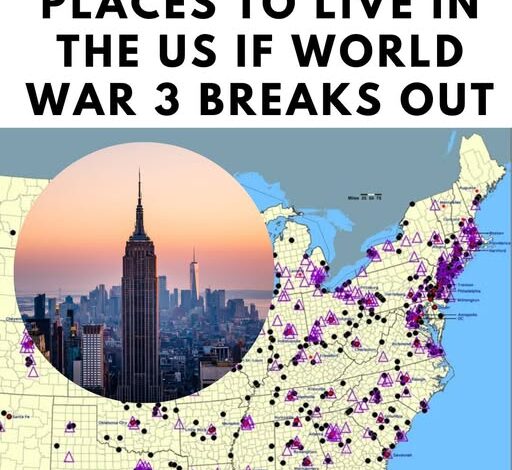
The architectural stability of global peace has been increasingly tested in 2026, as rising tensions among the United States, Israel, and Iran bring the realities of modern warfare sharply into the public consciousness.
Escalating military maneuvers and diplomatic friction have highlighted vulnerabilities previously confined to strategic assessments.
Analysts warn that these geopolitical shifts are no longer theoretical, signaling a period where global security calculations must be continuously reassessed to prevent irreversible escalation.
The interplay of national interests and military capabilities has intensified the international “spirit of defiance,” raising the stakes for governments and civilian populations alike.
Historically, discussions of World War III have largely remained academic exercises, but recent events illustrate a “long-simmering anxiety” transitioning into concrete planning and contingency operations.
The proliferation of missile technology, cyberwarfare capacity, and modern command structures has changed the strategic landscape, creating new vectors for rapid escalation.
Whereas prior decades relied heavily on diplomacy and nuclear deterrence, the modern era emphasizes both preemptive intelligence and survivable infrastructure.
This shift is particularly visible in how military planners reassess the positioning of nuclear assets and the potential consequences of direct engagement between major powers.
At the heart of this unease lies the “ominous” potential for nuclear deployment, a scenario with far-reaching consequences for both military personnel and civilian populations.
In the context of U.S. national security, strategic planners consider not only the destructive potential of weapons but also the broader implications of targeting intercontinental ballistic missile (ICBM) silos, command centers, and supporting infrastructure.
Neutralizing a nation’s retaliatory capability is a priority in modern counterforce strategies, reflecting lessons learned from Cold War-era simulations and contemporary geopolitical modeling.
The consequences of such an attack would extend far beyond immediate blast zones, affecting public health, agriculture, and long-term ecological stability.
Contrary to popular perception, a nuclear strike in a global conflict may prioritize military targets over population centers in the initial phase.
Counterforce strategies, which aim to disable a nation’s strategic capabilities, rely on precise intelligence and geographic knowledge, emphasizing missile silos, air bases, and command hubs.
For the United States, this means that the “beating heart” of its nuclear deterrent—the ICBM fields located across the central plains—would be the most immediate priority for an adversary.
A successful strike against these assets could temporarily undermine the ability to retaliate, creating a precarious period of strategic uncertainty.
The U.S. ICBM network is concentrated in the northern and central plains, including Montana, North Dakota, Wyoming, Colorado, Nebraska, and parts of Minnesota and Iowa.
These regions, collectively referred to as the “Silo States,” carry a disproportionate risk due to their high-value military assets. Fallout modeling and simulation studies have demonstrated that prevailing winds could transport radioactive particles across neighboring states, intensifying environmental hazards.
These studies, published in peer-reviewed scientific journals and analyzed by outlets such as Scientific American and Newsweek, provide detailed projections of radiation dispersal, offering critical insight for emergency preparedness and regional planning initiatives.
Montana, with its expansive missile fields and relative geographic isolation, epitomizes the paradox of strategic resilience and vulnerability.
While its low population density reduces potential civilian casualties, the state’s silos represent a primary target in counterforce operations, placing communities, infrastructure, and ecosystems at elevated risk.
Similarly, Wyoming’s high-altitude plains anchor critical portions of the U.S. nuclear arsenal, making the state a key node in strategic defense planning.
These regions highlight the difficult balance between national defense priorities and civilian safety, a challenge increasingly recognized by both government agencies and independent research institutions.
Colorado serves as a strategic nexus due to its proximity to command centers and military infrastructure supporting ICBM operations.
Its varied topography, encompassing mountains and plains, affects the trajectory of potential fallout and complicates evacuation or mitigation strategies. Nebraska, located at the geographic center of the continental United States, adds another layer of complexity with its extensive agricultural resources.
Contamination of farmland in the event of a nuclear strike could disrupt food supply chains nationwide, underscoring the interconnected nature of military strategy, civilian safety, and economic resilience.
The Dakotas, home to a substantial portion of the ground-based deterrent, are central to any analysis of counterforce vulnerability. North Dakota and South Dakota host missile fields that, if compromised, would significantly degrade national retaliatory capacity.
Additionally, Iowa and Minnesota, while containing fewer silos, fall directly downwind of these primary fields, creating a potential “brutal” environmental hazard from radioactive fallout.
Prevailing weather patterns and atmospheric currents play a pivotal role in determining the spread of radiation, emphasizing that risk is not confined solely to the immediate vicinity of strike targets.
Understanding these geographic realities is critical for both policymakers and the public. Simulations consistently reveal that while initial casualty estimates may focus on silo-adjacent areas, the broader implications of fallout extend into secondary and tertiary regions.
This ripple effect affects water supplies, agricultural productivity, and long-term public health outcomes. Emergency management planning, including evacuation routes, medical resource allocation, and radiation monitoring, is thus essential in areas identified as potential “danger zones.”
Public awareness and preparedness directly influence resilience in the face of such strategic risks.
While the central plains carry the highest immediate risk, atmospheric modeling demonstrates that radioactive fallout does not remain confined to silo-adjacent states.
Prevailing winds, weather systems, and topography influence how radioactive particles disperse over time, creating complex hazard zones.
Simulations show plumes can travel hundreds of miles eastward, gradually diluting but maintaining dangerous contamination levels for extended periods, affecting air quality, soil safety, and water systems across multiple states. Understanding these pathways is essential for strategic planning and emergency response coordination.
The concept of the “Atlantic Buffer” identifies regions at a greater distance from primary nuclear targets, where immediate ground-burst fallout is less intense.
States along the eastern seaboard, including Maine, New Hampshire, Vermont, New York, and Pennsylvania, occupy a position that models suggest would experience lower concentrations of radioactive particles.
Similarly, the Mid-Atlantic and Southeast corridors, spanning Virginia, the Carolinas, Georgia, and Florida, benefit from both geographic separation and prevailing wind patterns, creating a relative buffer against initial counterforce fallout.
Despite this apparent safety, the Atlantic Buffer is not immune to secondary or tertiary nuclear effects. Long-range radiation, particularly in the form of fine particulate fallout, can travel across states under specific meteorological conditions.
These particles may contaminate crops, affect freshwater sources, and deposit trace radioactive isotopes in areas far from initial impact zones.
Historical data from nuclear tests and peer-reviewed modeling consistently emphasize that distance mitigates but does not eliminate exposure, highlighting the importance of continued monitoring and disaster preparedness planning even in less directly affected regions.
Population centers in buffer regions face challenges distinct from the silo states. Urban density increases vulnerability to infrastructure disruption, even if radiation levels are lower.
Power grids, water systems, and transportation networks are interconnected nationally, meaning damage or disruption in the heartland could propagate eastward, creating cascading effects on public services.
Hospitals, emergency response teams, and local government agencies must prepare for indirect fallout effects, supply chain disruptions, and potential refugee influxes from harder-hit interior states.
Agriculture and food security emerge as critical concerns across both the central plains and the Atlantic Buffer. Contamination of soil and water in affected areas could compromise crops for multiple growing seasons, while livestock and dairy operations may experience radioactive bioaccumulation.
These consequences would affect not only local communities but also national food supply chains, emphasizing that nuclear strategy intersects directly with civilian survival, economic stability, and public health preparedness in ways that extend far beyond initial blast zones.
Environmental impacts further compound the human risks of a counterforce strike. Fallout introduces long-lived isotopes into the ecosystem, affecting flora and fauna and creating zones where reoccupation may be unsafe for decades.
Forests, rivers, and wetlands in both high-risk and buffer regions face potential contamination, affecting biodiversity and local livelihoods dependent on natural resources.
Long-term ecological monitoring and remediation strategies are essential for maintaining environmental resilience and mitigating lasting consequences of a nuclear event.
Emergency management strategies in buffer states emphasize monitoring, rapid warning systems, and community preparedness. Radiation detection networks, evacuation planning, and public information campaigns are critical in mitigating risk.
Lessons learned from historical nuclear simulations underscore the importance of layered preparedness, combining infrastructure reinforcement with citizen education.
Even when direct exposure is limited, knowledge of secondary fallout and proactive protective measures can save lives and reduce long-term environmental damage.
Healthcare infrastructure must adapt to both immediate and delayed nuclear effects. While initial casualties in buffer regions may be minimal, delayed radiation sickness, contamination of food and water, and stress-induced medical conditions pose serious threats.
Public health systems require scalable response frameworks, including mobile medical units, stockpiles of protective equipment, and training for large-scale radiation exposure treatment, ensuring readiness for the unpredictable consequences of nuclear fallout extending far beyond direct targets.
Political and social implications in buffer regions also warrant consideration. The perception of safety may lead to complacency, yet indirect effects can disrupt local economies, strain social cohesion, and challenge governance structures.
Preparedness efforts require coordinated messaging, public drills, and multi-agency collaboration to ensure populations remain vigilant and capable of responding to secondary nuclear impacts. National security planning must integrate these considerations to maintain resilience across both direct and indirect threat zones.
The Atlantic Buffer, though geographically advantaged, ultimately highlights the interconnected nature of national security, geography, and civilian vulnerability.
Distance provides temporary relief from direct counterforce strikes, but the cascading consequences of modern nuclear conflict extend beyond initial blast zones.
Both central and eastern regions would require strategic planning for infrastructure protection, public health intervention, and environmental remediation, underscoring the reality that no region exists outside the reach of systemic disruption caused by a large-scale nuclear exchange.
While counterforce strikes focus on military targets, a total-war scenario inevitably raises the specter of countervalue attacks aimed at population centers, industrial hubs, and political capitals.
These strikes would bypass strategic infrastructure to maximize disruption and influence enemy decision-making through civilian vulnerability, reshaping the landscape of risk for all Americans.
Urban centers, including Washington D.C., Chicago, and New York, would face heightened exposure, requiring layered civil defense strategies and emergency preparedness to mitigate catastrophic consequences while sustaining governmental functionality.
The concept of countervalue targeting highlights the fragility of social cohesion under nuclear threat. Casualties in densely populated cities could overwhelm healthcare systems, disrupt essential services, and erode public trust.
Evacuation plans and emergency communications must anticipate mass displacement, traffic congestion, and public panic, while providing guidance for sheltering, food distribution, and radiation monitoring across metropolitan areas. This underscores that strategic planning must extend beyond military calculations to societal resilience.
Economic disruption is an unavoidable consequence of nuclear conflict, even in regions initially spared direct impact. Damage to industrial centers, transportation networks, and energy grids would have cascading effects on national and international trade.
Critical sectors such as agriculture, finance, and technology could experience immediate paralysis, while longer-term economic recovery would require coordinated federal, state, and private-sector efforts. Regional buffer zones would be indirectly affected through supply chain interruptions and resource shortages.
Energy infrastructure, particularly electrical grids and fuel supply chains, is acutely vulnerable during a nuclear event. Even buffer states would feel the ripple effects of outages and interruptions, affecting residential, commercial, and industrial sectors.
Modern societies depend on continuous power for healthcare, water purification, communication, and transportation, emphasizing that nuclear disruption extends far beyond blast zones. Contingency planning for energy resilience is crucial for both survival and recovery.
Transportation and logistics networks would face immense challenges under nuclear stress. Highway systems, rail lines, ports, and airports may be compromised either directly by strikes or indirectly through radioactive contamination, congestion, or safety protocols.
Supply chains for food, medicine, and emergency equipment could be delayed or disrupted, creating pressure on both local communities and federal coordination. Preparedness planning must integrate transportation resilience into broader disaster response frameworks.
Communication networks represent another critical layer of vulnerability. Telecommunication infrastructure, including cellular towers, satellites, and internet backbones, could be degraded or disabled, complicating public alerts and inter-agency coordination.
Maintaining robust, redundant systems, including radio networks and satellite relays, is essential for timely dissemination of information, ensuring that both authorities and civilians have actionable guidance during emergencies.
The long-term environmental impact of nuclear strikes, both counterforce and countervalue, would be profound.
Fallout contamination of soil, water, and air could persist for decades, affecting agriculture, forestry, and natural habitats.
Ecosystem recovery would require careful monitoring and remediation efforts, highlighting the intertwined nature of human and environmental resilience. Policy planning must account for ecological consequences to preserve essential resources and biodiversity.
Public health preparedness is critical across both immediate and secondary risk zones. Hospitals and clinics must anticipate not only acute injuries from blast or radiation exposure but also chronic illnesses resulting from contamination.
Stockpiles of protective equipment, medical countermeasures, and radiation antidotes, combined with trained personnel and mobile care units, are essential to mitigate mortality and morbidity. Continuous training and resource allocation are necessary to maintain readiness for prolonged crises.
Education and public awareness form the foundation of civilian resilience. Citizens must understand radiation exposure, sheltering techniques, evacuation procedures, and the importance of communication with authorities.
Community drills, emergency notifications, and public health campaigns enhance readiness while reducing panic, enabling a population to respond effectively even under unprecedented stress conditions. Knowledge becomes a force multiplier in survival scenarios.
Social cohesion and governance stability are tested in nuclear crises. Regions spared from direct impact may still experience mass migration, economic disruption, and civil unrest.
Coordinated leadership, transparent communication, and equitable distribution of resources are essential to maintain trust in institutions and prevent societal fragmentation. The “spirit of resilience” depends on proactive planning, public engagement, and robust local governance networks.
Diplomacy and international cooperation remain the ultimate safeguards against escalation. While military planning prepares for worst-case scenarios, preventing nuclear conflict requires sustained negotiation, arms control agreements, and transparency between major powers.
Historical lessons from Cold War deterrence and contemporary geopolitical analysis demonstrate that diplomacy is the most effective means to prevent the “thin line” between peace and catastrophic escalation from being crossed.
Technological developments, including missile defense systems, early-warning networks, and advanced monitoring tools, enhance national security but do not guarantee absolute protection.
No system can fully eliminate risk; distance, redundancy, and preparedness remain essential complements. Citizens, policymakers, and military planners must recognize that modern nuclear strategy integrates both hardware and human factors, combining infrastructure resilience with societal awareness.
Citizen preparedness is an essential layer of national resilience. Families and communities should maintain emergency supplies, radiation detection tools, communication plans, and knowledge of local shelter locations.
The ability to act decisively in the first hours of a nuclear event significantly increases survival odds and reduces strain on emergency services, demonstrating that public readiness complements strategic military planning.
Ultimately, understanding the strategic landscape of the United States is not only a lesson in geography or military doctrine but also in human resilience. The “Silo States,” buffer regions, and major population centers together form an interconnected web of vulnerability and protection.
Awareness, preparation, and vigilance at every level—from local communities to federal leadership—remain essential to preserving life, infrastructure, and the environment under extreme threat conditions.
The modern nuclear landscape underscores the importance of balancing deterrence, diplomacy, and preparedness. The “arithmetic of survival” in 2026 is multifaceted, requiring careful coordination among military planners, civil authorities, and the public.
By integrating knowledge of fallout patterns, infrastructure vulnerabilities, societal dynamics, and environmental consequences, policymakers can develop more effective strategies to reduce risk and enhance national security.
In conclusion, the thin line between peace and escalation in 2026 depends on informed decision-making, proactive defense measures, and the resilience of society at large. Whether residing in the plains of North Dakota, the heartland of Nebraska, or the coastal cities of the Atlantic Buffer, Americans face shared responsibility for preparedness.
Maintaining vigilance, supporting diplomatic efforts, and fostering civic awareness constitute the most effective defense against a world shaped by nuclear uncertainty, preserving both national security and the collective spirit of life.
