
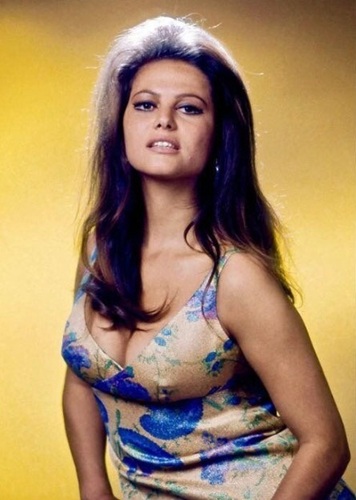
For more than six decades, Claudia Cardinale has stood as one of the most enduring and admired figures in international cinema.
Celebrated not only for her striking beauty but also for her emotional intelligence, artistic dedication, and remarkable resilience, Cardinale emerged during the golden age of European film and built a career that spanned continents, generations, and genres.
While audiences often remember her as one of the quintessential icons of 1960s European cinema, her journey to global recognition was far from straightforward.
It was shaped by personal hardship, professional determination, and a steadfast refusal to surrender her identity to the pressures of fame—a combination that would define both her personal and professional life.
Early Life in Tunisia: A Multicultural Foundation
Claudia Cardinale was born Claude Joséphine Rose Cardinale on April 15, 1938, in Tunis, Tunisia, then under French protectorate rule. Her parents, Sicilian immigrants who had moved to North Africa in search of opportunity, raised their children in a household where Italian traditions coexisted with French colonial culture and North African influences. This multicultural environment exposed Cardinale to a rich array of languages, customs, and artistic expressions from an early age.

She attended French-language schools and learned Italian from her family, laying the linguistic foundation that would allow her to navigate both European and international film industries later in life. Initially, Cardinale had no intention of becoming an actress. She was focused on her education and training to become a teacher, a profession that promised stability and social respectability, particularly for young women in the postwar era.
However, her life took a dramatic turn in 1957, when she became involved in organizing a local Italian film festival in Tunisia. It was during this festival that her natural charisma and photogenic presence first captured public attention. Friends reportedly encouraged her to step onto the stage, where she was unexpectedly crowned “Most Beautiful Italian Girl in Tunisia.”
This recognition came with a prize: a trip to the Venice Film Festival, one of Europe’s most prestigious cinematic events. There, filmmakers and producers noticed her immediately, drawn not merely to her appearance but also to an aura of elegance and poise. Offers for film work began arriving almost instantly, but Cardinale was hesitant, having no initial plans for a public career. She was still grappling with the enormity of sudden attention and the implications it carried for her personal life.
Personal Trauma and Resilience
Cardinale’s early adulthood was complicated by a profound personal trauma. As she later recounted in interviews, she became pregnant as a teenager following a violent sexual assault by an older man. The event was shrouded in secrecy due to the societal stigmas surrounding unwed motherhood at the time, particularly in conservative Italian and North African communities.
Demonstrating extraordinary courage, Cardinale chose to carry her pregnancy to term. In 1958, she gave birth to her son, Patrick. Yet, for decades, the public was misled regarding his parentage; Patrick was officially presented as her younger brother. This concealment was orchestrated largely by film producer Franco Cristaldi, who would become her manager and later her husband. Cristaldi played a pivotal role in launching Cardinale’s cinematic career, carefully managing her public image and shielding her from scandal in an industry notorious for punishing women who deviated from prescribed norms.
Cristaldi’s influence was double-edged. On one hand, his guidance allowed Cardinale to navigate the complexities of European film production and gain access to high-profile projects. On the other, it imposed significant restrictions, including strict control over her public persona and the roles she accepted. Notably, Cardinale refused to perform nude scenes—a bold choice at a time when many leading actresses were pressured to exploit sexuality for fame. This decision reinforced her commitment to personal dignity and set her apart from contemporaries whose careers often hinged on physical display rather than talent.

The Early European Film Career
Cardinale’s first film appearances in Italian cinema quickly demonstrated that her appeal went beyond physical beauty. Her debut in Three Strangers in Rome (1958) introduced her to domestic audiences, and she soon began working with some of the most influential directors of European cinema.
The year 1963 proved pivotal. Cardinale starred in 8½, directed by Federico Fellini, a landmark of art cinema that would become an enduring reference point for filmmakers worldwide. In the film, she played an idealized woman who embodies inspiration and purity within the protagonist’s imagination. Though her role was relatively limited in dialogue, her presence carried symbolic weight, reflecting the ethereal and transformative qualities that Fellini sought to explore in his meditation on creativity and artistic crisis.
That same year, she delivered another defining performance in Luchino Visconti’s The Leopard, a historical epic examining the social and political upheavals during the unification of Italy. Cardinale portrayed Angelica, a young woman whose beauty and social ambition mirrored the shifting power structures of the time. She infused the character with a combination of intelligence, sensuality, and grounded realism, earning critical acclaim and establishing herself as more than a decorative presence in European cinema.
Unlike many actresses confined to superficial roles, Cardinale frequently portrayed women with emotional depth and internal strength, a distinction that set the stage for her later international career. Her early collaborations with luminaries like Fellini and Visconti signaled her ability to navigate complex narratives and portray nuanced characters, making her a sought-after performer for directors who valued both talent and screen presence.
Crossing into Hollywood
By the mid-1960s, Cardinale’s fame had crossed the Atlantic. She began appearing in English-language productions, working alongside some of Hollywood’s biggest stars. In 1963, she appeared in The Pink Panther, alongside Peter Sellers and David Niven. The film was a commercial hit and introduced her to global audiences, highlighting her capacity for understated humor and elegance amidst a cast of larger-than-life comedic performers.
Cardinale’s early Hollywood roles also included Circus World (1964), where she acted alongside John Wayne and Rita Hayworth. These opportunities allowed her to demonstrate versatility across genres—from sophisticated comedies to sprawling Westerns and historical dramas.

Her Hollywood breakthrough came with Sergio Leone’s Once Upon a Time in the West, where she portrayed Jill McBain, a former sex worker arriving in the American frontier to rebuild her life. Cardinale’s performance captured the character’s resilience, vulnerability, and quiet determination, cementing her status as a leading actress capable of anchoring complex narratives while maintaining emotional authenticity.
Even as her international reputation grew, Cardinale remained discerning in her choice of roles. She balanced commercial projects with art-house cinema, prioritizing artistic integrity over mere financial gain. This careful curation ensured that her career would be characterized by quality, diversity, and enduring relevance.
By the mid-1960s, Claudia Cardinale had firmly established herself as one of Europe’s most sought-after actresses. Her transition from Italian cinema to international projects was not merely a leap in geography; it marked a profound expansion of her artistic influence. Cardinale became a bridge between the European art-house tradition and mainstream international cinema, navigating complex roles while maintaining a reputation for grace, intellect, and integrity.
Landmark Roles and Collaborations with Legendary Directors
A defining period in Cardinale’s career occurred between 1964 and 1970, when she worked on some of the most iconic films in cinematic history. Directors recognized her rare combination of beauty, intelligence, and emotional range, allowing her to play characters who were both glamorous and psychologically nuanced.
In Sergio Leone’s Once Upon a Time in the West (1968), Cardinale’s performance as Jill McBain redefined female roles in Western cinema. Unlike the typical damsel in distress trope prevalent in the genre, Jill was a fully realized character who navigated a violent, male-dominated frontier with agency and moral strength. Cardinale’s portrayal highlighted the inner fortitude required to survive and thrive in the harsh landscape of Leone’s epic narrative. Critics praised her ability to convey vulnerability without diminishing the character’s resilience, a balance that has inspired filmmakers and actors for decades.

Around the same period, she starred in The Pink Panther series and The Legend of Frenchie King (1971), a film co-starring Brigitte Bardot. Cardinale’s work alongside Bardot invited inevitable comparisons between the two European icons. Bardot, often known for embracing overt sexual liberation on screen, contrasted sharply with Cardinale’s more restrained and subtly commanding screen presence. Cardinale’s personal philosophy of leaving room for imagination and suggestion rather than explicit display informed her decisions, allowing her to retain control over her image and resist objectification in an era when actresses often had little say over their portrayal.
Luchino Visconti’s The Leopard (1963) remained a touchstone for her career, but her subsequent work in films like Rocco and His Brothers (1960, though early in her career) and Il Gattopardo highlighted her enduring ability to embody the emotional and moral complexities of women confronting social and political upheaval. Cardinale’s Angelica in The Leopard was a young woman whose beauty symbolized both opportunity and social mobility, yet Cardinale imbued her with intelligence and subtle defiance, making her more than a decorative presence.
Crossing Genres: Comedy, Drama, and Historical Epics
Cardinale’s versatility became increasingly evident as she seamlessly transitioned between genres. She appeared in comedies, historical dramas, epics, and thrillers, often bringing a depth that elevated otherwise conventional plots. Her nuanced performances in French comedies demonstrated impeccable timing and charm, while her work in Italian melodramas highlighted her capacity for emotional intensity.
Notably, Cardinale excelled in international co-productions—a common practice in the 1960s and 1970s when studios sought to blend star power from different countries. She worked alongside Hollywood legends such as John Wayne, Burt Lancaster, and Alain Delon, while maintaining deep ties with European auteurs like Fellini, Visconti, and Sergio Leone. This ability to traverse cinematic cultures gave her a unique position as both a European icon and a globally recognized star.
In The Pink Panther (1963) and Circus World (1964), she displayed a keen understanding of timing, tone, and subtle humor, which contrasted with the overtly comedic styles of her co-stars. This allowed her characters to remain grounded and relatable, even amid extravagant production designs and slapstick situations.
Meanwhile, in dramatic roles, she drew on her own life experiences to convey emotional authenticity. Audiences and critics alike noted the depth she brought to complex characters: women navigating societal expectations, personal trauma, or moral ambiguity. These qualities helped her avoid typecasting and allowed her to continue pursuing intellectually and emotionally rewarding projects throughout her career.
Maintaining Agency and Artistic Integrity
What distinguished Claudia Cardinale from many of her contemporaries was her insistence on maintaining personal and artistic control. In an era when female actors often had minimal say over the roles they played, she negotiated contracts and made careful decisions that balanced career advancement with self-respect.
Her refusal to perform nude scenes or accept overtly exploitative roles did not hinder her international success; instead, it cultivated a lasting image of dignity and sophistication. Cardinale demonstrated that an actress could be both a glamorous screen presence and a serious performer, commanding attention without compromising personal values.
This approach also influenced the kinds of stories she pursued. Cardinale gravitated toward roles that offered moral complexity and emotional resonance, ensuring that her performances contributed meaningfully to the narratives rather than serving merely as decorative elements. Whether playing a socialite navigating political upheaval, a frontier widow rebuilding her life, or a woman grappling with personal loss, she infused each character with humanity and nuance.
Personal Life: Partnerships, Family, and Reclaiming Her Narrative
While her professional life flourished, Cardinale navigated a complex personal landscape. Her marriage to Franco Cristaldi ended in 1975, and she subsequently formed a long-term partnership with Italian director Pasquale Squitieri. Together, they had a daughter, also named Claudia, and remained together until Squitieri’s death in 2017.
The revelation of her son Patrick’s true parentage marked an important emotional milestone. After years of secrecy imposed by societal norms and industry pressures, Cardinale openly acknowledged him as her child. This decision symbolized both personal empowerment and reclamation of her narrative, allowing her to speak publicly about a deeply private chapter of her life with dignity and grace.

Her reflections on past trauma, including the assault she suffered as a teenager, emphasize resilience rather than victimhood. By confronting these experiences while maintaining a successful international career, Cardinale became a role model for women navigating the dual pressures of personal adversity and public scrutiny.
Philanthropy, Advocacy, and Public Presence
Beyond her work in film, Cardinale has dedicated significant energy to humanitarian and advocacy efforts. She has served as a UNESCO goodwill ambassador, championing cultural preservation, education, and women’s rights. These endeavors underscore her commitment to dignity, equality, and global awareness, demonstrating that her influence extends far beyond cinema.
Even as she has aged, Cardinale continues to command respect in film circles. Retrospectives of her work draw attention from new audiences, and she remains an influential voice in discussions of cinematic history, artistic integrity, and the evolution of female representation on screen.
As Claudia Cardinale entered the later decades of her career, she continued to demonstrate the same commitment to artistry, dignity, and authenticity that had defined her from the beginning. While she appeared less frequently on screen compared to her peak in the 1960s and 1970s, her choices during this period reflected a mature artist focused on quality, meaning, and personal satisfaction over commercial necessity.
Continuing Artistic Pursuits
In the 1980s and 1990s, Cardinale selectively embraced projects that allowed her to explore complex female characters and emotionally rich narratives. She appeared in films across Italy, France, and occasionally in Hollywood productions, collaborating with directors who valued her experience, insight, and ability to elevate material.
Her performances during this era often emphasized depth and nuance rather than mere glamour. She brought a seasoned perspective to roles that demanded emotional honesty, whether portraying women coping with family challenges, social upheaval, or personal transformation. Critics frequently praised her ability to convey a lifetime of experience and subtle emotional shifts with minimal dialogue, a testament to her mastery of cinematic expression.
Cardinale also occasionally returned to television and theater, mediums that allowed her to reach audiences in more intimate settings. Her stage work, in particular, showcased her skill in conveying layered characters live, where immediacy and authenticity are paramount.
International Recognition and Retrospectives
As her career matured, the film world increasingly acknowledged Cardinale’s contributions not only as an actress but as a cultural icon. Retrospectives of her work appeared at major international film festivals, including Venice, Cannes, and the Rome Film Festival, highlighting the breadth and longevity of her career.
Film scholars and critics analyzed her performances in canonical works such as The Leopard, 8½, Once Upon a Time in the West, and Rocco and His Brothers, emphasizing how Cardinale helped redefine the depiction of women in cinema. Her characters often combined beauty with intelligence, vulnerability with resilience, and sensuality with moral agency. These qualities challenged traditional narratives in both European and Hollywood filmmaking, inspiring generations of actresses to pursue complex, multidimensional roles.
She became a frequent guest at masterclasses, panels, and interviews, where she shared insights about acting, character development, and the importance of maintaining personal and artistic integrity in a challenging industry. Younger actors often cited her as a role model for balancing career longevity with ethical decision-making, emphasizing that true artistry is about the depth of performance, not mere fame.
Reflections on Fame and Personal Integrity
In interviews throughout the 2000s and 2010s, Cardinale reflected thoughtfully on fame, public scrutiny, and the pressures faced by women in cinema. She spoke candidly about navigating an industry that frequently sought to commodify beauty and limit agency, highlighting her efforts to retain control over her career.
Her philosophy remained consistent: choosing roles that align with personal values and refusing to compromise dignity or authenticity. Cardinale expressed gratitude for the opportunities she received but maintained a critical awareness of the societal and cultural forces shaping film production and star image. This reflective approach allowed her to move through Hollywood and European cinema without losing her identity, even amid intense public attention.
Advocacy and Cultural Contributions
Beyond acting, Cardinale devoted herself to causes she deeply cared about. She used her public profile to advocate for women’s rights, education, and cultural preservation. Her work with UNESCO as a goodwill ambassador showcased her belief in using influence responsibly to promote social good and foster global understanding.
Cardinale has spoken about the importance of cultural dialogue, education, and the arts as a means of building empathy and human connection. She emphasized that cinema is not only entertainment but a tool for reflection, inspiration, and social commentary. By modeling this philosophy through both her professional choices and public engagement, she became a symbol of integrity in the creative world.
Later Life and Personal Fulfillment
In her later years, Cardinale prioritized family, personal reflection, and a more private lifestyle. Living in France with her children and grandchildren, she remained engaged with cinema, attending screenings, festivals, and retrospectives while enjoying the quieter pleasures of life away from the spotlight.
Her personal narrative—from teenage trauma and societal judgment to professional triumph and advocacy—continued to resonate with fans and aspiring actors. By reclaiming her story and speaking openly about past challenges, she offered a rare example of resilience, courage, and dignity. Cardinale’s ability to balance public life with private authenticity became an enduring lesson for those navigating careers in media, arts, and culture.
Enduring Legacy
Today, Claudia Cardinale is remembered not only for her iconic beauty but for the intelligence, emotional depth, and principled decision-making she brought to every role. Her career spans more than six decades, during which she contributed to some of the most influential films in European and international cinema.
Her influence extends beyond her performances. She helped redefine the possibilities for women in film, demonstrating that female characters could be complex, morally engaged, and emotionally authentic. She balanced commercial success with personal integrity, showing that long-term artistic fulfillment is achievable even amid external pressures.
Cardinale’s life story also serves as a testament to human resilience. Despite trauma, societal judgment, and the challenges inherent in public life, she forged a career and personal identity that reflect strength, intelligence, and grace. Her advocacy work further amplifies this legacy, demonstrating that an artist’s impact can extend far beyond the screen.
In summation, Claudia Cardinale stands as a singular figure in the history of cinema: a woman whose talent, integrity, and resilience ensured that her performances, her life, and her voice remain relevant and inspiring across generations. She embodies the possibility of achieving both personal authenticity and professional excellence, leaving a lasting imprint on film, culture, and the global imagination.
Her story reminds us that true legacy is not only in the roles we play but in the principles we uphold, the lives we touch, and the courage we exhibit in living authentically. Claudia Cardinale remains, in every sense, a timeless icon of cinema and a beacon of enduring human dignity.
