
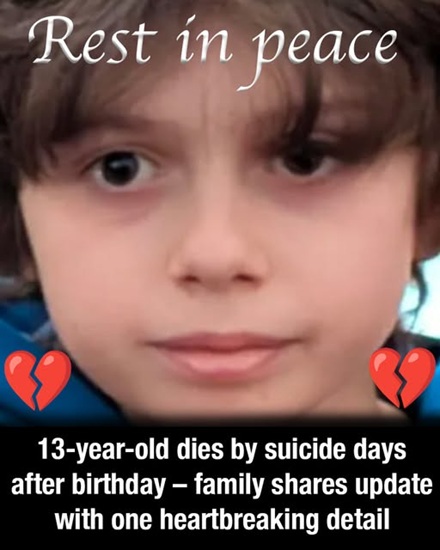
The loss of 13-year-old Josiah Michael Dwinell has left his family and a wider community facing profound grief, unanswered questions, and a painful awareness that earlier intervention might have made a meaningful difference.
Just days before his death, Josiah had celebrated his 13th birthday on March 4, marking what should have been the beginning of a new chapter in his life filled with growth, learning, and opportunity.
Eight days later, that future was suddenly cut short. The closeness of those dates has deeply affected his loved ones, making the tragedy feel even more immediate, personal, and difficult to process.
According to family members, concerns about bullying and Josiah’s emotional well-being had been raised multiple times in the months leading up to his death, reflecting a pattern rather than an isolated concern.
His aunt, Shaena Stebbins, described a young boy who was quietly struggling, showing signs of emotional distress at home that were noticeable to those closest to him, even if not fully recognized elsewhere.

“He was being bullied at school and on the bus… not one person outside his home tried to help him,” she wrote, expressing both heartbreak and frustration over what the family believes was a lack of effective intervention.
Bullying, especially when persistent, can have serious emotional and psychological effects on children. It may contribute to feelings of isolation, anxiety, and low self-esteem, particularly when the child feels unsupported or unheard.
Josiah’s life had already been shaped by significant personal loss. His biological mother passed away more than five years earlier, leaving a lasting emotional impact during a critical period of his development.
Following that loss, he lived with his grandmother, who became a central figure in his life. Family members say she provided consistent care, emotional support, and stability during difficult moments.
She was actively involved in his well-being, attending to his needs and advocating for him as concerns about his mental health became more visible over time.
There were medical visits and discussions about his emotional state, reflecting attempts by the family to seek professional help and better understand what he was experiencing internally.
Despite these efforts, relatives believe that the seriousness of his struggles was not always fully acknowledged, with some concerns reportedly minimized or misunderstood in ways that limited effective support.

“His Mimi sat by his side… trying to get him the help he was seeking, and his mental health was overlooked,” Stebbins shared, highlighting how easily warning signs can sometimes be underestimated.
In many situations involving children, emotional distress may not always present clearly. It can appear through behavior, withdrawal, or changes in mood that are sometimes misinterpreted as temporary or attention-seeking.
Experts emphasize that even subtle signs of distress deserve attention, as early recognition and supportive responses can significantly influence outcomes for children facing emotional challenges.
Family members said that some of Josiah’s behaviors were interpreted as attempts to gain attention rather than signals of deeper emotional pain, a misunderstanding that can have serious consequences.
The distinction between attention-seeking and help-seeking is critical. In many cases, what appears as a call for attention may actually be a child’s way of expressing unmet emotional needs.
Bullying was described as an ongoing issue in Josiah’s life, affecting him both at school and during transportation, creating an environment where he may have felt unable to escape the negative experiences.
Repeated exposure to bullying can increase stress levels, affect sleep, reduce concentration, and contribute to emotional exhaustion, particularly in young individuals still developing coping mechanisms.

“My nephew decided after a bus ride home that he couldn’t handle the bullying anymore,” Stebbins said, a statement that reflects the overwhelming nature of what he may have been experiencing.
While it is important to approach such statements carefully, they highlight the broader issue of how sustained stress and emotional strain can impact a young person’s sense of safety and resilience.
In the days following his passing, Josiah’s family chose to share memories of who he was beyond his struggles, focusing on the joy, warmth, and personality he brought into their lives.
“He was an amazing brother, son, nephew… Josiah brought light and joy to our lives,” they wrote, reminding others that he was deeply loved and valued by those who knew him.
Grief in situations like this extends beyond immediate family members, affecting classmates, teachers, neighbors, and the broader community, all of whom may struggle to understand and process the loss.
Such tragedies often lead to important conversations about responsibility, awareness, and the systems in place to support children dealing with bullying and mental health challenges.
Schools play a key role in identifying and addressing bullying. Effective policies, early intervention, and open communication between staff, students, and families are essential in creating safe environments.
At the same time, families and communities also share responsibility in recognizing signs of distress and ensuring that children feel supported both inside and outside of school settings.

Mental health concerns in children are complex and can be influenced by multiple factors, including personal history, social experiences, and the availability of supportive relationships.
There is rarely a single cause in situations like this. Instead, multiple elements often interact, making it important to approach each case with care, understanding, and a focus on prevention.
Recognizing patterns, listening without judgment, and taking concerns seriously are key steps in reducing risks and supporting children who may be struggling emotionally.
Open communication is especially important. Children need to feel that they can express their feelings safely, without fear of dismissal, criticism, or misunderstanding.
When adults respond with empathy and patience, it can encourage children to share more openly, allowing for earlier intervention and more effective support.
Community awareness also plays a significant role. Public conversations about bullying and mental health help reduce stigma and encourage individuals to seek help when needed.
Resources are available for those who may be struggling. In the United States, support can be accessed through the 988 Suicide & Crisis Lifeline by calling or texting 988.
Additional support is available through Crisis Text Line by texting MHA to 741741, offering confidential assistance for individuals experiencing emotional distress or seeking guidance.
In urgent situations, contacting emergency services is essential. Immediate action can provide critical support and ensure safety during moments of heightened risk.

Preventing tragedies like this requires a collective effort. Families, schools, healthcare providers, and communities must work together to create environments where children feel safe, supported, and heard.
Even small actions, such as checking in regularly, listening attentively, and validating feelings, can have a meaningful impact on a child’s emotional well-being over time.
Education about mental health should begin early, helping children understand their emotions and giving them tools to cope with stress, conflict, and difficult experiences.
Equally important is teaching empathy and respect among peers, as positive social environments can reduce bullying and promote healthier interactions between students.
Josiah’s story is a reminder that behind every statistic is a real person, a family, and a community experiencing deep loss and searching for understanding.
His life, though brief, highlights the importance of awareness, compassion, and timely intervention when children show signs of distress or report negative experiences.
While no single action can guarantee prevention, consistent attention, care, and willingness to act can significantly reduce risks and improve outcomes for vulnerable youth.
Ultimately, the message is clear: concerns should never be dismissed, especially when they are repeated or come from those who know the child best.
Listening, responding, and seeking appropriate support are essential steps in protecting children and ensuring their emotional and psychological needs are met.
For those reading this, there is a simple but powerful takeaway—pay attention, take concerns seriously, and respond with care when someone shows signs of struggling.
Because sometimes, the most important intervention is not overlooking what is right in front of us, but choosing to act with understanding, empathy, and responsibility when it matters most.
