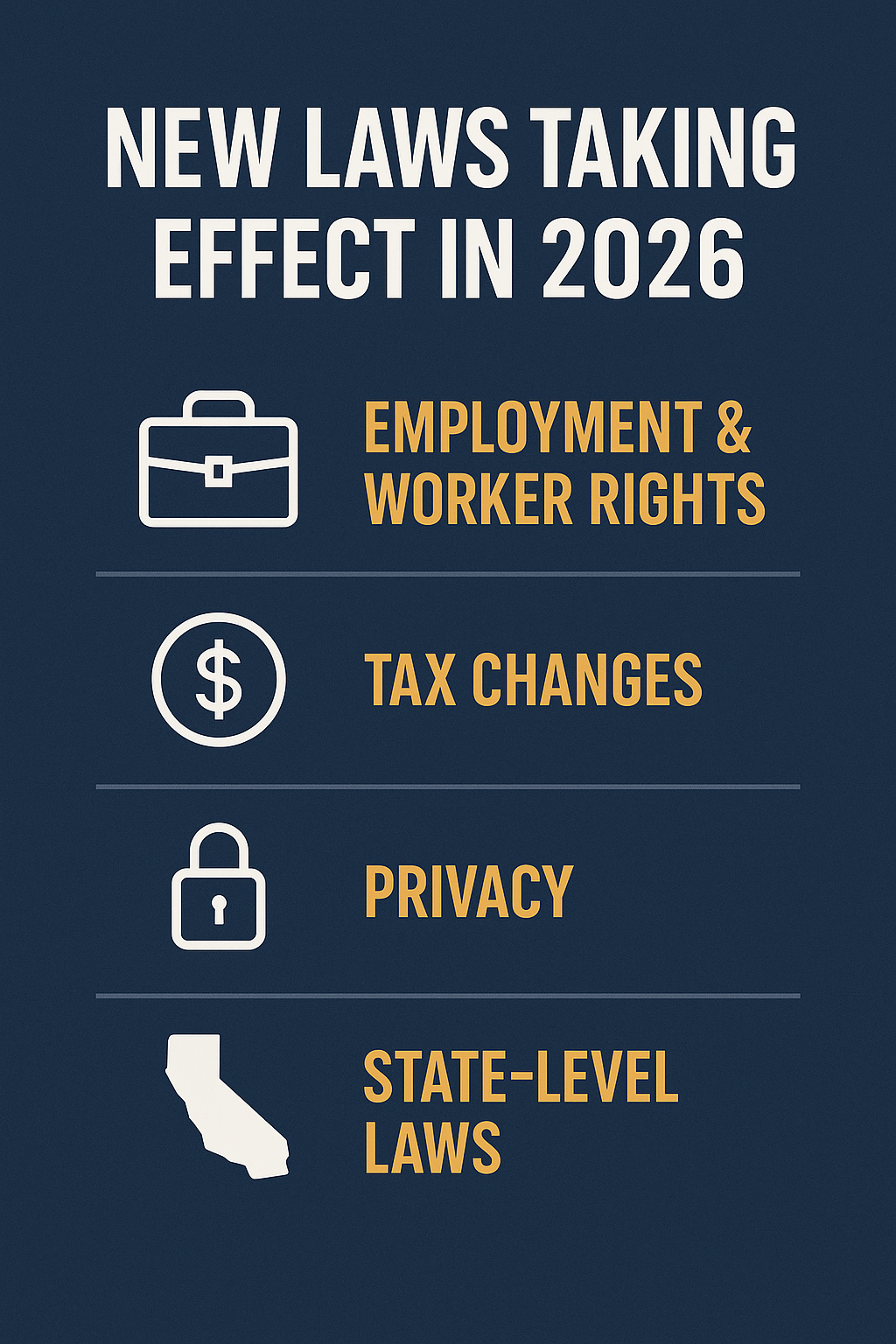
As 2026 arrives, a wide range of new laws and regulatory changes are set to reshape the way people work, manage their finances, protect their data, and interact with state and federal systems. From employment rules to privacy protections, these updates could have meaningful impacts on daily life across the country.
Employment and Worker Rights
A number of new employment-related laws will take effect in 2026, especially at the state level. These include expanded protections for gig workers, clearer anti-discrimination rules for both in-person and remote workplaces, and updated overtime and minimum-wage requirements in multiple regions. Some states are also implementing new transparency rules for employment contracts, making it easier for workers to understand pay structures and job expectations.
For employees, these changes aim to strengthen workplace fairness and protections. Employers and small businesses, meanwhile, may need to adjust their hiring practices, payroll systems, and compliance processes to stay aligned with the new regulations.
Tax Code Changes
A major collection of federal tax reforms is also scheduled to take effect in 2026. These updates may influence individual income taxes, estate planning thresholds, retirement strategies, and business tax deductions. Families and business owners are encouraged to review their financial plans, as some long-standing tax breaks will phase out while others shift into new brackets or structures.
For many households, this will be one of the most significant financial changes of the year, impacting everything from paycheck withholdings to long-term investment plans.
New Consumer Privacy Protections
Data privacy continues to be a major focus for lawmakers, and several states will introduce new consumer privacy laws in 2026. These rules are designed to give individuals more control over their personal information and require businesses to be more transparent about how data is collected, stored, and used.
Residents in states implementing these laws will gain new rights—such as the ability to request data deletion or correction—while business owners will need to update their privacy policies, security measures, and online consent systems.
State-Level Laws to Watch
Beyond federal changes, individual states will enact their own laws touching on issues like healthcare costs, public safety, environmental standards, and artificial intelligence transparency. Some states are introducing caps on prescription drug prices, new law enforcement guidelines, and updated regulations governing emerging technologies.
These state-level variations mean that the impact of 2026’s legal changes will differ widely depending on where someone lives.
The Bottom Line
2026 is bringing a notable wave of legal updates across employment, taxation, privacy, and state governance. For workers, families, and businesses, taking time to understand these changes can help avoid confusion and ensure compliance. Whether the effects are financial, digital, or workplace-related, these new laws are set to shape daily life in meaningful ways throughout the year.
