The day my dying husband asked me to adopt a sixteen-year-old girl, I thought my marriage had been built on a lie. For fifteen years, I had believed I knew everything about David.
I knew how he took his coffee, how he smiled when our children made him laugh, and how he always reached for my hand whenever we crossed a busy street. I knew the sound of his footsteps coming home in the evening.
I knew the little things that made him happy and the memories that sometimes made him quiet.
Or at least, I thought I did.
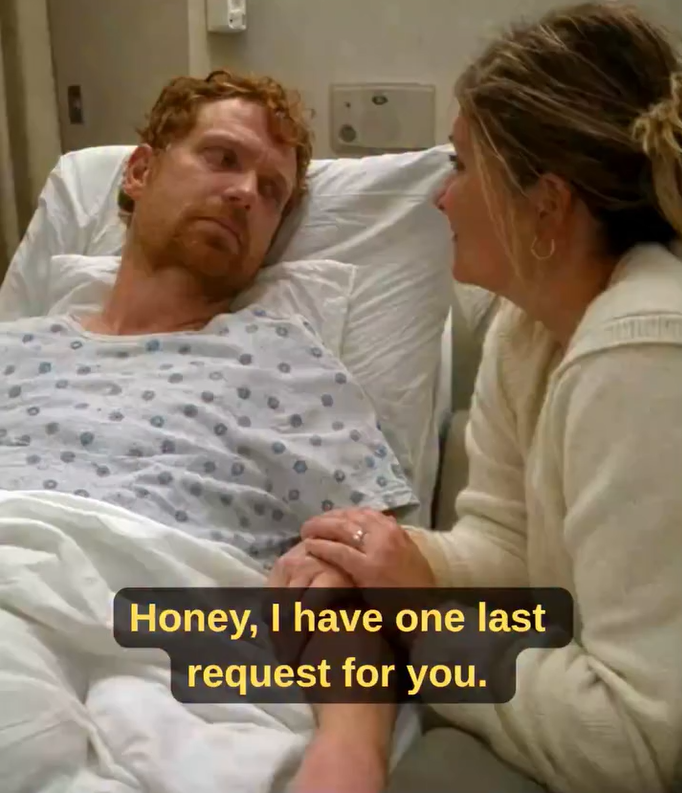
Then, one ordinary afternoon, a doctor walked into a hospital room, closed the door behind him, and told us that my husband’s cancer had reached its final stage.
There would be no miraculous treatment.
No surgery that could restore the life we had planned.
No promise that he would be there to watch our children grow up.
“Stage four,” the doctor explained gently. “At this point, our priority is to make sure David remains comfortable. We will do everything we can to manage his pain.”
I stared at him, waiting for another sentence.
Something hopeful.
Something that would make the words I had just heard less permanent.
But he simply lowered his eyes and gave us a moment.
David squeezed my hand.
I turned toward him, expecting to see fear.
Instead, he looked at me with an expression I couldn’t understand.
It wasn’t just sadness.
There was something else behind his eyes, something he seemed determined not to reveal.
“How long?” I finally managed to ask.
The doctor hesitated.
“Weeks, perhaps. Possibly a few months. Every patient is different.”
A few months.
I repeated those words silently, hoping they would somehow become less frightening.
David leaned toward me.
“Come here, sweetheart.”
I rested my head against his shoulder, trying not to cry.
He kissed my forehead.
“Whatever happens, we’ll get through it.”
I wanted to believe him.
But for the first time in fifteen years, I couldn’t imagine what our family would look like without him.
The first weeks at home were filled with small acts of pretending.
Our children tried to behave normally.
They talked about school, argued over television programs, and asked their father to help them with things he had always done before.
David played along whenever he could.
He smiled when our son showed him a drawing.
He listened patiently when our daughter described something that had happened at school.
Sometimes he even joked that he was becoming the most expensive person in the house because of all the medication.
We laughed.
But the laughter never lasted long.
When the children went to bed, the house changed.
The television went quiet.
The dishes were washed.
And I found myself listening to David’s breathing from the other side of the bedroom.
Some nights, I woke up and discovered that he wasn’t sleeping.
He was staring at the ceiling.
“What are you thinking about?” I asked one evening.
He turned toward me.
“Nothing important.”
“David, I know you better than that.”
He smiled weakly.
“You’re worrying too much.”
I reached for his hand.
“I’m worried because I love you. And because I can feel that something is bothering you.”
For a moment, he looked as though he wanted to tell me something.
His lips parted.
Then he turned his face toward the wall.
“Not tonight, my love.”
I didn’t push him.
I thought we had more time.
I didn’t realize how many things he would leave unsaid.